
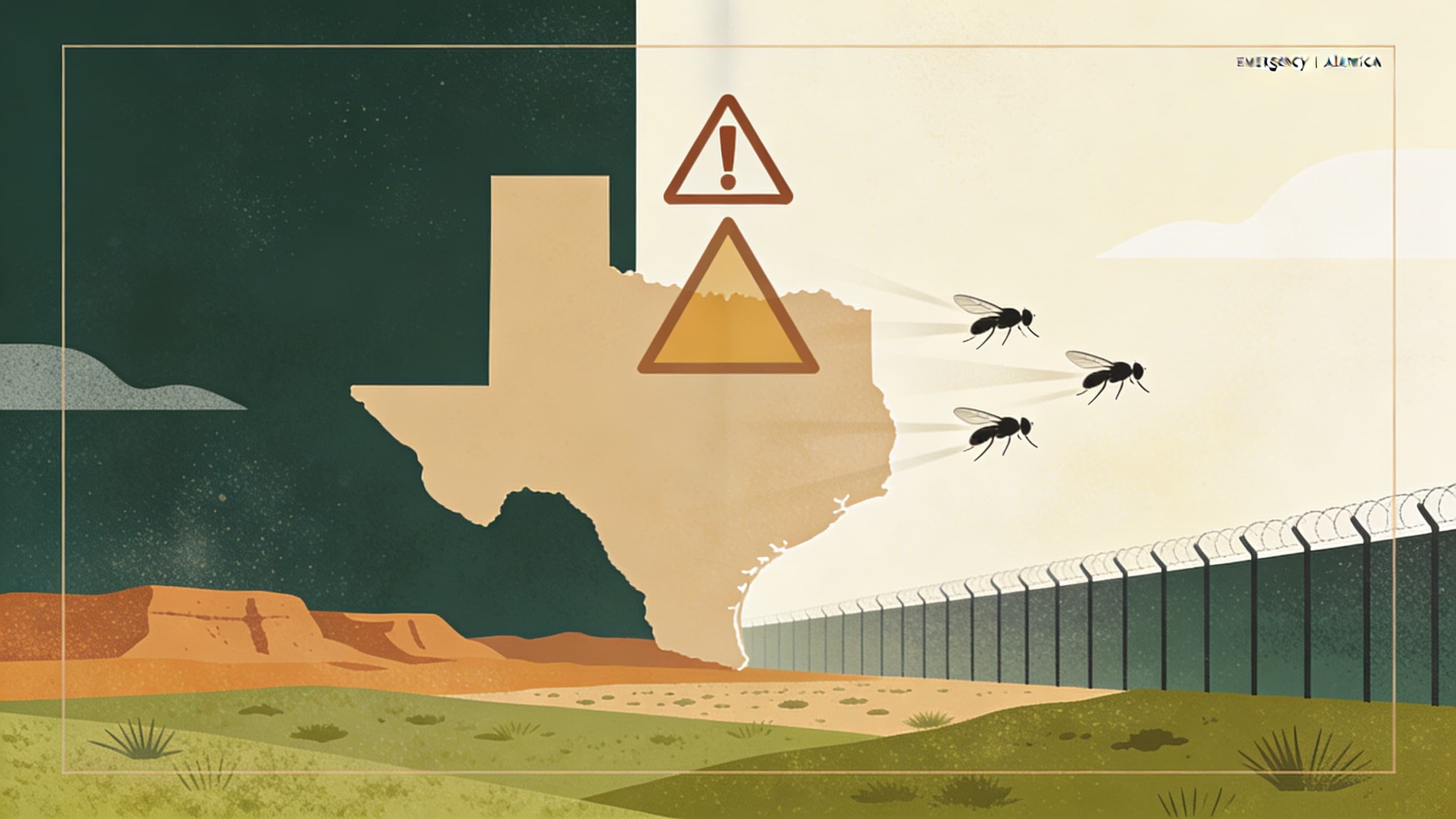
Screwworm Detected Just 60 Miles from Texas Border as Commissioner Declares Emergency
Texas Agriculture Commissioner Sid Miller has escalated the state's response to the New World screwworm threat after the USDA confirmed a new detection in Nuevo León, Mexico—just 60 miles from the Texas border. The finding, announced April 20, marks the closest the parasitic fly has come to U.S. livestock since eradication efforts began decades ago.
Track every confirmed case on our live Texas screwworm tracker and county map.
"This is not a drill," Miller said in an emergency statement. "We are facing a direct threat to Texas agriculture, and every livestock producer needs to be on high alert."
The New Threat
The Nuevo León detection represents a significant northward advance for the pest, which was previously confirmed approximately 90 miles from the border in early April. The 30-mile progression in just two weeks has alarmed agricultural officials who had hoped sterile fly releases and monitoring efforts would contain the spread.
New World screwworm (Cochliomyia hominivorax) is a parasitic fly whose larvae feed on living tissue of warm-blooded animals. Before its eradication from the United States in 1966, the pest caused hundreds of millions of dollars in annual losses to the livestock industry. A single infestation can kill untreated animals within days.
Emergency Measures Activated
Miller's office has activated emergency response protocols, including:
- Enhanced surveillance at livestock markets and border crossings
- Expanded public awareness campaigns for ranchers and veterinarians
- Coordination with federal agencies on sterile fly release strategies
- Preparation for potential quarantine measures if the pest crosses the border
The Texas Animal Health Commission is working with USDA APHIS to establish additional inspection points and increase the frequency of livestock checks in South Texas counties.
What Producers Should Watch For
Ranchers are urged to inspect their animals daily for signs of screwworm infestation, including:
- Visible larvae in wounds, often described as rice-like maggots
- Excessive licking or rubbing of specific areas
- Foul-smelling wounds that fail to heal normally
- Animals separating from the herd or showing signs of lethargy
Any suspected case must be reported immediately to the Texas Animal Health Commission or USDA APHIS. Early detection remains the only effective defense against widespread infestation.
The Bigger Picture
The advancing threat comes as Texas prepares for the completion of a new $750 million sterile fly production facility at Moore Air Base in Edinburg. The facility, which broke ground in mid-April, will be the only U.S.-based production site for sterile flies used in eradication efforts. However, it is not expected to be fully operational until late 2027.
Until then, Texas producers remain the front line of defense against a pest that could devastate the state's $15 billion livestock industry.
For emergency reporting of suspected screwworm cases, contact the Texas Animal Health Commission immediately.
Sources
Texas Bug Slayers Editorial Team
Editorial Board
The Texas Bug Slayers editorial team brings together licensed pest control professionals, entomologists, and writers dedicated to helping Texans protect their homes and families from pests.
Related Articles

USDA APHIS Releases New World Screwworm Response Playbook as Parasite Nears Texas Border
USDA updates emergency response protocols as New World screwworm detected just 90 miles from Texas. New playbook outlines coordinated federal-state response strategies.
Screwworm Rules Follow the Herd North as Canada Turns Back Texas Cattle
Canada now lists Texas and New Mexico as screwworm-affected states, blocking live cattle imports and forcing returning herds into a 21-day detour.

Texas Orders New Screwworm Protocols for Animals Arriving From Neighboring States
A TAHC executive director order signed Oct. 1 sets entry requirements for all livestock, exotic livestock and fowl coming into Texas from any state with an active New World screwworm zone.