
Florida Restricts Livestock Imports From Six Texas Counties Over Screwworm Threat
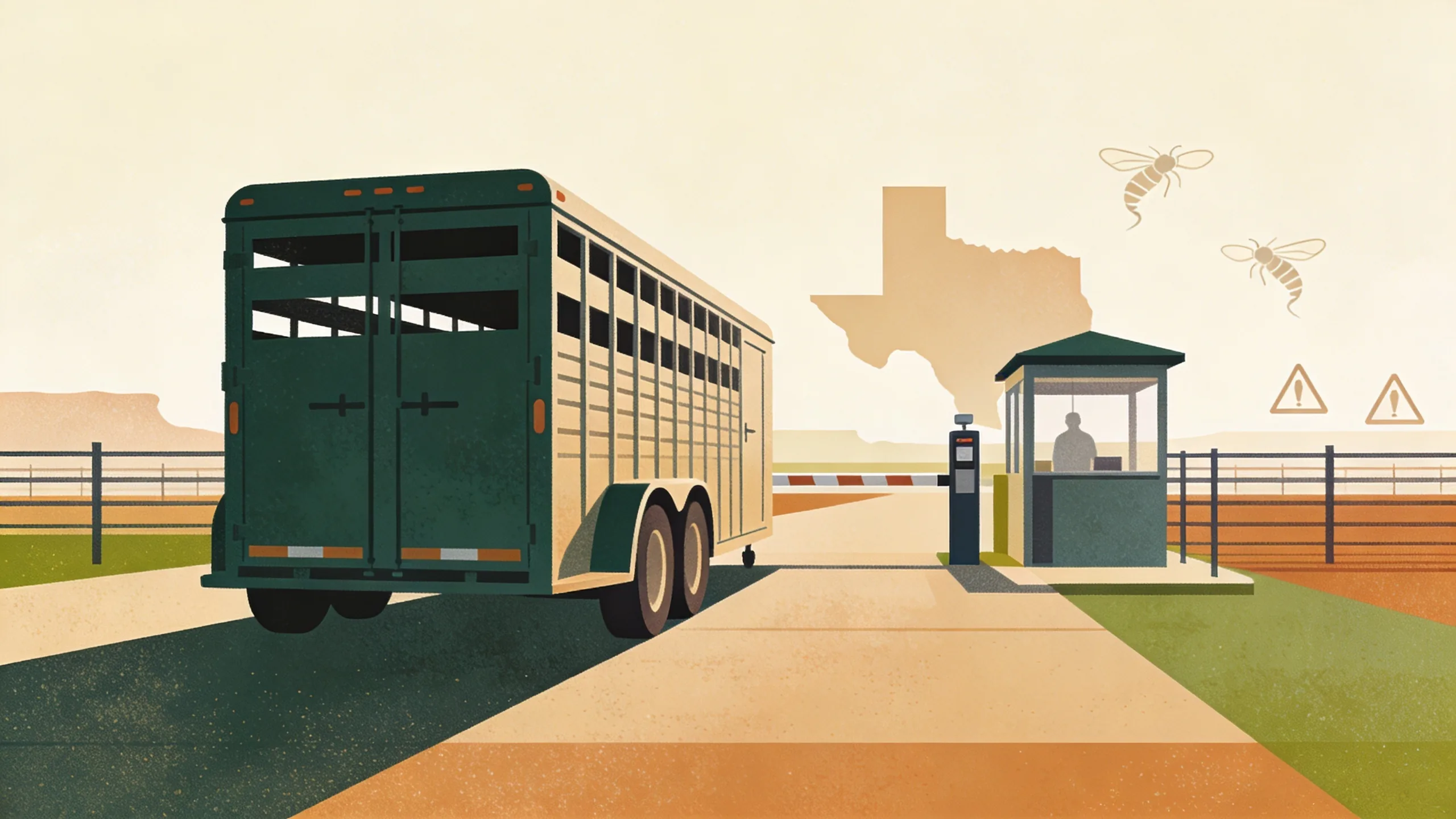
Florida has become the first state to impose trade restrictions on Texas livestock as the New World screwworm threat intensifies along the southern border. An emergency rule issued by Florida Agriculture Commissioner Wilton Simpson now requires enhanced veterinary screening for all animals imported from six South Texas counties deemed "high-risk" for the flesh-eating parasite.
Our live Texas screwworm case tracker keeps the running count and county map as USDA updates land.
The affected counties—Zapata, Jim Hogg, Starr, Hidalgo, Webb, and Brooks—sit along the Rio Grande Valley corridor where state and federal officials are racing to prevent the parasite's entry into the United States. Though no screwworm cases have been detected in Texas or anywhere else in the U.S., a confirmed case in Nuevo León, Mexico, just 60 miles south of the border, triggered the emergency measures.
"We know how costly and dangerous this pest can be to our agricultural industry if it takes hold, and we will use every tool at our disposal to protect our state," Simpson said in announcing the rule on Friday.
What the Emergency Rule Requires
Under Florida's emergency order, any livestock imported from the six designated counties must undergo inspection by licensed veterinarians before entering the state. Animals admitted with open wounds must be under effective treatment, a direct response to how screwworm flies operate—the insects lay eggs in wounds and body openings, where hatched maggots burrow into living tissue.
The New World screwworm (Cochliomyia hominivorax) poses a grave threat to cattle, horses, sheep, goats, pets, and occasionally humans. The parasite was eradicated from the United States in the 1960s through a pioneering sterile insect technique program, but its gradual march northward from Central America has put border states on high alert.
Texas Agriculture Commissioner Sid Miller acknowledged Florida's precautionary stance as understandable given the stakes. "With the growing threat of New World screwworm, and as ground zero of America's last outbreak a decade ago, they're acting to protect their state," Miller said. "This isn't a distant risk."
Interstate Trade Implications
While the emergency rule technically applies to any high-risk county nationwide, Florida officials confirmed it currently targets only the six Texas counties. The restriction creates immediate compliance obligations for Texas ranchers and livestock dealers shipping animals to Florida, adding veterinary inspection costs and potential delays to interstate commerce.
All ports of entry along the U.S.-Mexico border remain closed to livestock trade as federal authorities work to contain the threat. The USDA is currently constructing a $750 million sterile fly production facility at Moore Air Base in Edinburg, Texas, designed to release millions of sterilized male screwworm flies to prevent reproduction should the parasite breach the border. That facility is expected to become operational in November 2027.
Why the Aggressive Response
Florida's urgency stems from hard-won experience. The state endured its own screwworm outbreak in the mid-2010s, requiring a multi-million dollar eradication campaign and serving as a stark reminder of how quickly the parasite can establish itself in favorable conditions. The state's subtropical climate and robust cattle industry make it particularly vulnerable.
For Texas producers, the Florida restrictions represent the first concrete economic impact of the screwworm threat beyond heightened surveillance and prevention costs. Ranchers in the affected counties must now factor additional certification and inspection requirements into any sales to Florida buyers, potentially complicating an already stressed agricultural supply chain.
Federal and state agencies continue coordinating border surveillance, public outreach, and emergency response protocols as the situation develops. Texas officials emphasize that prevention remains the priority—once established, screwworm populations prove extraordinarily difficult and expensive to eradicate.
Sources
Texas Bug Slayers Editorial Team
Editorial Board
The Texas Bug Slayers editorial team brings together licensed pest control professionals, entomologists, and writers dedicated to helping Texans protect their homes and families from pests.
Related Articles

USDA Unveils Quarterly Review Roadmap for Screwworm Response Playbook
USDA APHIS shares comprehensive roadmap for quarterly reviews of New World Screwworm Response Playbook as parasite cases reach 45 infestations across Texas and New Mexico.
Screwworm Count Reaches 44 as Brewster County Adds Two More Cases and the Infested Zone Extends Into Presidio
USDA's dashboard now lists 44 confirmed New World screwworm cases — 43 in Texas — after two cattle cases in Brewster County and a sheep in Pecos County closed out July. TAHC has extended the infested zone into Presidio County, bringing movement restrictions to parts of 23 counties.
U.S. to Resume Mexican Cattle Imports After Screwworm Shutdown, Texas Ports Remain Closed
USDA announces phased reopening of southern cattle ports starting August 2026, allowing limited imports from Mexico while Texas ports remain closed due to ongoing screwworm outbreak.