

USDA APHIS Releases New World Screwworm Response Playbook as Parasite Nears Texas Border
The USDA's Animal and Plant Health Inspection Service (APHIS) has released an updated New World Screwworm Response Playbook this week, a move that comes as the parasitic fly has been detected just 90 miles from the Texas-Mexico border in Nuevo León, Mexico.
For the running case count and the affected-county map, follow our Texas screwworm tracker.
The timing is not coincidental. With each northward detection, the threat to American livestock—and potentially human health—grows more immediate. The new playbook represents months of coordination between federal agencies, state animal health officials, livestock industry groups, and veterinary organizations to prepare for what agriculture officials increasingly view as an inevitable encounter.
What's Inside the Updated Playbook
The 2026 revision outlines science-based strategies for federal, state, tribal, and local responders. According to APHIS, the document addresses six critical areas: coordinating response operations, reducing spread and preventing establishment in new areas, managing the pest in infested animals, implementing fly surveillance and control measures, maintaining business continuity, and supporting efficient information flow.
Drafting began in October 2025, with APHIS incorporating feedback from a broad coalition of stakeholders. The updates include revised terminology, clarified agency roles and responsibilities, updated animal movement requirements, and expanded guidance on wildlife management. Four supplemental documents accompany the main playbook, providing additional detail on specific response scenarios.
"USDA continues to execute Secretary Rollins' five-pronged plan to keep NWS out of the United States," said Under Secretary for Marketing and Regulatory Programs Dudley Hoskins in announcing the release. "While we are aggressively safeguarding American agriculture and working with Mexico to prevent further northward spread, we must also ensure that our domestic response plans are ready for immediate activation."
The 90-Mile Reality
The playbook's release follows confirmation from Texas Agriculture Commissioner Sid Miller that New World screwworm flies have been found in Nuevo León, approximately 90 miles south of the border. In a statement issued this week, Miller called the parasite a "direct and imminent threat to Texas."
The New World screwworm (Cochliomyia hominivorax) is not merely a pest—it is an obligate parasite that feeds on living tissue. Adult flies lay eggs in wounds, body openings, and even the navels of newborn animals. The resulting larvae burrow into flesh, creating painful, foul-smelling wounds that can kill untreated animals within days. While primarily a livestock threat, the parasite can also infect humans, particularly those in rural areas with animal exposure.
The 90-mile distance represents the closest confirmed detection to Texas since the parasite began its northward march through Central America and Mexico. For context, the screwworm was eradicated from the United States in 1966 through a pioneering sterile insect technique program, and the current outbreak represents the first serious threat to that achievement in decades.
What Texas Ranchers Should Know
Early detection remains the most critical factor in containing any potential outbreak. The CDC and USDA list several warning signs that livestock producers should monitor: visible maggots in wounds or body openings, wounds that worsen rapidly, foul odors from sores, and animals showing signs of distress or agitation near affected areas.
Commissioner Miller has urged Texas ranchers to maintain heightened vigilance, particularly with spring calving and foaling seasons underway. Newborn animals, with their soft tissue and umbilical wounds, are especially vulnerable.
The USDA maintains that the sterile fly release program along the Panama-Colombia border remains the primary defense against northward spread. However, the new playbook acknowledges that supplementary measures—including potential domestic sterile fly production facilities and enhanced border surveillance—may be necessary if the parasite continues advancing.
A History of Success, A Future of Uncertainty
The original screwworm eradication program stands as one of the most successful pest control efforts in history. Using radiation to sterilize male flies, scientists created a biological bottleneck that collapsed wild populations. The technique has since been applied to other insect pests worldwide.
Yet maintaining that success requires constant vigilance. The current outbreak, which began in Central America several years ago, has proven more persistent than previous incursions. Mexican authorities, working with USDA and international partners, have established quarantine zones and treatment facilities, but complete containment has remained elusive.
For Texas, the nation's leading cattle state with over 13 million head, the economic stakes are enormous. A full-blown screwworm outbreak could trigger movement restrictions, quarantine zones, and substantial treatment costs. The new playbook represents an attempt to minimize those impacts through preparation rather than reaction.
Ranchers seeking additional information can access the complete response playbook through the USDA APHIS website or contact the Texas Department of Agriculture for state-specific guidance.
Sources
Texas Bug Slayers Editorial Team
Editorial Board
The Texas Bug Slayers editorial team brings together licensed pest control professionals, entomologists, and writers dedicated to helping Texans protect their homes and families from pests.
Related Articles
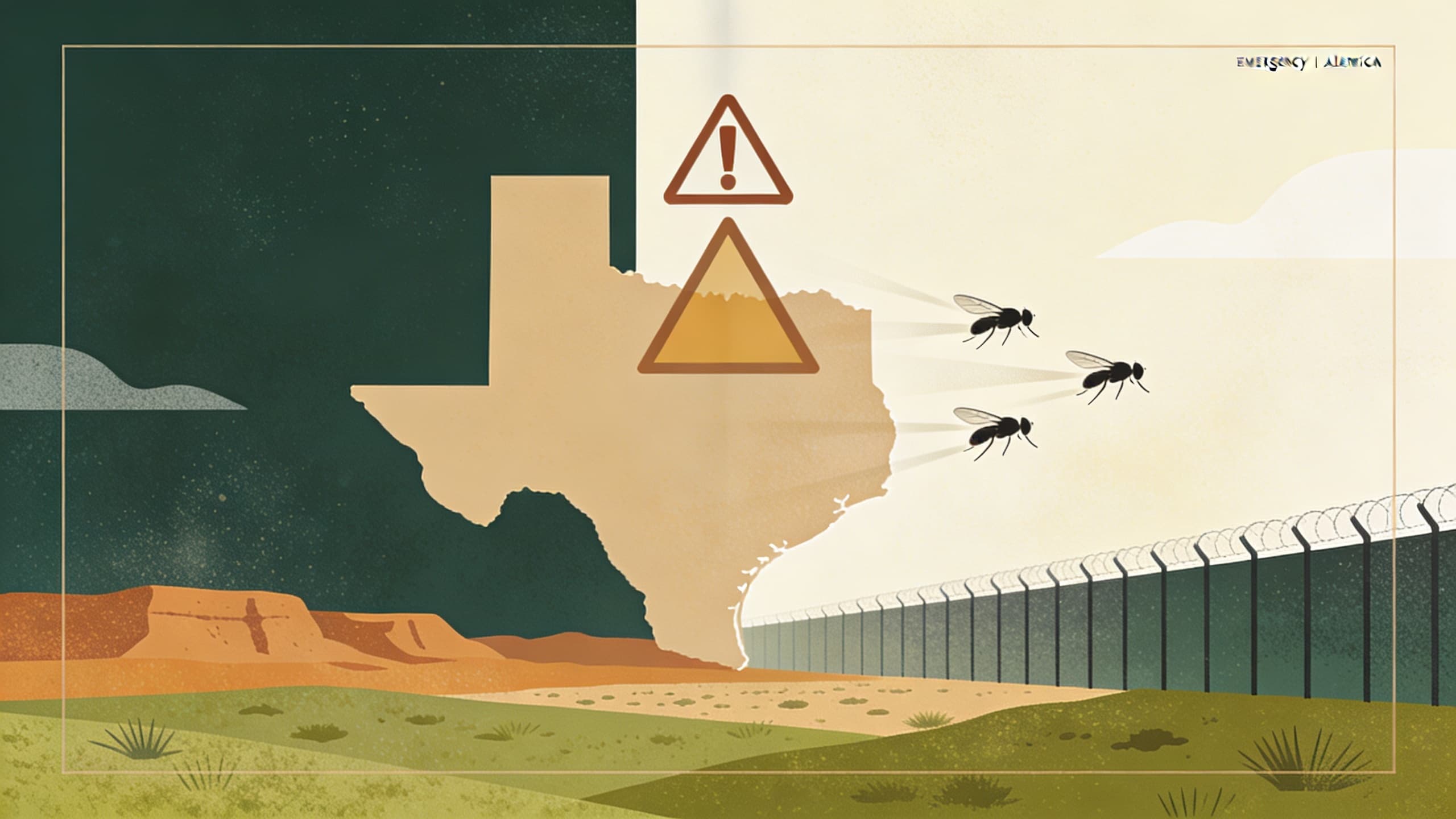
Screwworm Detected Just 60 Miles from Texas Border as Commissioner Declares Emergency
Texas Agriculture Commissioner Sid Miller sounds alarm after USDA confirms New World screwworm in Nuevo León, Mexico, only 60 miles from the Texas border.

USDA Unveils Quarterly Review Roadmap for Screwworm Response Playbook
USDA APHIS shares comprehensive roadmap for quarterly reviews of New World Screwworm Response Playbook as parasite cases reach 45 infestations across Texas and New Mexico.
FDA Grants Emergency Use of Wound Spray as Texas Screwworm Fight Gains a Second Drug
FDA issues Emergency Use Authorization for Elanco's CLiK Extra dicyclanil wound spray to prevent New World screwworm in cattle, horses, sheep, goats, swine and wildlife.