
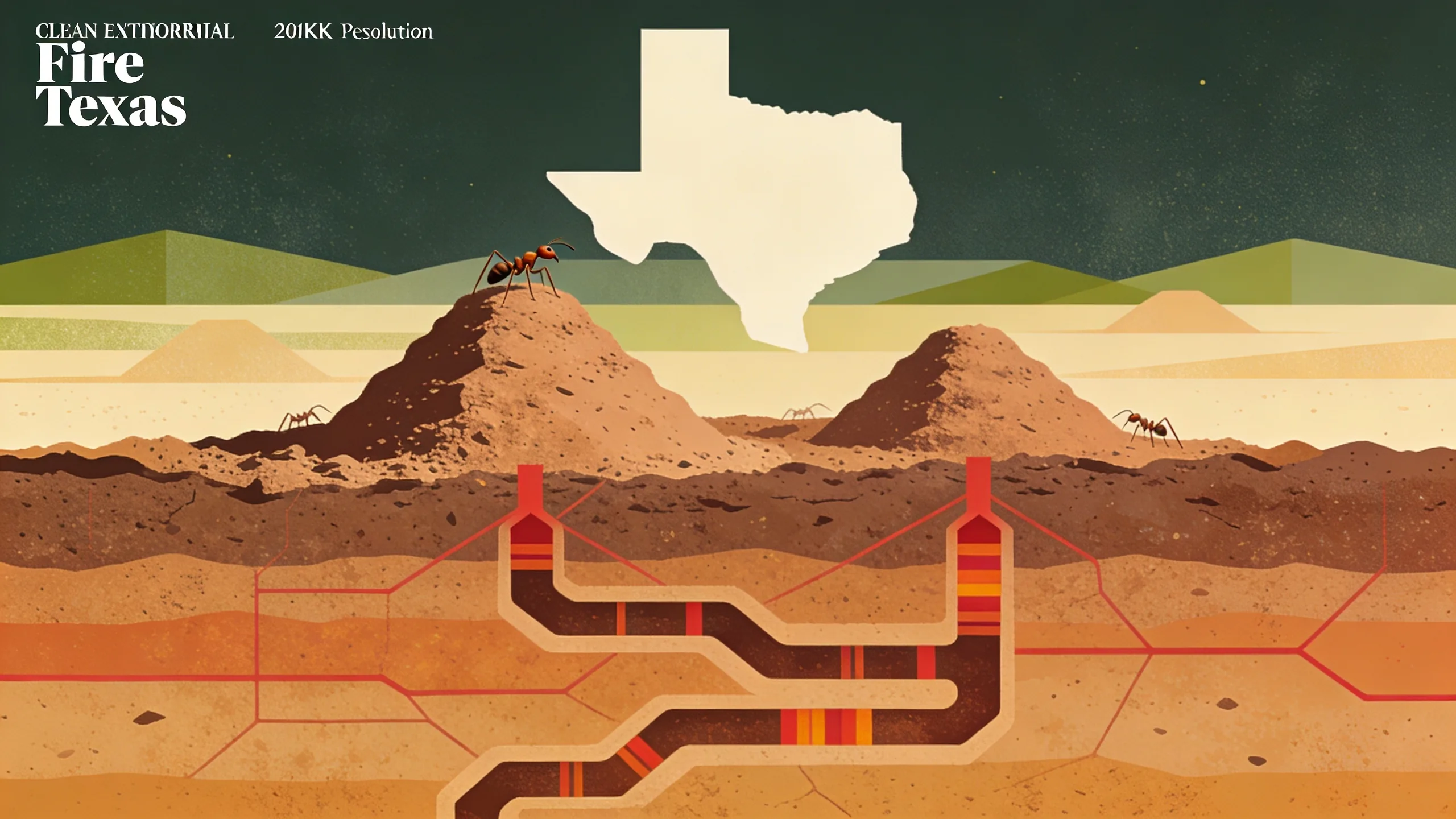
Texas A&M Expert Reveals Most Effective Fire Ant Control Strategy for 2026
As temperatures climb across Texas, fire ant mounds are popping up in yards, pastures, and agricultural fields with renewed vigor. But before you reach for the nearest over-the-counter spray, a Texas A&M expert says there's a smarter, more effective approach that targets the entire colony—not just the visible mounds.
Robert Puckett, Ph.D., a Texas A&M AgriLife Extension Service entomologist and associate professor in the Department of Entomology, has spent years helping landowners battle red imported fire ants across Texas and internationally. His recommended annual treatment method costs between $25 and $35 per acre and relies on a simple principle: let the ants do the work for you.
Why Baits Beat Broadcast Sprays
The most effective fire ant control method, according to Puckett, is granular fire ant bait. Unlike contact insecticides that kill workers on the surface, baits exploit the ants' own foraging behavior to deliver poison directly to the queen.
"Studies have shown time after time that fire ants have an extremely efficient foraging behavior and dominate those baits," Puckett explained. Worker ants collect the bait granules and carry them back to the colony, where the slow-acting poison is shared through trophallaxis—the social feeding behavior that makes fire ants so successful as invaders.
This approach eliminates the entire colony, including the queen, rather than just the workers visible at the surface. New colonies start when winged reproductive ants mate and establish fresh nests, which means treating only visible mounds leaves you playing whack-a-mole all season.
Setting Realistic Expectations
Store-bought baits vary significantly in both price and speed of action. Generally, Puckett notes, you get what you pay for: lower-cost options may take six to eight weeks to fully eliminate a colony, while premium formulations work faster.
The key is patience. Baits are not contact killers, and expecting immediate results leads many homeowners to abandon the strategy prematurely. For large properties or commercial agricultural operations, professional-grade baits applied with calibrated spreaders often provide the most cost-effective coverage.
Timing Matters in Texas
Spring is prime time for fire ant activity in Texas, but Puckett emphasizes that the best control programs operate on a calendar schedule rather than reactive spot treatments. A single well-timed broadcast application in spring, followed by spot treatments of new mounds that appear later in the season, typically outperforms repeated whole-yard spraying.
For homeowners, the math is compelling: at $25 to $35 per acre for effective bait treatments, protecting a typical suburban lot runs well under $100 annually. Compare that to the cumulative cost of multiple ineffective spray applications, plus the medical bills from stings that could have been prevented.
Fire ants remain one of Texas's most persistent invasive species, but with the right strategy, they're a manageable one. The science is clear—bait beats spray, patience beats panic, and understanding ant behavior beats blanket pesticide application every time.
Sources
Texas Bug Slayers Editorial Team
Editorial Board
The Texas Bug Slayers editorial team brings together licensed pest control professionals, entomologists, and writers dedicated to helping Texans protect their homes and families from pests.
Related Articles

Praying Mantids in Texas Gardens: Friend or Foe?
Texas A&M expert explains whether praying mantids help or harm your garden — and debunks common myths about these fascinating predators.
Texas Summer Lawn Pests: How to Spot and Stop Chinch Bugs, Grubs, and Armyworms
Texas A&M AgriLife Extension experts share identification tips and treatment strategies for the most destructive warm-season turf pests threatening lawns across the state.
Central Texas Braces for Spring Fire Ant and Termite Surge
Texas A&M entomologist warns homeowners about increased fire ant and termite activity as spring temperatures trigger peak pest season across Central Texas.