
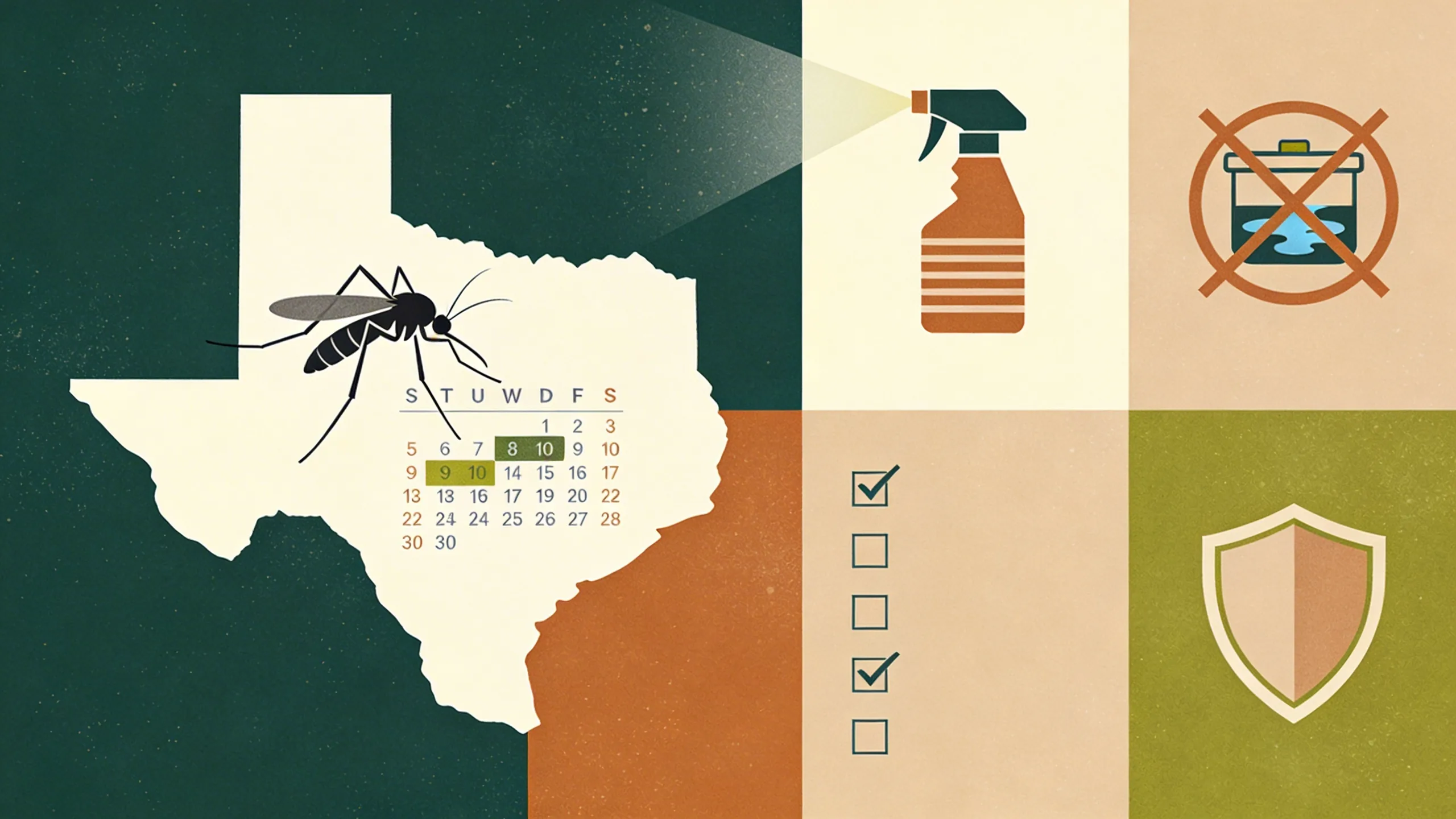
Early Mosquito Activity Signals Active 2026 Season in Texas
Harris County has become the first Texas county to report detecting West Nile virus in mosquitoes for 2026, according to Texas Department of State Health Services (DSHS) surveillance data. The early detection signals what could be an active mosquito season across the state as temperatures rise and rainfall patterns create ideal breeding conditions.
The finding comes as public health officials urge Texas residents to begin implementing mosquito prevention measures now, before population levels peak during summer months.
Understanding the Timeline
Mosquito activity in Texas follows predictable seasonal patterns, with populations beginning to build in early spring as temperatures consistently exceed 50°F—the threshold for mosquito development. Harris County's coastal location and subtropical climate often position it among the earliest Texas counties to detect arbovirus activity each year.
West Nile virus circulates in a transmission cycle between mosquitoes and birds. When infected mosquitoes feed on humans or horses, they can transmit the virus, which can cause serious neurological disease in some cases.
The virus typically appears in mosquito surveillance weeks to months before human cases emerge, giving public health agencies critical early warning time to enhance control efforts and public education.
2026 Season Outlook
Several factors suggest 2026 could see elevated mosquito-borne disease risk across Texas:
Mild winter: Warmer-than-average winter temperatures may have allowed higher mosquito overwintering survival rates.
Early spring rainfall: Intermittent spring rains create the standing water puddles and containers where mosquitoes breed.
Co-circulation of viruses: As recent CDC research highlighted, St. Louis encephalitis virus (SLEV) co-circulates with West Nile in some Texas regions, particularly in the west, increasing overall arbovirus disease risk.
Prevention Starts at Home
Texas homeowners can take immediate action to reduce mosquito populations on their properties:
Eliminate Standing Water
Mosquitoes can complete their lifecycle in as little as seven days when water is present. Walk your property weekly to identify and eliminate water sources:
- Empty flower pot saucers, buckets, toys, and containers
- Clean rain gutters to prevent standing water accumulation
- Change birdbath water twice weekly
- Treat ornamental ponds with mosquito dunks (Bti)
- Fill tree holes and low spots where water pools
- Ensure pool covers don't collect rainwater
Protect Yourself Outdoors
When mosquitoes are active—primarily dawn and dusk—take personal protection measures:
- Apply EPA-registered insect repellent (DEET, picaridin, IR3535, or oil of lemon eucalyptus)
- Wear long sleeves and pants when practical
- Use fans on patios and outdoor seating areas
- Avoid outdoor activity during peak mosquito hours if possible
Maintain Screens
Intact window and door screens prevent mosquitoes from entering homes. Inspect screens for tears and gaps, paying special attention to areas where screen meets frame. Even small openings can admit mosquitoes.
When to Seek Professional Help
Homeowners facing persistent mosquito issues despite source reduction efforts may benefit from professional pest control services. Licensed Texas pest control operators can:
- Conduct property assessments to identify mosquito breeding sites
- Apply larvicides to water sources that cannot be eliminated
- Treat vegetation and resting areas with appropriate adulticides
- Install or repair mosquito misting systems
- Provide ongoing monitoring and treatment programs
Recognizing West Nile Symptoms
Most people infected with West Nile virus experience no symptoms. However, about one in five develops fever, headache, body aches, joint pain, vomiting, diarrhea, or rash. Severe disease—affecting the nervous system—occurs in approximately one in 150 infected individuals.
Seek immediate medical attention for:
- High fever with severe headache
- Stiff neck
- Confusion or disorientation
- Tremors or muscle weakness
- Vision problems
- Numbness or paralysis
Inform healthcare providers about recent mosquito exposure and residential location, as this helps guide diagnostic testing.
Community Mosquito Control
Many Texas municipalities operate mosquito control programs that include surveillance, larviciding, and adulticiding. Residents can support these efforts by:
- Reporting areas of high mosquito activity to local health departments
- Participating in community cleanup events that remove mosquito habitat
- Supporting public health funding for mosquito surveillance and control
- Reporting dead birds, which can indicate West Nile virus circulation in local bird populations
What's Ahead
As Texas progresses through spring into summer, mosquito populations will likely increase across most of the state. Peak season typically runs from June through September, with some southern counties experiencing year-round activity.
The Texas Department of State Health Services maintains updated surveillance data on mosquito-borne diseases through its website. County-level maps showing West Nile virus detection in mosquitoes and human cases provide residents with local situational awareness.
Take Action Now
Early season prevention—before mosquito populations peak—provides the best protection against mosquito-borne disease. Texas homeowners who implement source reduction and personal protection measures in April and May position themselves for a safer, more comfortable outdoor season throughout the summer months.
For detailed guidance on mosquito prevention specific to your Texas region, consult your county extension office or local health department. Many provide free educational materials and can offer site-specific recommendations based on local mosquito species and disease risk.
Sources
Texas Bug Slayers Editorial Team
Editorial Board
The Texas Bug Slayers editorial team brings together licensed pest control professionals, entomologists, and writers dedicated to helping Texans protect their homes and families from pests.
Related Articles
Mosquito Spraying in the Houston Area: How to Request County Service
How to request mosquito control — inspections, treatment, and spraying — from county health departments in Harris, Brazoria, Fort Bend, Galveston and surrounding counties, with contacts for each.

Dallas County Records Its First West Nile Death of 2026 With the Season Still Running
A man in his 60s is the county's first West Nile fatality this year. State data shows 1,376 positive mosquito pools and 57 human cases across Texas.

October Mosquito Pools Are Still Testing Positive, and Cameron County Wants Residents to Call It In
Cameron County launched a community vector-reporting line and Combes began larviciding ditches the same week new West Nile positives surfaced in Nueces, Bell and Rockwall counties.