
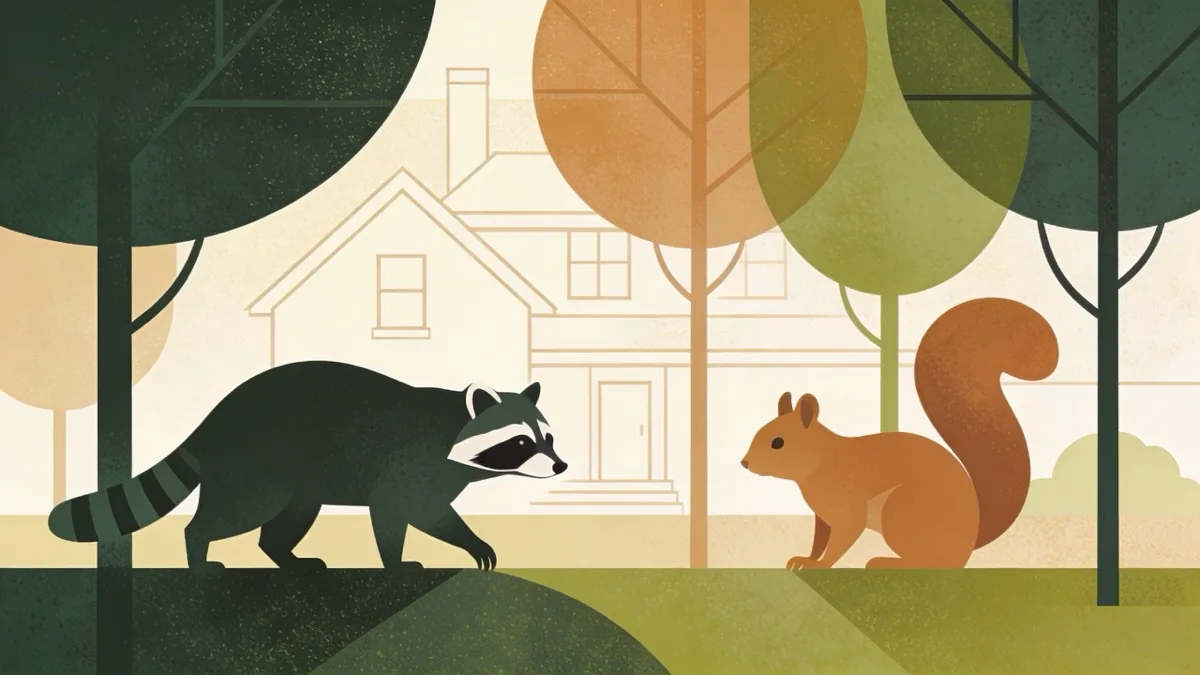
Wildlife Intrusions Spike Across Texas as Urban Expansion Collides with Nature
The line between Texas wilderness and suburban neighborhoods is blurring—and wildlife is crossing it in record numbers.
Wildlife X Team, a Texas-based wildlife management company, reported this week a significant surge in calls from homeowners and businesses dealing with uninvited animal guests. Raccoons nesting in attics, squirrels chewing through crawlspaces, and rodents establishing colonies inside walls have become increasingly common scenarios from Dallas-Fort Worth to Houston suburbs.
The driving forces behind this uptick aren't mysterious. Rapid urban expansion across the Lone Star State continues to fragment natural habitats, pushing animals into closer contact with human developments. Meanwhile, erratic seasonal weather patterns have disrupted traditional wildlife behavior, sending animals scrambling for stable shelter earlier and more aggressively than in previous years.
"Wildlife activity is on the rise, and many people don't realize there's a problem until it becomes costly or dangerous," said Don Hudson, CEO of Wildlife X Team. The company's trademark question—"What's In Your Attic?"—reflects a reality that catches many property owners off guard. By the time scratching sounds wake homeowners at 3 AM, the situation often requires professional intervention rather than simple prevention.
The financial stakes are substantial. Unchecked wildlife intrusions can lead to thousands in structural damage, electrical hazards from chewed wiring, and contamination from animal waste. Beyond the economic impact, there's a genuine safety concern: cornered raccoons or protective mother squirrels can become aggressive when they perceive threats to their young.
What distinguishes modern wildlife management from old-school extermination is an emphasis on humane, environmentally conscious approaches. Wildlife X Team's methodology focuses on removal paired with exclusion—sealing entry points and eliminating attractants to prevent recurrence. Their team includes Dr. Ray Thompson, an entomologist and zoologist whose academic and extension background informs evidence-based control strategies.
For Texas homeowners, the message is proactive rather than reactive. Wildlife experts recommend inspecting properties for potential entry points—gaps in soffits, uncapped chimneys, loose vent covers—before animals discover them. Removing food attractants, securing garbage containers, and trimming tree branches that provide roof access can dramatically reduce intrusion risk.
The expansion isn't limited to established suburbs. New developments across Central and North Texas are breaking ground in areas that were recently undisturbed habitat, virtually guaranteeing human-wildlife conflict as animals adapt to transformed landscapes. The pattern repeats across the state: as concrete spreads, wildlife either retreats or adapts—and many species are choosing adaptation.
Industry observers note that this trend extends beyond Texas borders. Similar reports of increased wildlife activity are emerging from Florida, Arizona, and other states experiencing rapid growth. The structural pest control industry, valued at approximately $6.5 billion annually nationwide, increasingly treats wildlife management as a specialized discipline requiring distinct expertise from traditional insect control.
For now, Texas property owners face a simple choice: address potential vulnerabilities now, or deal with the consequences when a family of raccoons moves in uninvited. As Hudson puts it, early detection remains the key—because once wildlife establishes residency, removal becomes significantly more complex and expensive.
The wild isn't staying where it used to. In Texas's booming metropolitan areas, the question isn't whether wildlife will test your home's defenses—it's whether you'll notice in time to keep them out.
Sources
Texas Bug Slayers Editorial Team
Editorial Board
The Texas Bug Slayers editorial team brings together licensed pest control professionals, entomologists, and writers dedicated to helping Texans protect their homes and families from pests.
Related Articles

Infected Tick Found Inside Austin Apartment Points to Rare Relapsing Fever Case
Baylor College of Medicine and Texas DSHS researchers traced a likely case of soft tick-borne relapsing fever to an infected tick discovered inside an Austin-area apartment.
Don't Let Bed Bugs Ruin Your Summer Vacation: Texas Expert Shares Travel Tips
Texas A&M AgriLife Extension entomologist Dr. Robert Puckett offers practical advice for spotting and avoiding bed bugs during hotel stays.
Bed Bug Awareness Week: How Texas Travelers Can Avoid Hitchhiking Pests This Summer
As Memorial Day kicks off travel season, pest control experts warn Texans about peak bed bug activity and share proven strategies to prevent bringing these hitchhiking pests home.