
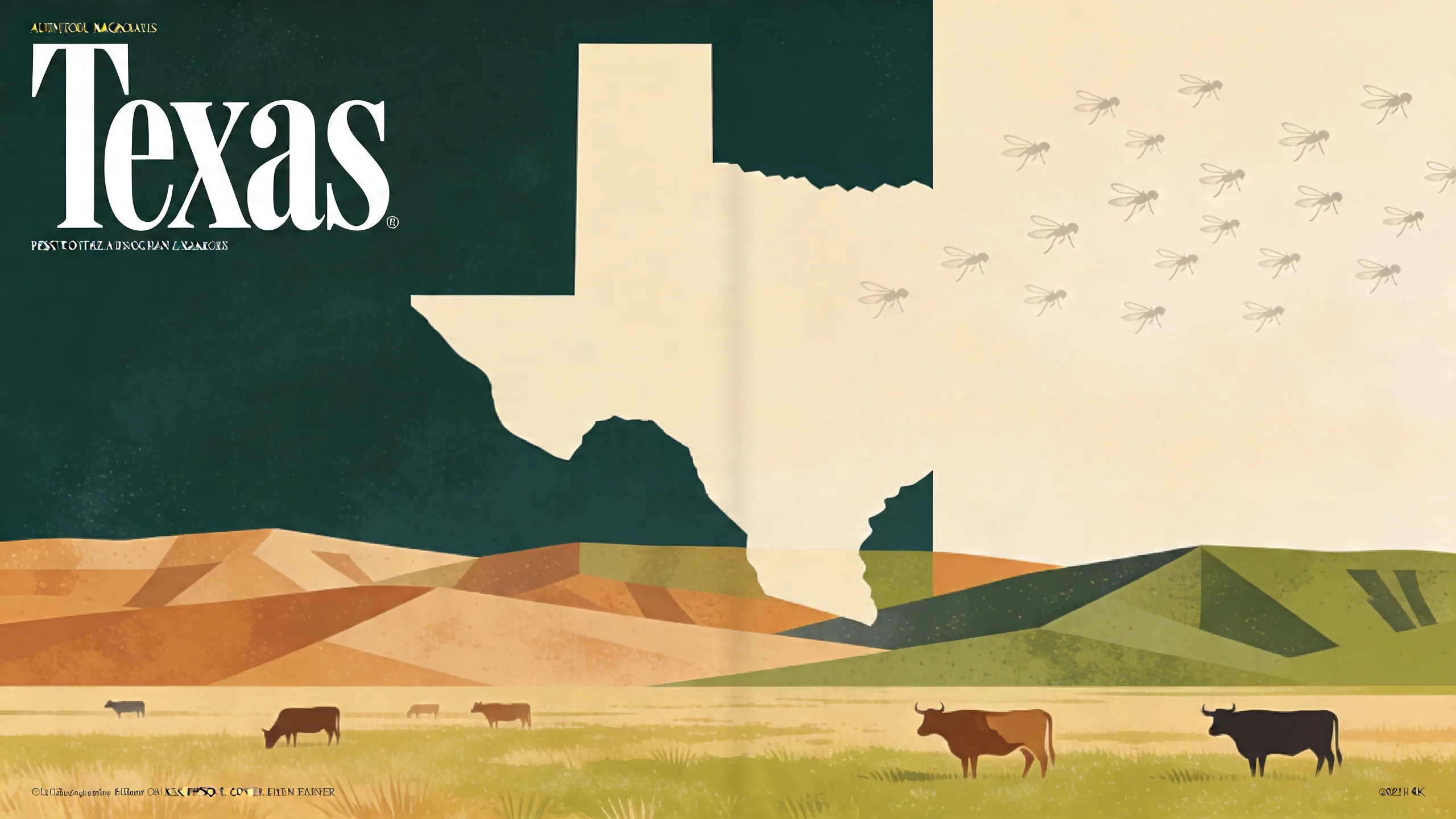
East Texas Ranchers Confront Screwworm Threat as Parasite Nears Border
OVERTON — The auditorium at the Texas A&M AgriLife Extension office filled with ranchers earlier this month, their attention fixed on images projected at the front: a fly and its larvae magnified to monstrous proportions. The New World screwworm, despite its actual size, represents an outsized threat to Texas livestock operations.
Our live Texas screwworm case tracker keeps the running count and county map as USDA updates land.
Dr. Sonja Swiger, an entomologist with Texas A&M AgriLife Extension, addressed the gathering with a sobering reality. "That's a huge concern we also have here in the U.S. because we haven't seen it in years," she explained. "We have a lot of people who don't know anything about this fly at all."
The parasite, eradicated from the United States in the 1960s, has been marching northward from South America since 2023. By April 10, Agriculture Commissioner Sid Miller confirmed detections in Nuevo Leon, Mexico — approximately 90 miles from the Texas border. The implications for ranchers, particularly in East Texas where cattle operations form the economic backbone of rural communities, are significant.
Unlike common blow flies that feed on carrion, the New World screwworm targets living flesh. Female flies deposit eggs in wounds, body openings, or fresh surgical sites like castration or dehorning wounds. The resulting larvae burrow deeper into tissue in a characteristic screw-like pattern, consuming living flesh and eventually killing the host if untreated.
Cattle represent the primary targets, though deer and other warm-blooded animals face equal vulnerability. Texas A&M researchers emphasize that the screwworm poses no automatic animal-to-animal transmission — infection requires fresh fly contact with open wounds.
Recognition skills may determine whether ranchers catch infestations early enough for treatment. By day three of an infestation, wounds typically produce bloody discharge accompanied by a distinctive foul odor. The larvae grow rapidly, and delays beyond this window often prove fatal or require expensive veterinary intervention.
Prevention strategies center on wound management. Swiger recommends treating and sealing any cuts, scrapes, or surgical sites immediately. Injectable ivermectin administered within 24 hours of birth, castration, dehorning, or wound appearance provides effective protection. F10 Germicidal Wound Spray with Insecticide offers a non-prescription alternative for topical treatment.
The USDA has mobilized its sterile fly program, releasing radiation-sterilized male screwworms in South Texas. Because female screwworms mate only once, overwhelming areas with sterile males effectively collapses reproduction. New facilities, including a $750 million sterile fly production center under construction at Moore Air Base near Edinburg, will expand this capacity.
Ranchers who suspect screwworm infestations must contact the Texas Animal Health Commission at (800) 550-8242. Reports trigger sterile fly releases in affected areas and help authorities track spread patterns.
For Tom Goodwin, a Gilmer rancher who remembers the screwworm era of the 1950s, the educational session offered both concern and comfort. "You really didn't have anything that you could use to control it," he recalled of decades past. "I didn't know what a sterile fly was back in the '50s."
The difference between then and now, Texas A&M specialists stress, lies in preparation and knowledge. Ranchers who inspect livestock every other day, treat wounds promptly, and understand what to look for can manage the threat effectively. Those who wait risk losing animals — and potentially facing herd reductions that would ripple through Texas beef supplies.
As Todd Benson, a rancher recently relocated from West Texas, summarized after the Overton session: "You turn a blind eye for a week, and you're in trouble."
The screwworm's potential return represents more than an agricultural inconvenience. With memories of past outbreaks still vivid among older ranchers and two generations of producers lacking any firsthand experience with the parasite, Texas A&M AgriLife Extension's education efforts may prove as critical as any sterile fly release in preventing economic catastrophe.
Sources
Texas Bug Slayers Editorial Team
Editorial Board
The Texas Bug Slayers editorial team brings together licensed pest control professionals, entomologists, and writers dedicated to helping Texans protect their homes and families from pests.
Related Articles
New World Screwworm Confirmed in Texas: 12 Cases Reported as Parasite Spreads
USDA confirms New World screwworm in Zavala County calf, triggering statewide response. Quarantine now covers 13 Texas counties as cases rise.

Texas A&M AgriLife Launches Statewide Alert System for Agricultural Threats and Invasive Pests
New Texas Agriculture Alert System delivers real-time notifications about pest outbreaks, wildlife diseases, and quarantine actions to farmers, ranchers, and residents across the state.

Texas A&M AgriLife Extension Deploys Massive Screwworm Education Campaign Across Texas
AgriLife Extension launches statewide educational events on New World screwworm, having already reached 23,000 Texans through 316 programs. Find upcoming workshops in your county.