
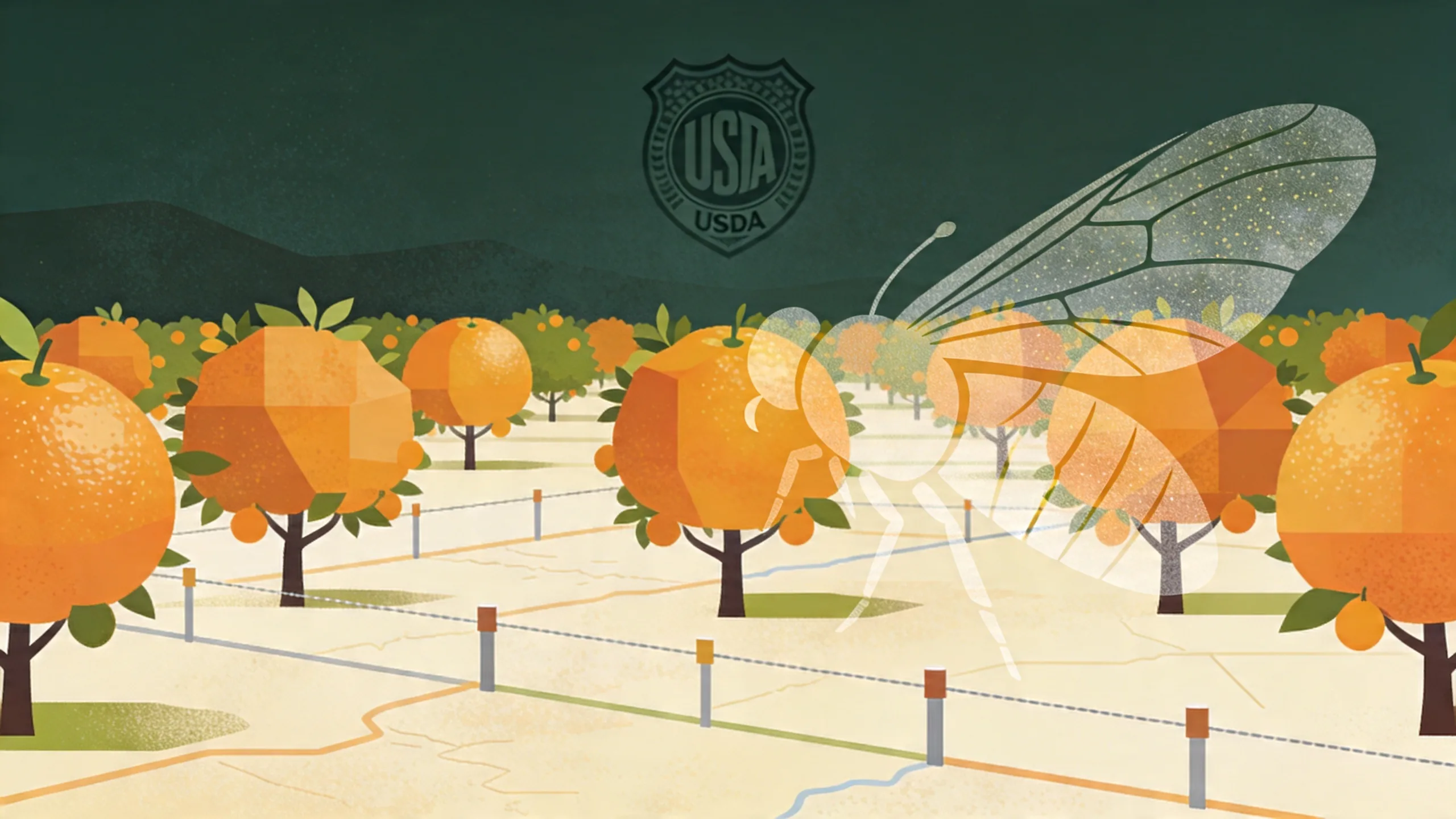
USDA Declares Mexican Fruit Fly Quarantine in South Texas
The U.S. Department of Agriculture's Animal and Plant Health Inspection Service (APHIS) has established a federal quarantine in Zapata County, South Texas, after detecting a wild Mexican fruit fly in a residential sweet orange tree. The finding, confirmed on March 11, marks the northernmost detection of this invasive pest in the region this year and has triggered an immediate multi-agency response.
For the running case count and the affected-county map, follow our Texas screwworm tracker.
The quarantine encompasses approximately 55 square miles around the detection site in Zapata. While the area contains no commercial agriculture operations, the establishment of a federal quarantine reflects the serious threat that Anastrepha ludens poses to Texas's citrus industry and backyard fruit growers alike.
APHIS, working alongside the Texas Department of Agriculture, is implementing a coordinated eradication protocol that includes intensive trapping surveys, targeted pesticide treatments, and strict regulations on the movement of regulated articles. The restrictions apply to host fruits—including citrus, mango, peach, and guava—as well as soil and gardening equipment that could harbor larvae or pupae.
Why This Matters for Texas
The Mexican fruit fly ranks among the most destructive agricultural pests in the Western Hemisphere. Unlike native fruit flies that typically target overripe or damaged fruit, the Mexfly attacks developing, healthy fruit, rendering it unmarketable and inedible. A single female can lay up to 1,500 eggs during her lifetime, depositing them beneath the skin of host fruits where larvae tunnel through the flesh.
Texas ranks third nationally in grapefruit production and maintains significant orange and lemon acreage, particularly in the Lower Rio Grande Valley. The state's citrus industry generates hundreds of millions in annual revenue and supports thousands of jobs. An established Mexfly population would jeopardize market access, as domestic and international buyers routinely require pest-free certification for citrus products.
The Zapata detection comes as APHIS maintains active fruit fly quarantines in multiple states, including California and Florida. The agency's response in Texas follows established protocols developed through decades of successful eradication campaigns. Previous Mexfly outbreaks in Texas have been eliminated through similar coordinated efforts, most recently in 2020.
What the Quarantine Means for Residents
Property owners within the 55-square-mile quarantine zone face specific restrictions on fruit movement. Host fruits cannot be moved outside the quarantine boundary unless they have been treated according to APHIS protocols or processed to eliminate pest risk. Homeowners with backyard citrus trees should consume their fruit on-site or dispose of it properly within the quarantine area.
APHIS inspectors are conducting door-to-door surveys to identify host material and apply bait spray treatments. The insecticide applications target adult flies and use formulations that pose minimal risk to humans and pets when applied according to label directions. Residents may notice increased agricultural aircraft activity as aerial treatments supplement ground-based operations.
The quarantine also affects nursery operations and landscapers. Soil, compost, and containerized plants cannot leave the quarantine zone without certification. Gardeners should avoid moving homegrown fruit or vegetables from their properties and should report any suspicious larvae in fruit to the Texas Department of Agriculture.
Detection and Identification
Mexican fruit flies measure approximately 7-8 millimeters in length—slightly larger than common vinegar flies. They display distinctive wing patterns featuring a dark band across the middle of each wing and a characteristic elongated body shape. The adult's thorax shows a creamy-white to yellow coloration with a dark T-shaped marking.
Larvae, which cause the actual damage, appear as cream-colored maggots reaching 10 millimeters at maturity. They tunnel through fruit pulp, creating visible trails and promoting secondary bacterial and fungal infections. Infested fruit often shows premature dropping, softening, or external discoloration.
Trapping networks form the backbone of detection efforts. APHIS maintains thousands of Jackson traps baited with lures attractive to fruit flies throughout Texas's citrus-producing regions. The Zapata detection resulted from this routine surveillance, demonstrating the system's effectiveness in identifying incursions before they establish.
Economic and Trade Implications
Federal fruit fly quarantines carry significant economic weight. Interstate movement restrictions can disrupt supply chains for nurseries, fruit stands, and farmers markets. Export markets may impose additional phytosanitary requirements on Texas citrus, increasing compliance costs for growers.
However, the alternative—allowing the pest to establish—would prove far costlier. Established fruit fly populations require permanent control programs involving continuous trapping, baiting, and fruit stripping. California's decades-long battle with the Mediterranean fruit fly provides a cautionary example, with annual control costs running into tens of millions of dollars.
APHIS has indicated it will publish formal notice of the quarantine in the Federal Register, establishing the legal framework for enforcement. Violations of fruit fly quarantine regulations can result in civil penalties and criminal prosecution in severe cases.
Looking Forward
Eradication timelines for Mexican fruit fly outbreaks typically span several months to more than a year, depending on detection density and environmental conditions. APHIS will maintain the quarantine until three consecutive life cycles pass without wild fly detections—a standard that ensures true elimination rather than temporary suppression.
For South Texas residents, vigilance remains essential. Anyone observing suspicious larvae in homegrown fruit should contact the Texas Department of Agriculture or their local APHIS office. Early reporting accelerates response times and reduces the geographic footprint of necessary quarantines.
The Zapata quarantine serves as a reminder that invasive species recognize no borders. Even as Texas agriculture officials focus on the New World screwworm threat approaching from the south, established pests like the Mexican fruit fly continue testing the state's biosecurity defenses. Coordinated federal-state response protocols, refined through decades of experience, remain the best defense against agricultural pests that could otherwise devastate local industries.
Sources
Texas Bug Slayers Editorial Team
Editorial Board
The Texas Bug Slayers editorial team brings together licensed pest control professionals, entomologists, and writers dedicated to helping Texans protect their homes and families from pests.
Related Articles

Screwworm Rules Are Stranding Texas Shelter Pets as States Tighten Animal Transport
New state restrictions on dogs and cats leaving Texas over New World screwworm have cut rescue transports in half, straining overcrowded shelters.
USDA Opens $90 Million Funding Pool to Combat Invasive Pests Threatening Texas Agriculture
USDA APHIS announces $90M in FY 2027 funding through Plant Protection Act Section 7721 to protect farms and forests from invasive pests, with applications open through September 21.

Texas A&M AgriLife Launches Statewide Alert System for Agricultural Threats and Invasive Pests
New Texas Agriculture Alert System delivers real-time notifications about pest outbreaks, wildlife diseases, and quarantine actions to farmers, ranchers, and residents across the state.