
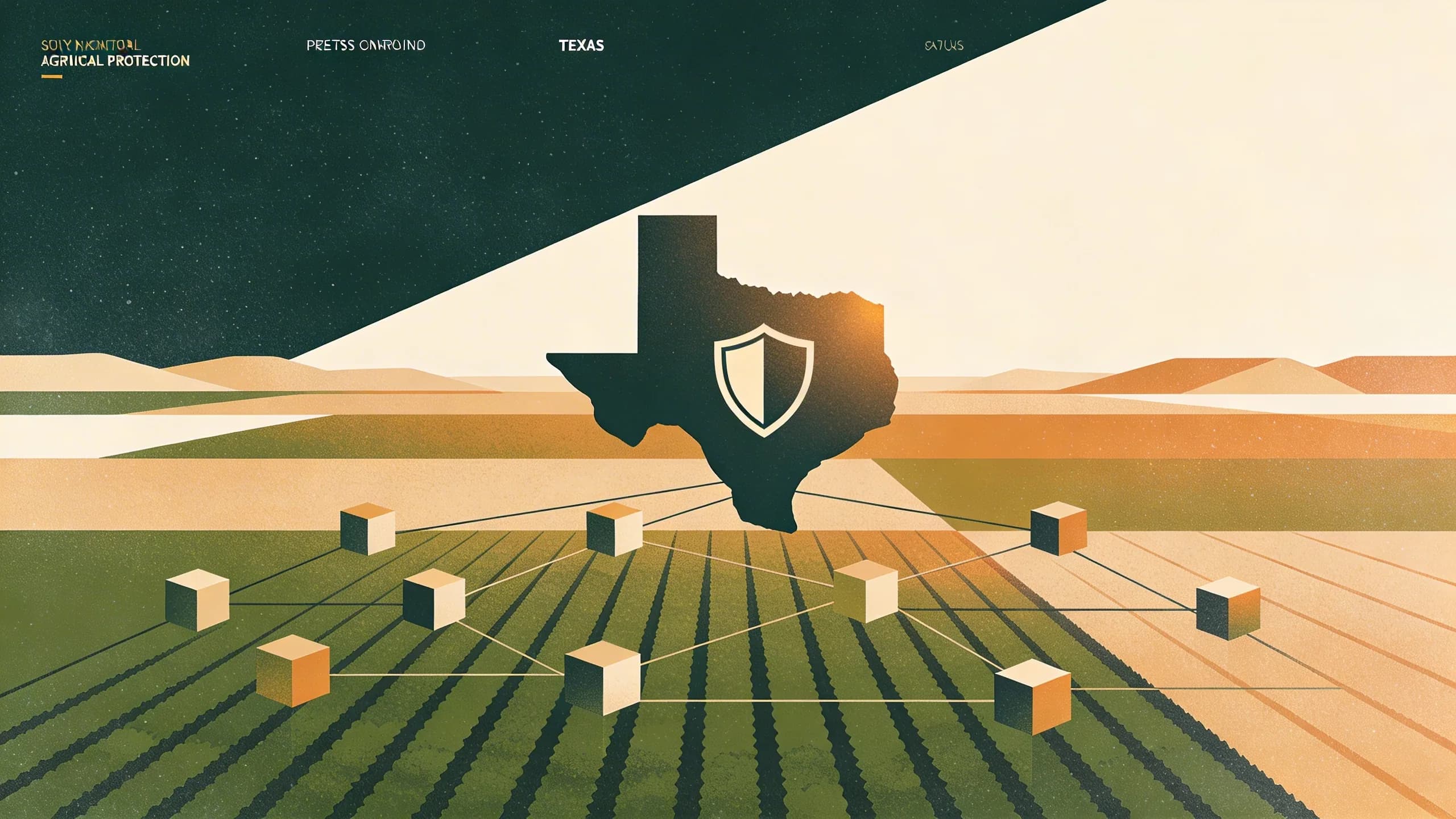
Texas Launches Agricultural Defense Program to Combat Pests and Disease
Texas Agriculture Commissioner Sid Miller has officially opened applications for the Agricultural Defense Program (AgDefense), a new initiative designed to shield the state's farmers and ranchers from mounting threats posed by pests, diseases, and wildlife depredation. The program, administered through the Texas Agricultural Finance Authority (TAFA), marks a significant expansion of state resources dedicated to proactive agricultural protection.
Our live Texas screwworm case tracker keeps the running count and county map as USDA updates land.
"Texas agriculture feeds and clothes the world, and I'm not going to stand by while pests, disease, or predators threaten the livelihoods of our farmers and ranchers," Miller said at the program's launch. "This Agricultural Defense Program gives us another powerful tool to stay ahead of these threats and protect the producers who keep our state strong."
How AgDefense Works
The program channels financial assistance to three key agencies tasked with safeguarding Texas agriculture:
- Texas Animal Health Commission — livestock disease monitoring and response
- Texas A&M AgriLife Extension Service — field-level education and intervention
- Texas A&M AgriLife Research — scientific solutions and threat assessment
Eligible projects span monitoring systems, rapid response strategies, and direct field interventions. The goal is to catch emerging threats before they trigger the kind of widespread economic damage that can ripple through rural communities from the Panhandle to the Rio Grande Valley.
Why Now?
The timing reflects a convergence of pressures on Texas agriculture. Recently identified pests—including rice delphacid, cotton jassid, pasture mealybug, and the ever-approaching New World screwworm—have stretched existing response capabilities. Feral swine continue to inflict costly damage across farmland statewide. And the specter of foreign animal diseases remains a constant concern for livestock producers.
Texas agriculture generates hundreds of billions of dollars in annual economic activity. Protecting that foundation requires what Miller describes as "constant vigilance and investment in science-based solutions."
Flexible Response to Evolving Threats
AgDefense is designed with adaptability in mind. Rather than locking funds into rigid categories, the program can pivot toward whatever challenge emerges—whether that's an invasive insect threatening cotton fields, a livestock disease outbreak, or predator pressure on ranching operations.
The program operates under authority granted by Texas Agriculture Code, Chapter 58. Letters of intent are now being accepted from the three eligible agencies, with projects expected to range from surveillance networks to on-the-ground control measures.
For Texas producers, the message is clear: the state is betting on prevention over cleanup, and it's putting resources behind that bet.
For more information about the Agricultural Defense Program, contact the Texas Department of Agriculture or visit their official website.
Sources
Texas Bug Slayers Editorial Team
Editorial Board
The Texas Bug Slayers editorial team brings together licensed pest control professionals, entomologists, and writers dedicated to helping Texans protect their homes and families from pests.
Related Articles
USDA Commits $25 Million to Arizona Sterile Fly Facility as Douglas Port Readies Cattle Reopening
USDA will spend $25 million on a sterile fly dispersal facility in Douglas, Arizona, as the port prepares to resume Mexican cattle imports on Aug. 24.
USDA Opens $90 Million Funding Pool to Combat Invasive Pests Threatening Texas Agriculture
USDA APHIS announces $90M in FY 2027 funding through Plant Protection Act Section 7721 to protect farms and forests from invasive pests, with applications open through September 21.
Screwworm Detected Just 60 Miles from Texas Border as Commissioner Declares Emergency
Texas Agriculture Commissioner Sid Miller sounds alarm after USDA confirms New World screwworm in Nuevo León, Mexico, only 60 miles from the Texas border.