
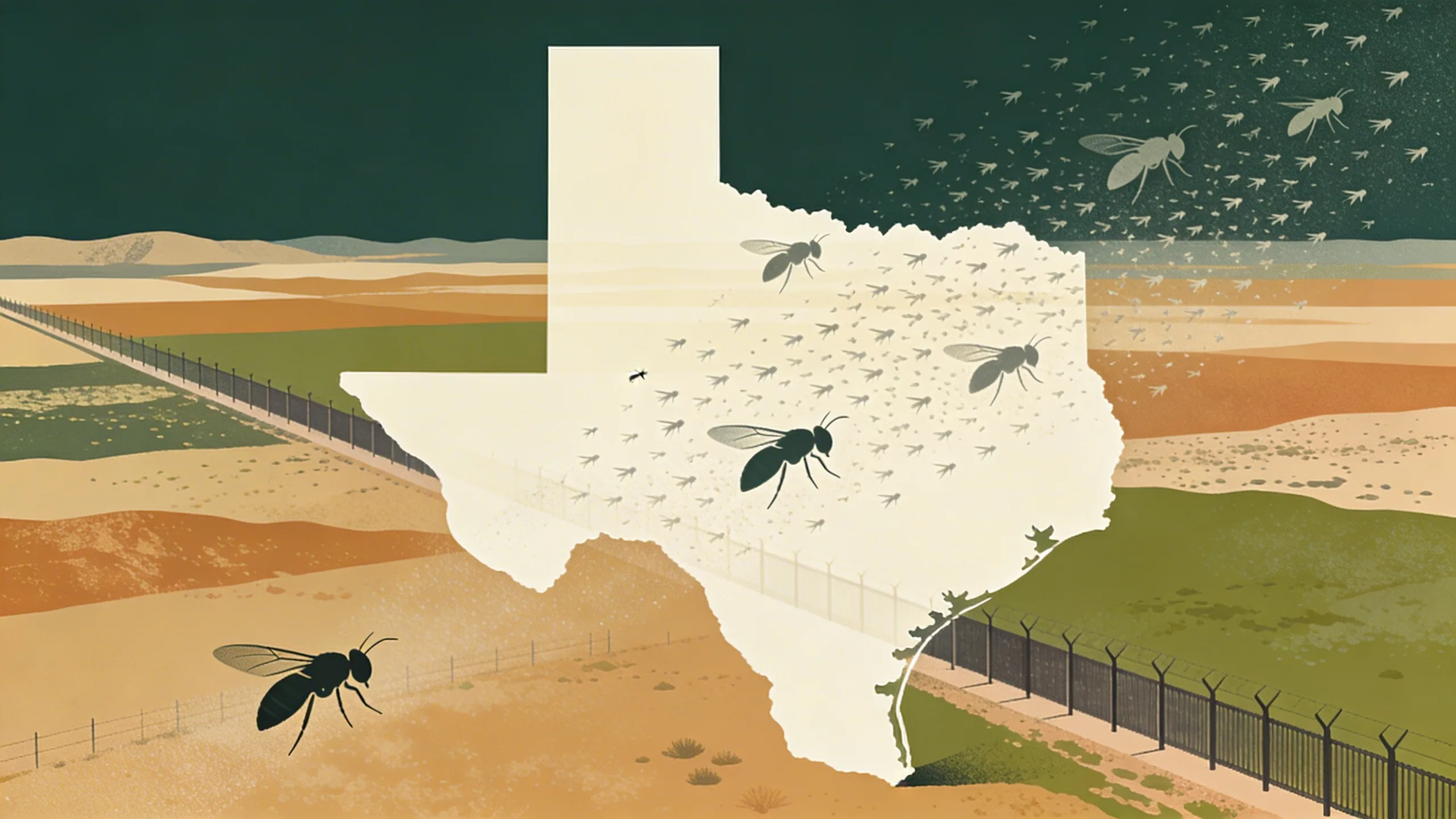
Screwworm Detected 90 Miles from Texas Border: Agriculture Commissioner Issues Urgent Warning
Texas Agriculture Commissioner Sid Miller has issued an urgent warning to livestock producers across the state after confirmation that New World screwworm has been detected in Nuevo León, Mexico—just 90 miles from the U.S.-Mexico border. The finding marks the northernmost detection of the parasitic fly to date, raising the stakes for Texas ranchers already on high alert.
Track every confirmed case on our live Texas screwworm tracker and county map.
"The New World screwworm is not some distant problem," Miller said in a statement released April 13. "It is a direct and imminent threat to Texas, and we are treating it that way."
The commissioner emphasized that while the U.S. Department of Agriculture has initiated response measures, the pest's spread remains unchecked. For an insect capable of devastating livestock populations, that gap between detection and containment is precisely what keeps agricultural officials awake at night.
Why the Alarm?
New World screwworm (Cochliomyia hominivorax) is not your typical agricultural nuisance. The fly's larvae feed on living tissue, creating open wounds that attract more flies and can kill untreated animals within days. Before its eradication from the United States in the 1960s, the pest cost the livestock industry hundreds of millions of dollars annually.
That eradication—accomplished through the sterile insect technique—remains one of the most successful pest control programs in history. The approach involves releasing millions of sterilized male flies to mate with wild females, collapsing the population over successive generations. Today, the U.S. produces sterile flies primarily in Panama, with a new $21 million facility planned in Mexico to bolster capacity.
But sterile fly releases work best as a buffer, not a last line of defense. With screwworm now confirmed so close to Texas, that buffer has grown uncomfortably thin.
What Producers Should Watch For
Miller urged producers to monitor their animals closely and report any unusual signs immediately. Early detection, he stressed, offers the only real chance at preventing a wider outbreak.
"There is zero margin for delay when it comes to screwworm," he said.
Signs of infestation include:
- Visible larvae in wounds, often described as rice-like maggots
- Animals excessively licking or rubbing specific areas
- Foul-smelling wounds that fail to heal
- Separation from the herd, lethargy, or loss of appetite
Any animal showing these symptoms should be examined by a veterinarian immediately. Suspected cases must be reported to the Texas Animal Health Commission or USDA APHIS.
The Bigger Picture
The Nuevo León detection comes as Texas and federal agencies accelerate preparedness efforts. In March, USDA announced a contract for a new sterile fly production facility at Moore Air Base in Texas—the only U.S.-based facility of its kind. The project, developed in partnership with the U.S. Army Corps of Engineers, aims to complement existing operations in Panama and Mexico.
Meanwhile, Texas A&M AgriLife Extension has released updated fact sheets and educational materials to help producers recognize and respond to potential infestations. The agency is also coordinating with state and federal partners on surveillance and rapid response protocols.
For now, the focus remains on keeping the pest south of the border. But with each northern detection, that task grows more complex—and more urgent.
Texas ranchers have faced down screwworm before. The question now is whether vigilance and preparation can hold the line once again.
For more information on screwworm identification and reporting, visit the Texas A&M AgriLife Extension screwworm resource page.
Sources
Texas Bug Slayers Editorial Team
Editorial Board
The Texas Bug Slayers editorial team brings together licensed pest control professionals, entomologists, and writers dedicated to helping Texans protect their homes and families from pests.
Related Articles
New World Screwworm Confirmed in Texas: 12 Cases Reported as Parasite Spreads
USDA confirms New World screwworm in Zavala County calf, triggering statewide response. Quarantine now covers 13 Texas counties as cases rise.
New World Screwworm Confirmed in Texas: What Livestock Owners and Residents Need to Know Now
USDA-APHIS confirms New World screwworm in Zavala County, Texas. Learn detection signs, prevention tips, and state response efforts from Texas A&M AgriLife.
Screwworm Detected Just 60 Miles from Texas Border as Commissioner Declares Emergency
Texas Agriculture Commissioner Sid Miller sounds alarm after USDA confirms New World screwworm in Nuevo León, Mexico, only 60 miles from the Texas border.