

Giant Desert Centipedes in Texas — Complete Guide
Scolopendra heros — up to 8 inches of red-headed, yellow-legged nocturnal hunter
Not sure it's a Giant Desert Centipede?
Snap a photo — our free AI tool identifies Texas pests in seconds.
Quick facts — giant desert centipedes in Texas
- Species: giant desert centipede (Scolopendra heros) — the largest centipede in North America
- Size: 6 to 8 inches; dark body, red-orange head, yellow-orange legs (21 pairs)
- Range: West Texas, Trans-Pecos, South Texas brush — ranging into the Hill Country and Central Texas
- Bite: very painful (bad wasp-sting level), rarely medically dangerous for healthy adults
- Caution: children and small pets should be seen after a bite
- Behavior: nocturnal predator of insects, spiders, scorpions, and small lizards
About the Giant Desert Centipede in Texas
The giant desert centipede (Scolopendra heros) is the apex predator of Texas arthropods — an eight-inch hunter that eats tarantulas, scorpions, roaches, and even small lizards and mice. It is a creature of the arid west: most common in the Trans-Pecos, Big Bend, and South Texas brush country, but regularly encountered in the Hill Country and Central Texas, where it turns up in yards, garages, and occasionally bathtubs. Nothing else in Texas looks remotely like it, and nothing else in the state's bug catalog empties a room faster.
Identifying a Giant Desert Centipede
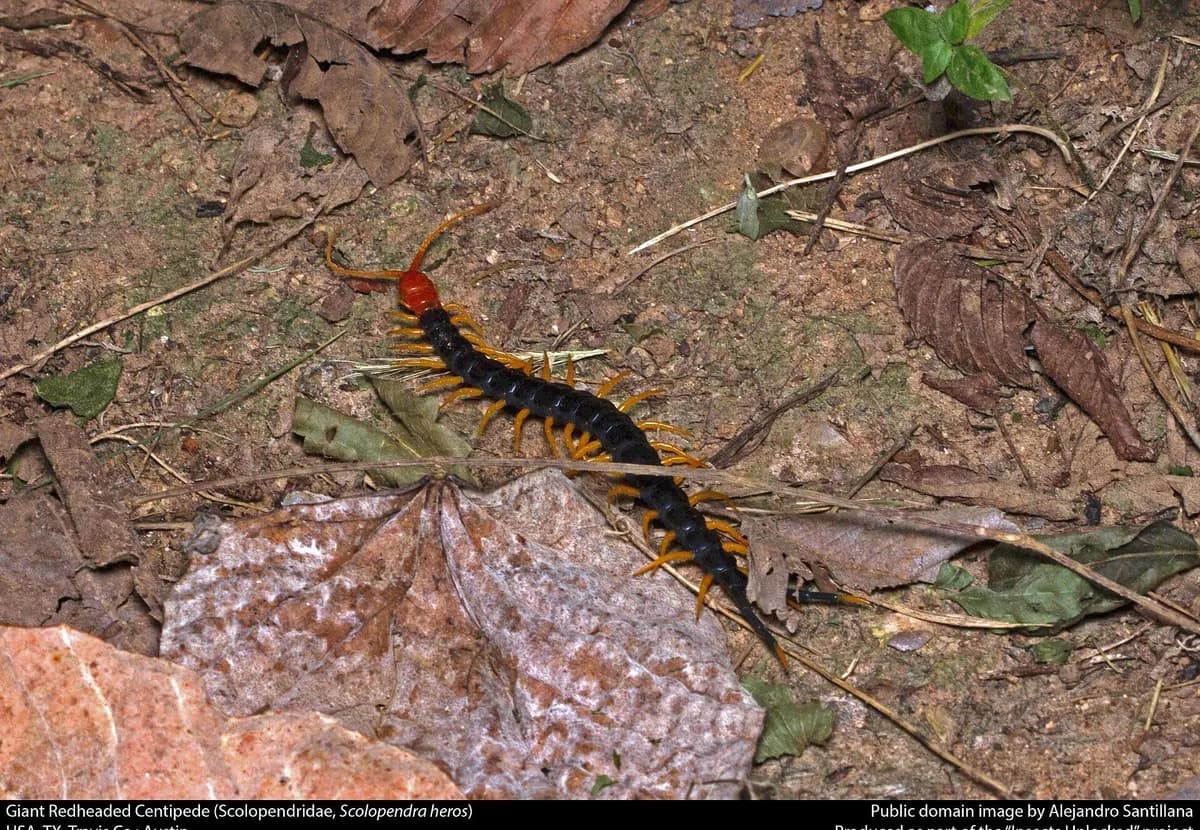
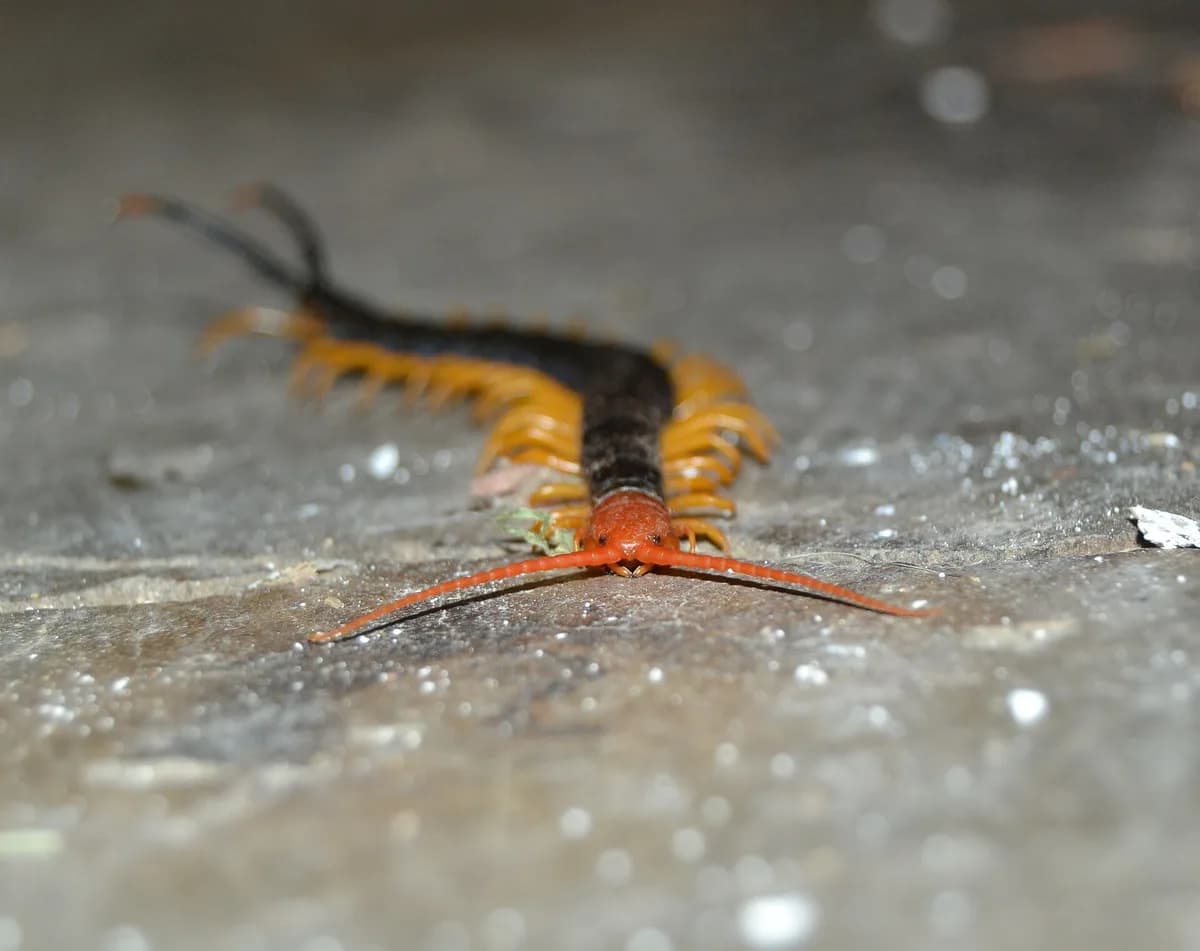
The identification is instant: a flat, segmented body 6 to 8 inches long in dark blue-black to greenish-black, a bright red to orange head with a pair of long antennae, and 21 pairs of yellow to orange legs. The tail end has a pair of long rear legs that mimic a second head — a defensive trick. They are fast, and they rear up defensively when cornered rather than fleeing.
Where They Live and Why They Enter Homes
By day, giant desert centipedes shelter under rocks, logs, bark, landscape timbers, and debris; at night they hunt. In Texas yards they favor rock borders, flagstone paths, wood piles, and the cool soil under AC pads and water meter boxes. They enter homes through ground-level gaps — door thresholds, weep holes, garage doors — most often during extreme heat and drought (seeking moisture and cooler air) and after heavy rain that floods their shelter sites. A centipede inside is hunting or lost, not colonizing: they do not establish indoor populations.
The Bite — Painful, Rarely Dangerous
Centipedes "bite" with forcipules — venom-injecting modified front legs — and a giant desert centipede bite is genuinely painful: immediate burning pain often compared to a bad wasp sting, with redness and swelling that can spread across the bitten hand or foot and persist for a day or two. For healthy adults, that is the whole story; serious systemic reactions are rare. Children and small pets are the exception — their smaller body mass makes envenomation proportionally worse, and they should be seen by a doctor or veterinarian after any bite. First aid: wash with soap and water, cold compress, standard pain relief, and watch for unusual swelling or systemic symptoms.
Giant Desert Centipede Prevention Tips
- Seal ground-level entry points: door sweeps, thresholds, caulked utility penetrations, and screened weep holes.
- Reduce harborage near the foundation — rock piles, firewood, landscape timbers, leaf litter, and thick ground cover.
- Fix moisture problems and improve drainage; centipedes follow water and the prey it attracts.
- Wear gloves when moving rocks, firewood, and landscape materials in West and Central Texas.
- Shake out boots and gloves left in the garage or outside.
- Keep a standard perimeter pest program in place — fewer crickets and roaches means less reason for centipedes to hunt near the house.
Giant Desert Centipede Control in Texas
Control is exclusion plus habitat reduction, usually folded into a quarterly general pest program ($100 to $175 per visit) with perimeter treatment of foundation, rock borders, and harborage areas. A centipede found indoors can be trapped under a container and released away from the house — indoor chemical treatment is rarely needed for a solitary intruder. If you are finding them repeatedly, the honest fix is the sealing and cleanup above, not stronger chemicals. Browse licensed pest control companies in your area below.
Licensed Texas Companies
2027 companies offering pest control
2,027 companies
Romex Pest & Termite Control
Urbanex Pest Control
A-Action Home Inspection Houston
Forterra Pest Control
EnviroCon Pest Control
X Out Pest Services

Adams Exterminating

Innovative Pest Control

Cerv Property Solutions San Antonio
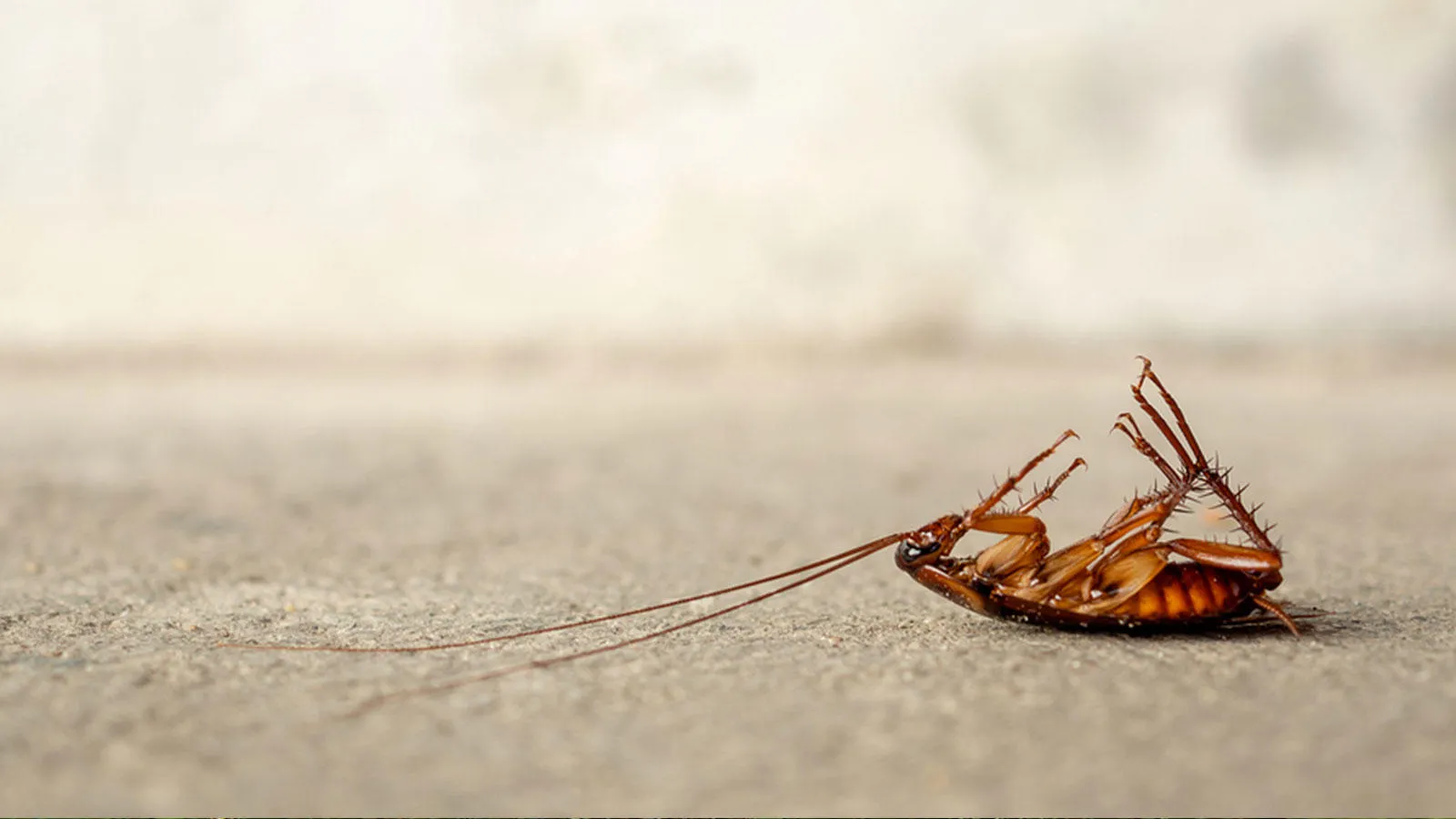
Ace Pest Control
Integrity Pest and Termite

The CanMan
Bill Clark Pest Control, Inc.

Bug Blasters Pest Control

Pest Solutions of North Texas

Pinnacle Pest Defense
BugMan Pest Control & Termite Control
Justice Pest Services
Frequently Asked Questions
Best Professional Treatment
General pest management for common household pests including roaches, ants, spiders, and more
Find Local Exterminators for Giant Desert Centipede Near You
Use our interactive map to find licensed giant desert centipede control companies near your Texas location.
Find Licensed Companies by Texas City
Licensed giant desert centipede control companies in major Texas cities