

Chiggers in Texas — Complete Guide
Tiny mites behind the worst itching in Texas — spring through fall in grass and brush
Not sure it's a Chiggers?
Snap a photo — our free AI tool identifies Texas pests in seconds.
Quick facts — chiggers in Texas
- What they are: trombiculid mites (not insects) — only the six-legged larva bites, and it is nearly invisible (1/150 inch)
- Season: April – October in Texas, peaking in warm humid months
- Habitat: tall grass, brushy field edges, blackberry thickets, shaded moist spots
- The myth: chiggers do not burrow into skin — nail polish is useless
- Bites: intensely itchy red welts around sock lines, waistbands, and skin folds; worst on days 1–2
- Real risk: infection from scratching — not the chigger itself
About Chiggers in Texas
Chiggers are the larval stage of trombiculid mites — tiny arachnids (relatives of ticks and spiders), not insects. In Texas the main culprit is Eutrombicula alfreddugesi, and nearly every Texan who has walked through tall grass between April and October has paid the price: clusters of red welts that itch more intensely than almost anything else in the state's pest catalog. The adults are harmless vegetarians living in soil; only the microscopic six-legged larvae feed on animals — and humans are accidental hosts.
What Chiggers Look Like
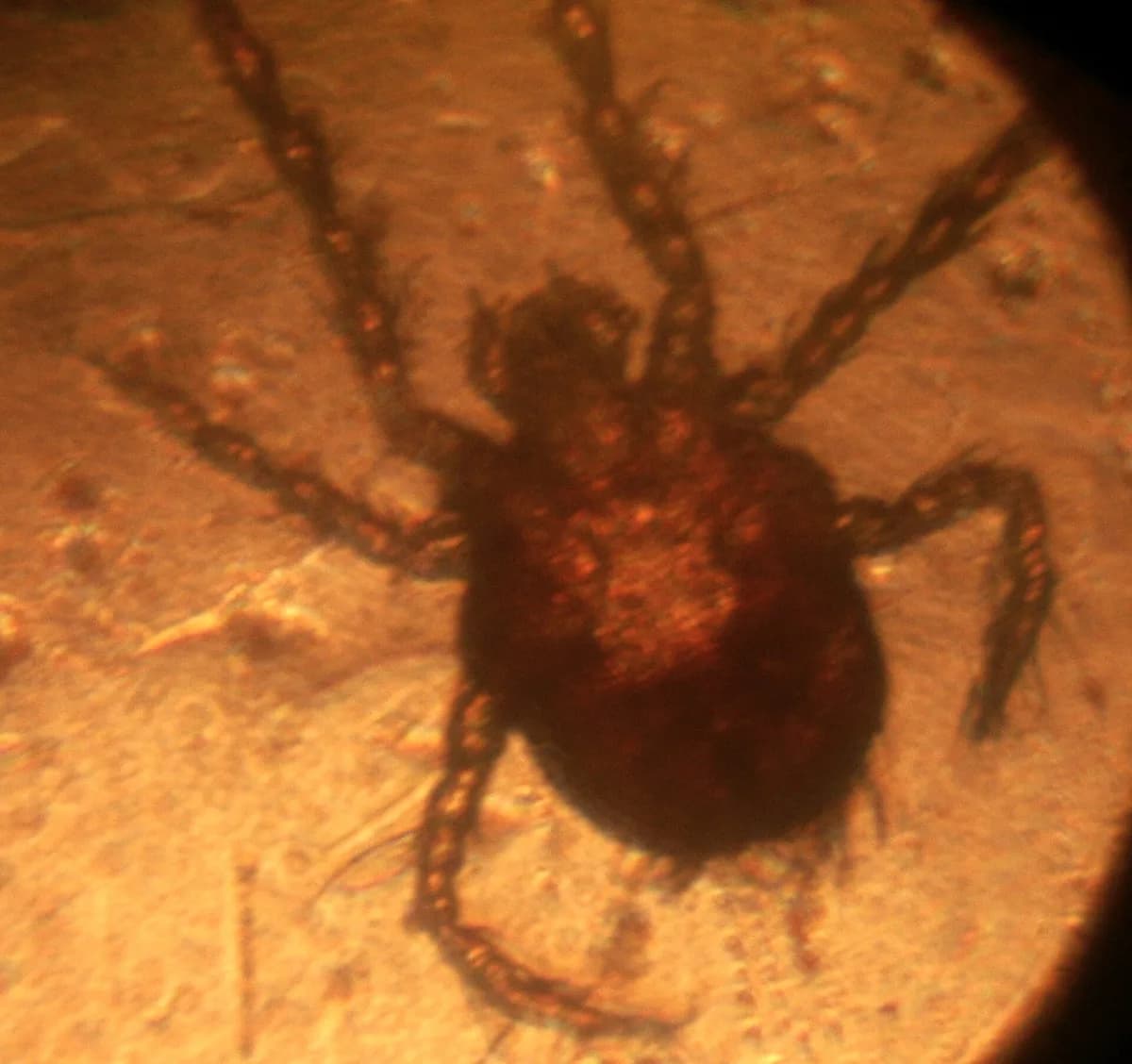
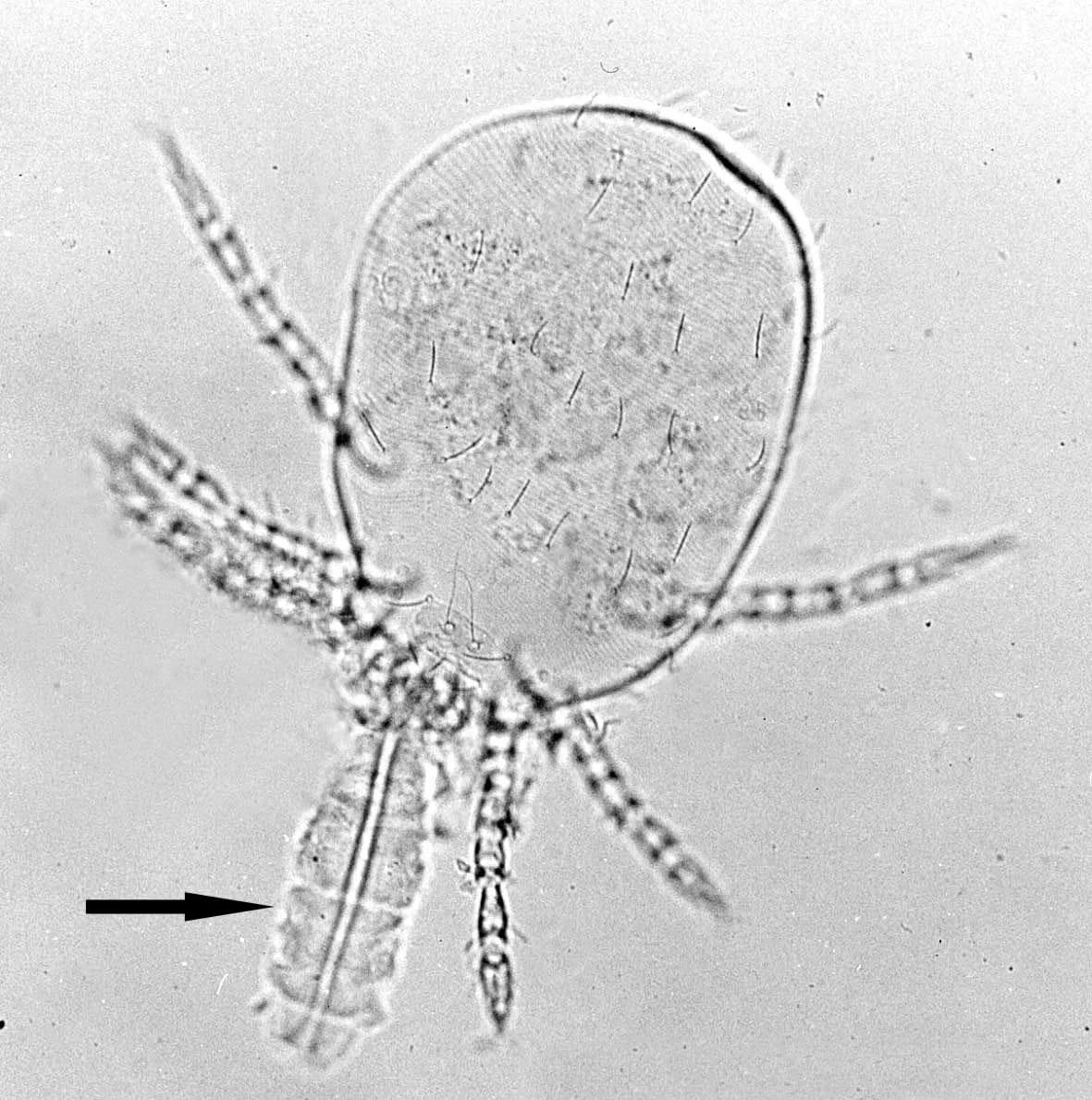
You will almost never see the one that bit you. Chigger larvae are about 1/150 inch — barely a red or orange speck — though clusters on skin can look like fine red dust. Adults are larger (about 1/20 inch), velvety red, and live harmlessly in soil and leaf litter eating other small organisms.
The Burrowing Myth — What Chiggers Actually Do
Chiggers do not burrow into your skin, and they do not feed on blood. A larva attaches to the skin surface, pierces it with short mouthparts, and injects digestive enzymes that liquefy the surrounding skin cells. The skin responds by hardening into a straw-like feeding tube called a stylostome, and the chigger drinks the liquefied tissue through it. The legendary itch is your immune reaction to those enzymes and the stylostome — and it continues for days after the chigger is gone.
This is why the folk remedies fail: there is no mite inside your skin to "smother" with nail polish, and by the time itching peaks, the chigger has usually dropped off or been scratched away already. Larvae feed for up to a few days at most if undisturbed — but most are removed by showering or scratching within hours.
Chigger Bites — What to Expect
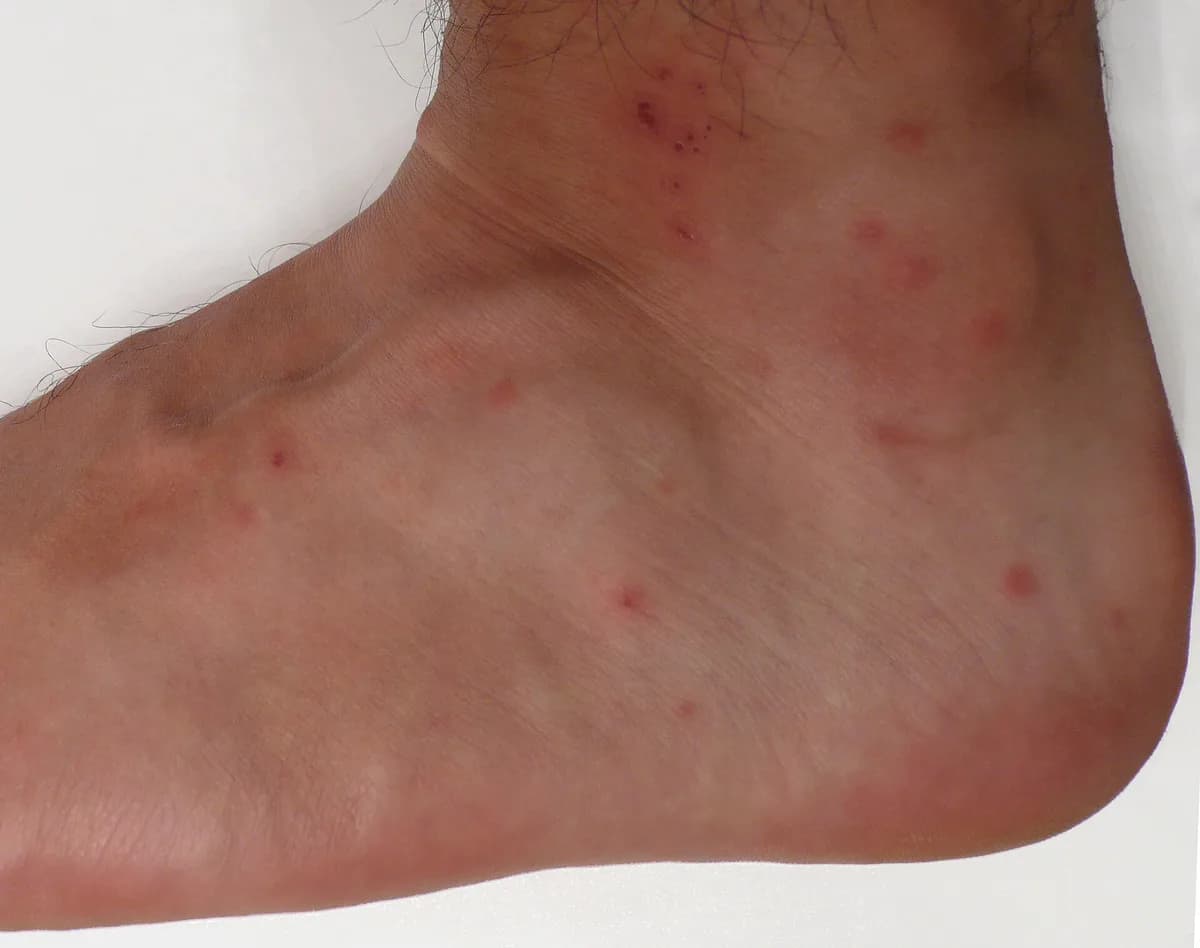
Bites appear 3 to 24 hours after exposure as small red bumps that develop into intensely itchy welts, often with a tiny central dot. They cluster where clothing fits tight — sock lines, waistbands, underwear edges, bra lines, behind knees, and armpits — because chiggers crawl until fabric stops them. Itching peaks at 24 to 48 hours and welts fade over one to two weeks.
Treatment: shower with soap and hot water as soon as you suspect exposure — this removes larvae still on you. For bites, oral antihistamines (diphenhydramine) and topical hydrocortisone or calamine control the itch; cold compresses help. The one real medical risk is secondary infection from scratching — keep nails short, and see a doctor if welts show spreading redness, pus, red streaks, or you develop fever. Good news for Texans: unlike some chigger species in Asia, U.S. chiggers do not transmit disease.
Where Chiggers Live in Texas
Chiggers need humidity and cover. In Texas they concentrate in tall grass, brushy field and forest edges, blackberry and briar thickets, creek banks, and shaded overgrown corners — not in short, sunny, well-maintained lawns. Peak season runs April through October, with the worst pressure in the warm, humid months. The classic exposure is the first warm-weather weekend: yard cleanup, a camping trip, fishing the creek bank, or kids playing at the field edge.
Chigger Prevention Tips
- Apply DEET-based repellent to skin; treat clothing, socks, and boots with 0.5% permethrin before high-risk outings.
- Wear long pants tucked into socks and closed boots in tall grass and brush.
- Stay on trails and mowed areas; avoid sitting directly on grass or logs in chigger habitat.
- Shower and machine-wash clothing in hot water within two hours of exposure.
- Keep the lawn mowed short, trim brush and briars, and remove leaf litter and overgrowth — especially along fence lines and shaded corners.
- Discourage the small mammals (rodents, rabbits) that sustain chigger populations in the yard.
Chigger Yard Control in Texas
Habitat reduction is the primary control — a mowed, sunny, trimmed yard supports few chiggers. For persistent hot spots (brush lines, shaded overgrown areas), licensed pest control companies apply residual miticide treatments to vegetation borders, typically $100 to $300 per application or bundled into quarterly programs. Treatment without habitat cleanup gives only temporary relief. Browse licensed pest control companies in your area below.
Licensed Texas Companies
2027 companies offering pest control
2,027 companies

Romex Pest & Termite Control

Urbanex Pest Control
A-Action Home Inspection Houston

Forterra Pest Control

EnviroCon Pest Control

X Out Pest Services

Adams Exterminating

Innovative Pest Control

Cerv Property Solutions San Antonio
Ace Pest Control

Integrity Pest and Termite

The CanMan

Bill Clark Pest Control, Inc.

Bug Blasters Pest Control

Pest Solutions of North Texas

Pinnacle Pest Defense

BugMan Pest Control & Termite Control

Justice Pest Services
Frequently Asked Questions
Best Professional Treatment
General pest management for common household pests including roaches, ants, spiders, and more
Find Local Exterminators for Chiggers Near You
Use our interactive map to find licensed chiggers control companies near your Texas location.
Find Licensed Companies by Texas City
Licensed chiggers control companies in major Texas cities