
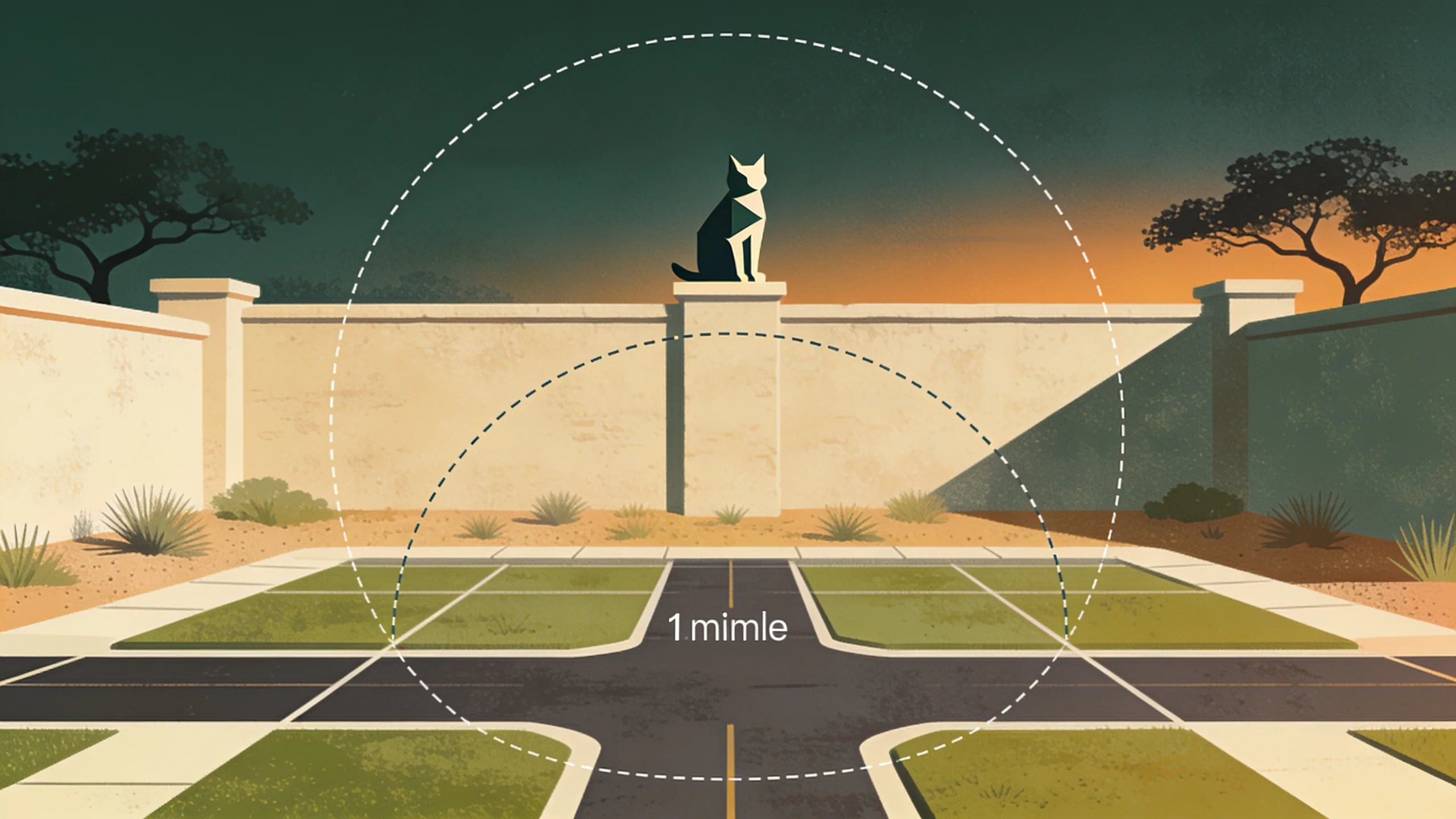
New Braunfels Puts Its Feral Cat Program on Hold After a Second Rabid Cat
Comal County's rabies ledger picked up a second entry from the same city this year, and this one cost New Braunfels a program.
Animal welfare officers took a cat off the street last week at the Augusta at Gruene Garden Apartments, in the 2200 block of East Common Street north of downtown, after calls came in that it was acting strangely and aggressively. The lab test came back positive. The city posted the result Friday.
The same thing happened in August, when a cat found in the 800 block of West Mill Street tested positive for the virus. Two rabid cats inside one city in roughly two months is the sort of thing that changes how a municipality handles its free-roaming cat population, and New Braunfels moved quickly: by the end of the week it had suspended its trap-neuter-release program for feral cats within a one-mile radius of the East Common Street address.
The pause runs four weeks. If no further case turns up inside that circle during the window, trapping and neutering resumes. If one does, the city will be back at the same decision with worse information.
TNR works on a simple premise — trap the colony cats, sterilize and vaccinate them, then put them back on the same territory, where they live out their lives without producing kittens. The model depends on the colony staying put and on the cats being handled repeatedly by volunteers and city staff. A rabid cat inside that mile complicates it, because the whole arrangement rests on the assumption that the animals in a managed colony are known animals with vaccination status on file.
The city's other answer is a free drive-through rabies vaccination clinic on Oct. 24, run with Best Friends Animal Society, from 8 a.m. to noon in the City Hall parking lot at 550 Landa Street. Vaccines are free for the first 300 pets, dogs and cats only, up to four animals per household. Residents need a state-issued photo ID and a current utility bill to prove they live in the city, and they will be asked for a name, address and basic details on each animal so a rabies certificate can be printed. The vehicle line forms at the Laurel Lane entrance to the lot; the Landa Street entrance will be closed and cars will exit onto Walnut Avenue.
Texas has confirmed 443 rabid animals so far in 2026, according to the Department of State Health Services. The department's monthly county summaries show how routine that testing is: in July alone, laboratories ran 1,315 animals and returned 52 positives, a hit rate just under 4 percent. The positive column in that report is dominated by bats and skunks, with a smattering of raccoons, foxes, cats, dogs and livestock — which is why the state's guidance keeps returning to the same instruction, that wildlife should be left alone.
The protocol after an exposure splits on whether the animal has an owner. A dog or cat that bites a person goes into a 10-day observation period; if the animal was infectious at the time of the bite, signs of rabies appear inside that window. Wild animals that attack people are never quarantined — they are euthanized and their brains submitted for testing. An unvaccinated pet bitten by a known rabid animal faces a harder fork: euthanasia, or vaccination followed by 90 days of strict isolation with boosters along the way.
For anyone who lives near the East Common Street complex, the practical version is shorter. Wash any bite or scratch immediately with soap and hot water, then see a provider. Rabies treatment works, but only before symptoms begin; once they do, the disease is almost always fatal. Stray or unusually bold animals should go to animal welfare as a report, not a capture attempt.
Texas law already requires dogs and cats to be vaccinated against rabies, and the clinic exists for the households that have let that slip. Four weeks from now the city will know whether the mile around East Common Street is clear, and 300 pets will have paperwork saying they are covered either way.
Sources
Texas Bug Slayers Editorial Team
Editorial Board
The Texas Bug Slayers editorial team brings together licensed pest control professionals, entomologists, and writers dedicated to helping Texans protect their homes and families from pests.
Related Articles

Fall Hands the Grass Back to Texas' Lone Star Tick, and a Meat Allergy Rides Along
Cooler weather revives daytime lone star tick activity across Texas, renewing attention on alpha-gal syndrome, the red-meat allergy a single bite can set off.

San Angelo State Park Issues Screwworm Warning for Visitors and Pets
Texas Parks and Wildlife warns visitors to San Angelo State Park about New World screwworm risks after parasite detected in Tom Green County area.

Infected Tick Found Inside Austin Apartment Points to Rare Relapsing Fever Case
Baylor College of Medicine and Texas DSHS researchers traced a likely case of soft tick-borne relapsing fever to an infected tick discovered inside an Austin-area apartment.