
Mississippi's Tawny Crazy Ants Went Quiet for 15 Years. Texas Never Got the Break.
For fifteen years, the tawny crazy ant sat still in Mississippi. It arrived there in 2009, identified in Hancock County, and it moved quickly along the Gulf Coast into Harrison, Jackson and Pearl River counties while turning up in large numbers across coastal Alabama, Georgia and Florida. Then it stopped, and nobody could say why.
This year it started again.
Mississippi State University Extension confirmed the ant in Wilkinson, Marion and Perry counties, bringing the state total to seven. Joe MacGown, an ant taxonomist at the Mississippi Entomological Museum and a researcher with the Mississippi Agricultural and Forestry Experiment Station, told the university's extension service that the fifteen-year halt in the species' spread had no explanation attached to it.
Texas has never had that kind of pause. MacGown's own museum records put the earliest American collection of the ant in Illinois in 1931, followed by Florida and Texas in the late 1930s. As with most invasive ants, it went largely unnoticed for decades — until populations exploded in Florida and Texas in the early 2000s. The Texas surge was documented well enough that one of the insect's working names came from the pest management professional in the state who found them in extraordinary numbers, and for years the trade called them Rasberry crazy ants. Floridians called them hairy crazy ants. Researchers eventually settled the taxonomy on Nylanderia fulva.
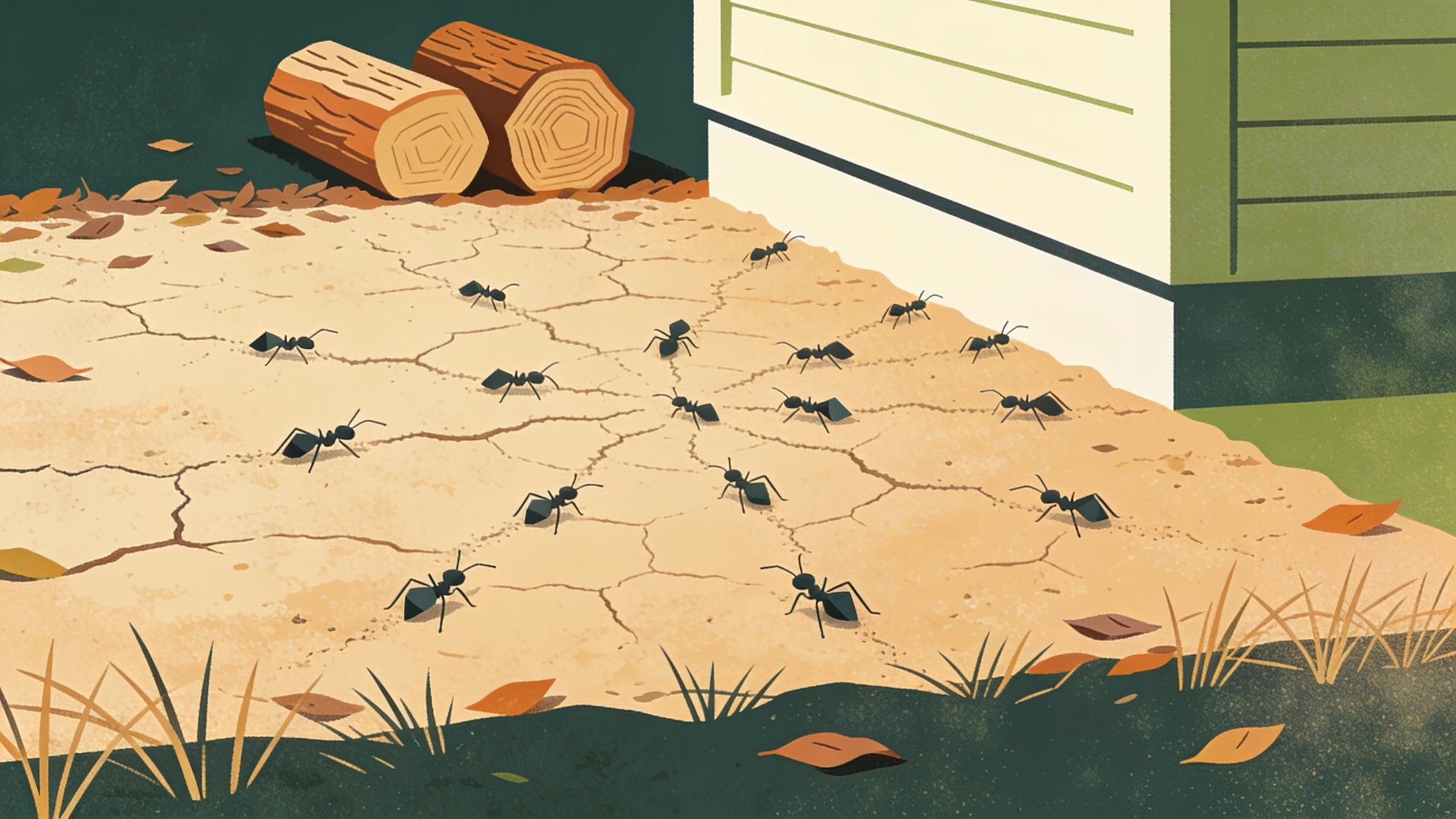
Identifying one in the field is less about a single feature than about volume. Santos Portugal, an entomologist with MSU Extension, points to the hairiness, the long antennae and the long legs, and to the movement: they run erratically instead of following defined trails, which is where the name comes from. But the giveaway most homeowners notice first is how many there are, covering large areas and numbering in the hundreds of thousands or even millions. At that density, entomologists use the word supercolony.
That density also explains why this ant is a different kind of problem from a fire ant. There is no mound to scan for. Colonies nest under rocks, fallen limbs, leaf litter and firewood, and when outdoor numbers climb high enough, they spill into houses. They do not sting and the bite is minor, but the numbers themselves do damage — they are known for getting into electrical equipment and shorting out wiring, and they have drawn concern in veterinary settings for the same reason.
The part that reaches Texas is the report from the field. Portugal said pest management professionals in Mississippi's coastal counties, in Louisiana and in Texas are all describing a more active year than normal with these ants, and that no explanation for the increase has been determined yet. Texas A&M AgriLife Extension counts 43 Texas counties inside the species' range since it surfaced in Harris County in 2002, and autumn is when colonies are typically at their most visible.
Portugal's guidance for anyone who finds them is worth repeating, because it sets expectations honestly. Once the ant is established in an area, complete eradication is not a realistic goal, and a homeowner is unlikely to manage a large population alone. Success should be measured by keeping the ants out of the house and other sensitive places rather than by wiping them off the property, and even a good professional treatment usually needs follow-up work. It is, he said, not a once-and-done thing.
Mississippi has also set up a confirmation pipeline: suspected ants are submitted as physical specimens to the MSU Extension Insect Identification Lab, and an official county record gives pest managers a regulatory green light to treat more extensively with a specific product. Texas A&M AgriLife Extension maintains its own tawny crazy ant management guidance, built around habitat modification and a wide perimeter around the structure.
The lesson in the Mississippi numbers is not that the ants are heading to Texas. It is that this species can stand still for fifteen years and then take three counties in a single season. Anyone treating a yard on the Gulf Coast should plan accordingly — not for a season, but for a decade.
Sources
Texas Bug Slayers Editorial Team
Editorial Board
The Texas Bug Slayers editorial team brings together licensed pest control professionals, entomologists, and writers dedicated to helping Texans protect their homes and families from pests.
Related Articles
Fall Ant Season Arrives in Southeast Texas as Fire Ants and Tawny Crazy Ants Reappear
Cooler nights and September rain have Southeast Texas yards showing ant mounds and trails again. The colonies never left — and fall is when treating them pays off.
Lovebugs Swarm Houston in Late Summer Surge, Testing Patience and Paint
Houston drivers and homeowners face an unwelcome seasonal visitor as lovebugs swarm the region in higher-than-usual numbers this August.
Formosan Termite Swarm Season Arrives Early Across the Gulf South
Warm temperatures and rising humidity trigger early Formosan termite swarming season. Texas homeowners face heightened risk from the 'super termite' that causes billions in annual damage.