
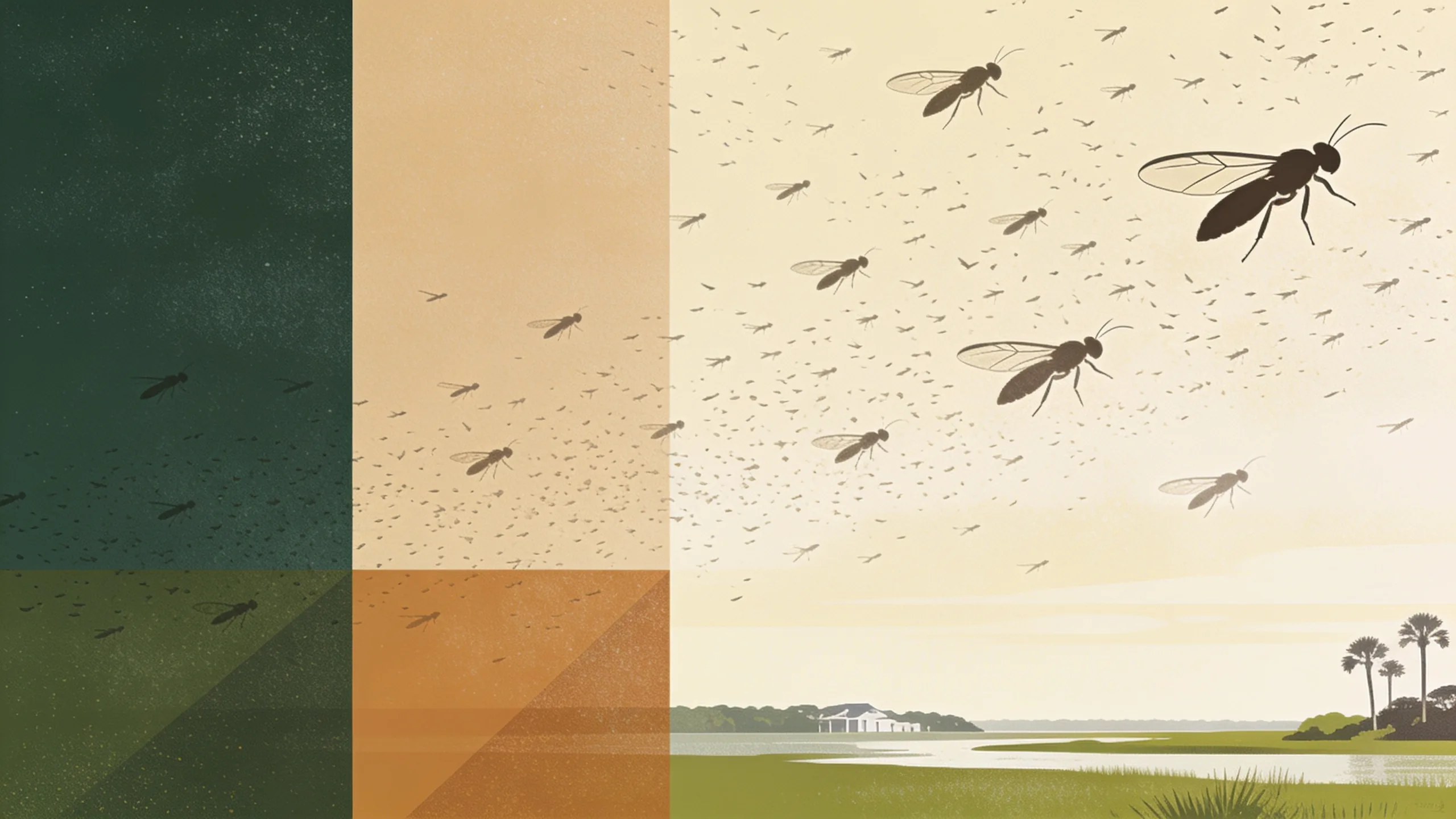
Lovebugs Swarm Houston in Late Summer Surge, Testing Patience and Paint
Houston motorists have noticed an unwelcome trend this August: lovebugs are everywhere. The small black flies, infamous for their mating flights and acidic body chemistry, have appeared in numbers that have residents and auto detailers scrambling for solutions.
The late-summer surge has been particularly noticeable along Gulf Coast highways, where swarms create visibility hazards and leave vehicles splattered with acidic residue that can damage paint if left untreated. For a region already dealing with heat advisories and hurricane season preparations, the lovebug invasion adds another layer of seasonal frustration.
Biology Behind the Boom
Lovebugs (Plecia nearctica) are not native to Texas. The species migrated westward from Florida during the twentieth century and established populations across the Gulf South. Their life cycle creates two distinct population peaks each year: one in late spring and another in late summer that typically runs from August through September.
This year's August emergence appears particularly robust. Entomologists attribute the surge to favorable breeding conditions earlier in the summer. The larvae develop in decaying organic matter, and the moist conditions that prevailed across Southeast Texas in early 2026 provided ideal habitat for juvenile stages.
"When you get the right combination of moisture and organic debris, you see population spikes," explains a Texas A&M AgriLife Extension specialist. "The adults we're seeing now developed in that environment and are following their biological programming to mate and disperse."
More Than a Nuisance
While lovebugs do not bite or sting, their impact extends beyond mere annoyance. The acidic composition of their bodies can etch automobile paint if remains are not promptly removed. Radiator clogging from dense swarms creates overheating risks for vehicles, particularly during Texas's brutal late-summer heat.
Agricultural operations face challenges as well. Livestock producers report animals reluctant to graze in fields where lovebug concentrations are highest. The flies do not harm the animals directly, but their persistent presence stresses herds and complicates routine care.
Honeybee keepers note another concern: lovebugs compete with pollinators for floral resources during a season when nectar flows are already declining. While not a primary threat, the added competition comes at a time when bee colonies are preparing for winter.
Defensive Measures
For homeowners and drivers, the standard advice remains unchanged but bears repeating. Vehicle paint protection through frequent washing—ideally within 24 hours of exposure—prevents the acidic compounds from causing permanent damage. Protective wax applications create a barrier that makes removal easier.
Timing travel to avoid peak swarming hours helps. Lovebugs are most active between 10 AM and 4 PM, particularly in warm, humid conditions. Early morning and evening travel reduces encounters significantly.
For residential properties, eliminating breeding sites provides longer-term relief. Decaying lawn clippings, compost piles, and organic debris in poorly drained areas all support larval development. Regular yard maintenance and proper drainage remove the habitat that sustains local populations.
A Temporary Invasion
The good news for beleaguered Houstonians: this surge will pass. As temperatures moderate in late September and the current generation completes its life cycle, populations will decline naturally. Until then, patience and proactive protection remain the best strategies.
The lovebug phenomenon serves as a reminder of how ecological factors—moisture, temperature, organic debris—translate directly into pest pressure. For a region accustomed to managing fire ants, mosquitoes, and cockroaches, these seasonal visitors represent one more chapter in Texas's ongoing relationship with its arthropod neighbors.
For now, keep the garden hose and soft sponge handy. The lovebugs are not leaving until the calendar turns.
Sources
Texas Bug Slayers Editorial Team
Editorial Board
The Texas Bug Slayers editorial team brings together licensed pest control professionals, entomologists, and writers dedicated to helping Texans protect their homes and families from pests.
Related Articles

The Cotton Jassid Vanished This Season. Experts Say That's No Reason to Relax
After 2025's invasive cotton jassid surge, winter freezes have kept 2026 populations low across the Southeast. UGA's Phillip Roberts warns growers — including in Texas — to keep scouting.
Pasture Mealybug Spreads Across 70 Texas Counties, Threatening Hay Production
A newly invasive pasture mealybug is devastating Texas hay fields and pastures, with confirmed infestations in 70 counties. Learn identification tips and prevention strategies.
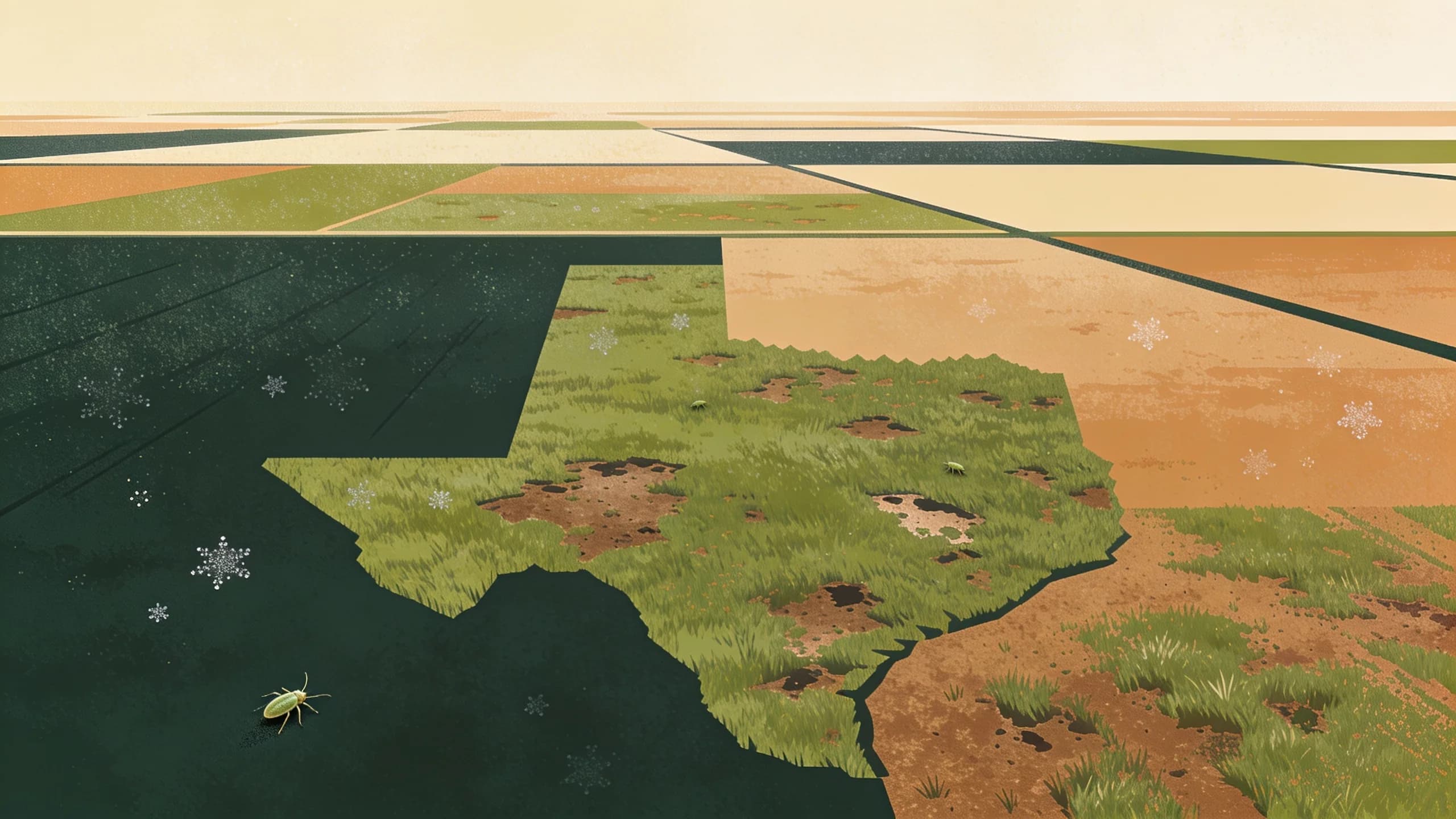
Pasture Mealybug Spreads to 70 Texas Counties, Threatening $15.5 Billion Cattle Industry
Texas A&M AgriLife warns of rapidly expanding invasive pest that could cause up to $1 billion in annual forage losses with no effective pesticide controls available.