

Fifty-Eight Invasive Antelope Live at a Texas Battlefield, and Ranchers Next Door Have Reason to Care
Visitors walk into Palo Alto Battlefield National Historical Park expecting prairie, cannon and the story of a war that started there in 1846. What they get, often enough, is a 600-pound antelope.
Nilgai — Boselaphus tragocamelus, native to South Asia — are now a fixture of the park's grasslands outside Brownsville, and until recently nobody could say how many. Park managers had the same problem every landowner in this corner of Texas has with them: the animals are large, mobile, and easy to see without ever being countable.
So they counted them the way field biologists increasingly do. Working with researchers from the Caesar Kleberg Wildlife Research Institute and the firm DJ&A, the park ran a study in 2021 and 2022 with 20 motion-triggered cameras distributed across the park's habitats, plus two more rotated through spots where nilgai were known to concentrate. By the end, the cameras had fired more than 23,000 times. Most of the frames held nilgai, and the resulting estimate was roughly 58 individuals using the study area.
That is a small number for a species that can reshape rangeland, and the study's more useful finding was about where they went. Nilgai favored patches dominated by invasive grasses and avoided native vegetation such as gulf cordgrass. Read forward, that is a management lever: restoring native prairie vegetation could make the park less attractive to the animals over time, which is a cheaper proposition than removal.
The reason ranchers around the park should read the same study comes down to one sentence in it. Nilgai can carry cattle fever ticks. The ticks — Rhipicephalus annulatus and Rhipicephalus microplus — transmit the organisms behind bovine babesiosis, a disease that can kill most of a susceptible herd. Eight Texas counties remain under a permanent fever tick quarantine with movement restrictions on livestock and on the carcasses of deer and exotic game, a regime the Texas Animal Health Commission reminded hunters about on Oct. 9, three days after archery season opened. Wildlife that moves freely across fence lines is the part of that system nobody can permit.
Nilgai do other work on the landscape, too. Their grazing can shift plant communities that give the battlefield its historic look, and they compete with white-tailed deer for food and space — an overlap that matters more in a park managing for a specific 19th-century vista than it would on open ranchland.
The camera survey paid a dividend the park didn't go looking for. Feral hogs turned up in the frames often enough that managers now have a rough map of where non-native wildlife activity concentrates, which is directly useful for the hog control work already under way on and around the site. Bobcats, coyotes, javelina, raccoons, nine-banded armadillos and white-tailed hawks filled out the rest of the 23,000 images — a wildlife inventory that arrived attached to an antelope count.
For the park, the study's value is as a baseline. Fifty-eight animals is not a number anyone should treat as fixed; it is a starting line that future surveys can be measured against, which is the only way to know whether invasive grasses, native prairie restoration or something else is winning.
Sources
- National Park Service — How Many Invasive Nilgai Roam Palo Alto Battlefield? Scientists Used Cameras to Find Out (published Oct. 13, 2026)
- Texas Animal Health Commission — cattle fever tick quarantine zone requirements (news release, Oct. 9, 2026)
- Texas Parks and Wildlife Department — hunting regulations
Texas Bug Slayers Editorial Team
Editorial Board
The Texas Bug Slayers editorial team brings together licensed pest control professionals, entomologists, and writers dedicated to helping Texans protect their homes and families from pests.
Related Articles
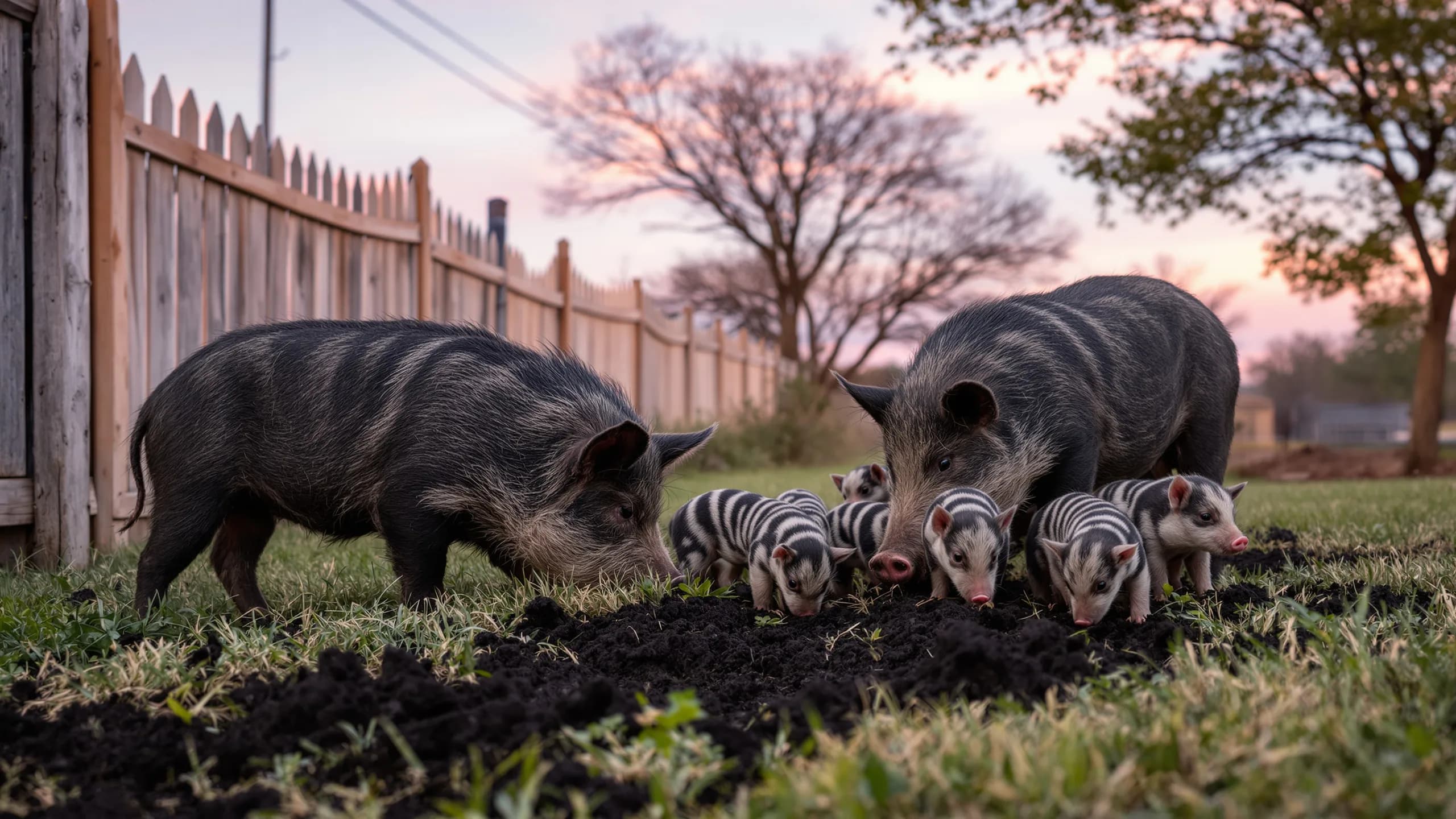
Feral Pigs Cost Texas $670 Million in One Year, and the Fight Is Moving Into the Suburbs
A new Texas A&M Natural Resources Institute publication targets feral pig control on small acreage and in metro areas, where city codes and HOAs limit traps and firearms.
Eight South Texas Counties Still Quarantine a Tick, and Hunting Season Just Walked Into It
TAHC's Oct. 9 reminder: deer, nilgai and other wildlife taken inside a fever tick quarantine zone in South Texas must be inspected before they leave.
AgriLife Puts Screwworm and Pasture Mealybug in the Same Room on Oct. 26
Texas A&M AgriLife Extension heads to Franklin with a screwworm deep dive, pasture mealybug control guidance and seven TDA CEUs on the schedule.