
Eight South Texas Counties Still Quarantine a Tick, and Hunting Season Just Walked Into It
The Texas Animal Health Commission's notice went out on Oct. 9 and reads like routine housekeeping: a reminder, in the agency's own words, of "additional requirements" for moving animals out of fever tick country. It lands during the heaviest stretch of the Texas hunting calendar, and the requirements it repeats are not advisory.
Anyone who harvests, relocates or captures a white-tailed deer, nilgai antelope, blackbuck, axis deer or other free-ranging exotic cervid on a quarantined premises has to arrange inspection and treatment of the animal — or of the hide-on carcass, hide, cape or head — before it comes off the property. A TAHC or U.S. Department of Agriculture representative performs the work. A permit has to be issued first, and it must travel with the shipment the whole way.
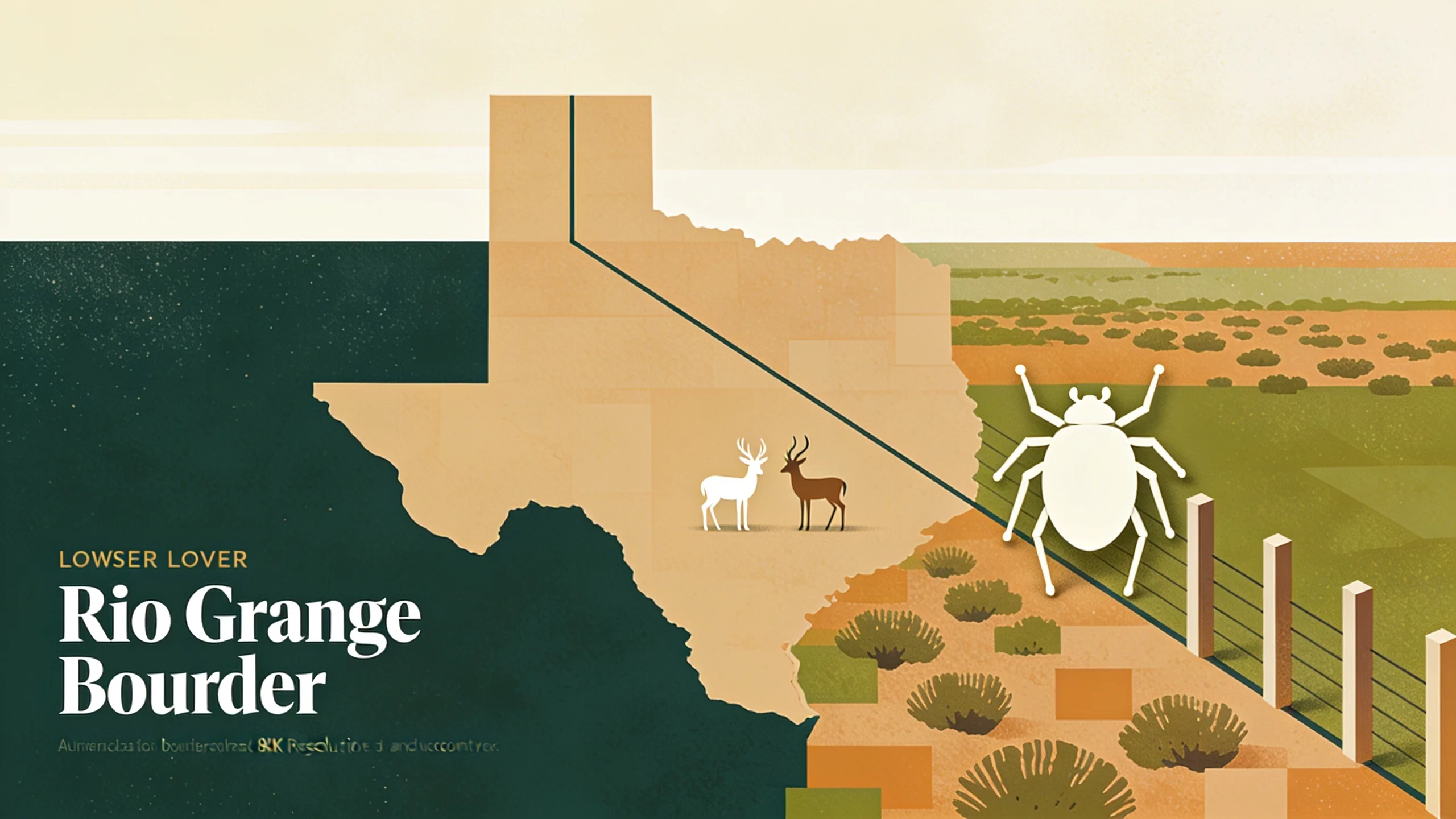
The quarantines are not one block. They are currently established in Cameron, Starr, Val Verde, Maverick, Hidalgo, Webb, Willacy and Zapata counties, a string of territory running from the Lower Rio Grande Valley west toward the southern edge of the Edwards Plateau. Arranging the inspection means calling a county contact — 956-723-3051 in Webb, 830-773-5565 in Maverick, 956-546-6004 in Cameron — and TAHC publishes a line for each of the eight.
What is being kept inside those counties is a tick, not a fly. Cattle fever ticks are Rhipicephalus annulatus and Rhipicephalus microplus, two species formerly grouped under the genus Boophilus, and they are not dangerous because of their bite. They carry Babesia bovis and Babesia bigemina, the protozoa behind cattle fever, or bovine babesiosis. The organism attacks and destroys red blood cells, producing acute anemia, high fever and an enlarged spleen and liver, and according to TAHC it kills as much as 90 percent of susceptible cattle with no prior exposure.
That mortality curve is why the tick has been a policy problem for more than a century. The disease took enormous economic losses out of the U.S. cattle herd in the late 1800s and early 1900s, and the state and federal animal health agencies have worked the problem jointly ever since. What has kept the quarantine lines alive into 2026 is wildlife. Nilgai and white-tailed deer carry fever ticks across pastures and fence lines, and they do not line up for a dipping vat at the gate. TAHC maintains systematic quarantine areas specifically to hold a permanent buffer against that traffic.
"We maintain a simple process for hunters to get an inspection before leaving a fever tick quarantine zone that helps protect the rest of Texas and the nation from these pests and the disease they spread," said Dr. Bud Dinges, TAHC executive director and state veterinarian.
The timing is the point. Archery season for white-tailed deer opened Oct. 3. The youth-only weekend is Oct. 30, and the general season opens Nov. 7 — meaning tens of thousands of hunters will be moving through South Texas brush country in the coming weeks, and a share of them will be hunting inside a quarantine line they may not know exists. Texas Parks and Wildlife has already asked deer hunters to inspect carcasses for screwworm wounds this fall, which is a different parasite with a different rulebook: screwworm asks for a report, while the fever tick rules govern whether the animal leaves the premises at all. Fever ticks are also reportable to TAHC.
The practical sequence for a hunter is to call the county contact before the trip rather than at the tailgate, confirm whether the lease sits inside a quarantine, and build in time for an inspection that has to happen on site. Livestock owners moving cattle out of the same areas have their own requirements and can find voluntary fever tick treatment locations through the agency. None of it is new, but the reminder arrives exactly when compliance is hardest to remember.
Sources
Texas Bug Slayers Editorial Team
Editorial Board
The Texas Bug Slayers editorial team brings together licensed pest control professionals, entomologists, and writers dedicated to helping Texans protect their homes and families from pests.
Related Articles
EPA Imposes Strictest Dicamba Rules Yet for 2026-2027 Growing Seasons
New EPA regulations tighten over-the-top dicamba use on cotton and soybeans with halved application rates, temperature cutoffs, and expanded Endangered Species Act requirements.
Del Rio's Horse Lane Is Open Again, and the First Week Arrived as a Backlog
Horse exports from Texas to Mexico resumed at the Del Rio crossing after a months-long screwworm halt. One San Antonio hauler moved 130 head in week one.
USDA Says the Data, Not the Calendar, Decides When the Next Cattle Port Reopens
Fifty-two U.S. screwworm cases and two still active: USDA's Dudley Hoskins explains the inspection regime behind port reopenings and a fly-supply plan aimed at 300 million sterile insects a week.