

US and Mexico Open Massive Sterile Fly Facility in Chiapas to Combat Screwworm Threatening Texas
The United States and Mexico have taken a dramatic step in their joint fight against the New World screwworm, inaugurating a massive sterile fly production facility in southern Mexico designed to halt the parasite's northward march toward Texas.
For the running case count and the affected-county map, follow our Texas screwworm tracker.
On June 27, 2026, Mexican President Claudia Sheinbaum and U.S. Agriculture Secretary Brooke Rollins officially opened the $50+ million plant in Metapa de Dominguez, Chiapas, near the Guatemala border. The facility will eventually produce up to 100 million sterile flies weekly, more than doubling current capacity in the region.
"Our countries have beaten this before, 40, 50 years ago," Rollins said at the ceremony. "We will beat the New World screwworm again sooner than anyone would have thought because of the extraordinary work that is going to happen at this facility."
The Screwworm Threat
The New World screwworm poses a devastating risk to warm-blooded animals. Female flies lay eggs in wounds or orifices, and when larvae hatch, they burrow into flesh and feed on living tissue. A single female can lay up to 3,000 eggs in her lifetime. Left untreated, infestations are fatal.
The parasite was eradicated from the United States in 1966 through an aggressive sterile insect technique program, but re-emerged in 2023 when it began spreading through Central America. Mexico confirmed its first case in November 2024, and by June 2025, the U.S. had detected cases in Texas—the first domestic infections in nearly 60 years.
As of late June 2026, USDA has confirmed at least 25 cases in Texas and New Mexico, while Mexico reports approximately 1,800 active cases. The outbreak has already disrupted cross-border cattle trade, with the U.S. maintaining restrictions on Mexican live cattle imports since May 2025.
How Sterile Flies Work
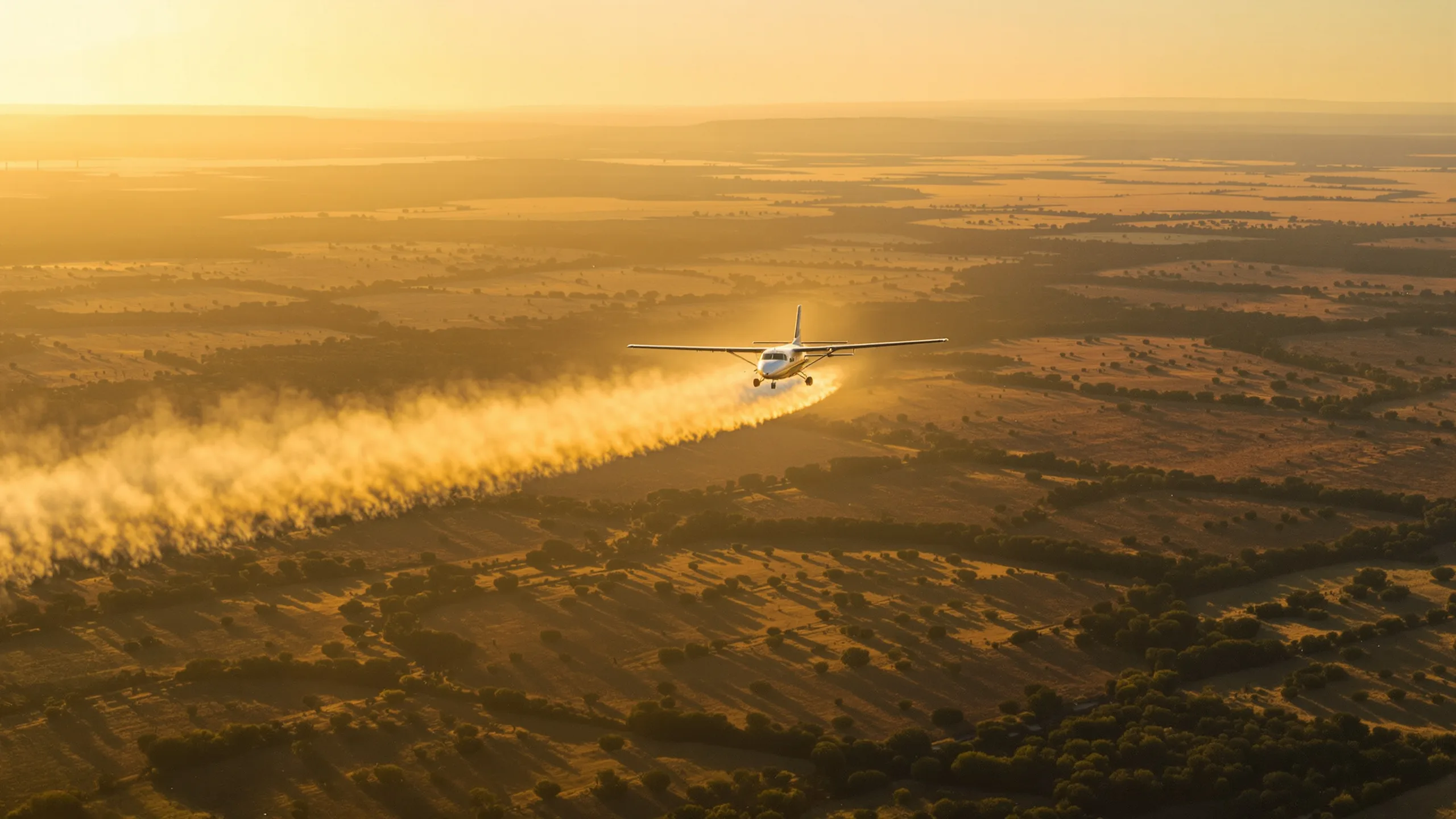
The sterile insect technique represents one of history's most successful biological control methods. Scientists rear massive numbers of male flies, sterilize them with radiation, and release them into wild populations. When these sterile males mate with wild females, the females produce no offspring, causing population collapse over time.
The new Metapa facility joins an existing COPEG plant in Panama that has been operating at capacity, producing roughly 100 million flies weekly. Together, the two facilities will release sterile flies along a broad front stretching from Panama to the U.S.-Mexico border.
Construction of the Chiapas plant began just 11 months ago, following a $21 million USDA investment announced in May 2025. The facility represents a key component of the department's five-point action plan announced last summer.
Texas Impact
For Texas ranchers, the facility cannot open soon enough. The state has confirmed screwworm cases across multiple counties including Zavala, La Salle, Gillespie, Edwards, Sutton, and Tom Green. Governor Greg Abbott activated the State Emergency Operations Center to Level II in response, and the Texas Animal Health Commission has established quarantine zones restricting livestock movement.
The border closure has hit Texas feedlots particularly hard. Before restrictions, Mexican suppliers shipped more than 1 million head of cattle annually to U.S. feedlots, many in Texas. The disruption has contributed to historically tight cattle inventories and squeezed supply chains.
Meanwhile, Texas A&M AgriLife Research is deploying artificial intelligence to assist trail-camera monitoring, identifying high-risk locations where livestock might interact with wildlife that could carry the parasite.
Looking Forward
Secretary Rollins has overseen what USDA calls "the largest New World screwworm response effort in decades," including $1.3 billion in investments, a 1,000 percent expansion of NWS workforce, and strengthened international cooperation.
President Trump recently appointed cattleman and food safety expert John Bellinger as senior adviser on NWS preparedness. "USDA is responding in real time and building up long-term capabilities to push back New World screwworm beyond our borders," Bellinger said.
The FDA has also accelerated emergency use authorizations for animal treatments, including Negasunt Powder for dogs and cats, as the agency prepares for potential expansion of the outbreak.
For Texas livestock producers, the Metapa facility represents hope that the biological barrier against screwworm can be re-established before the parasite gains a permanent foothold in the United States. The question now is whether 100 million sterile flies per week will be enough—and whether they can be deployed fast enough to outpace a pest that has already waited six decades for its return.
Sources
Texas Bug Slayers Editorial Team
Editorial Board
The Texas Bug Slayers editorial team brings together licensed pest control professionals, entomologists, and writers dedicated to helping Texans protect their homes and families from pests.
Related Articles

Screwworm Rules Follow the Herd North as Canada Turns Back Texas Cattle
Canada now lists Texas and New Mexico as screwworm-affected states, blocking live cattle imports and forcing returning herds into a 21-day detour.

First Wild Screwworm Fly Trapped in Texas as USDA Logs Brewster County Detection
USDA's case dashboard logged a wild screwworm fly from a Brewster County surveillance trap on Sept. 25 — the outbreak's first detection with no animal involved.
USDA Unveils Quarterly Review Roadmap for Screwworm Response Playbook
USDA APHIS shares comprehensive roadmap for quarterly reviews of New World Screwworm Response Playbook as parasite cases reach 45 infestations across Texas and New Mexico.