
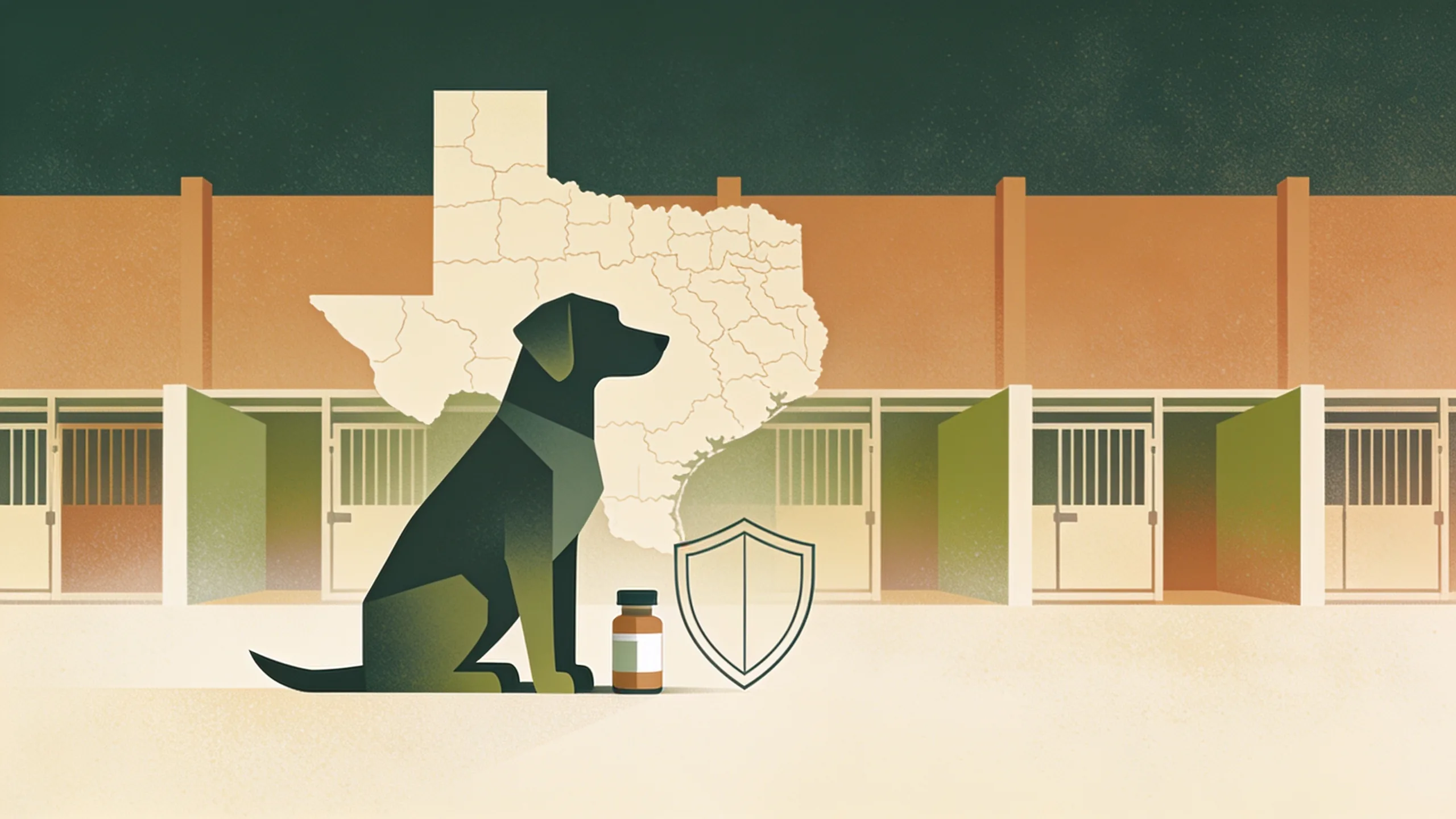
Harlingen's Shelter Would Rather Buy the Drug Than Treat the Wound
Shannon Harvill has no confirmed case of New World screwworm in Harlingen that she can point to. That is the whole point of the $10,000 her department just spent. The city's animal shelter took a grant from the ASPCA this month to buy the flea-and-tick medication the FDA cleared this summer as a screwworm treatment — enough of it, the shelter says, for at least 100 animals.
"It will allow us to be proactive instead of reactive in reference to the New World screwworm and make sure we prevent any spread of the screwworm if we get our first case," said Harvill, Harlingen's environmental health director.
The wager is a small one set against a specific piece of arithmetic. A dose of preventive medication runs a shelter a few dollars per animal. Treating an infested dog means sedation, surgical removal of larvae from living tissue, antibiotics and days of wound care. In a kennel, it also means every animal that shares a run, a fence line or a drainage path becomes a surveillance question. Screwworm flies lay eggs on any break in the skin, including the small ones dogs pick up in brush, and the larvae that hatch burrow into healthy flesh instead of dead tissue — the trait that makes the species so destructive in livestock and pets alike.
That dogs belong on the risk list is no longer theoretical. Three of the infestations confirmed in Texas and New Mexico this year involved dogs, and the parasite's arrival in the state — a three-week-old calf in Zavala County, announced by the Department of State Health Services on June 4 — set off a summer of movement rules for companion animals. Several states now demand preventive medication before a Texas dog or cat crosses their line, a requirement most of the state's smaller shelters cannot meet because they have no veterinarian on staff to administer it. Ellen Jefferson, president of Austin Pets Alive, put the number of Texas shelters without veterinary access above 200 this summer, part of the reason rescue transports out of the state were cut roughly in half in July and August.
Closing that gap is what the grant money is for. The ASPCA opened its screwworm direct-support program in August with up to $500,000 committed, after shelter-medicine veterinarians made the case that a common class of flea-and-tick preventives kills screwworm larvae if an animal is dosed before the flies find it. Sandra Newbury, who directs the University of Wisconsin's Shelter Medicine Program, argued the position in the middle of the entry-order scramble: treat the animal before it leaves an infested zone and the risk largely disappears.
For a border county the calculation leans harder toward prevention than it does in Dallas or Lubbock. Cameron County's stray population is large, free-roaming dogs are difficult to account for, and the fly has been moving north through Mexico and Central America since the current outbreak began in Panama in 2022. USDA counted 52 confirmed U.S. cases since June 3 in its Friday briefing, with only two still active — a lull that has not changed the math for a shelter buying doses in October.
The public guidance from the shelter is close to the state's. Check animals after they come out of brush. Clean and cover any wound, however small. Watch ears, eyes, nostrils and the base of the tail for larvae — creamy-white maggots with dark hooks at one end — and call a veterinarian rather than pulling them out, because a clumsy removal tears more tissue. Suspicious cases in animals should go to a veterinarian or the Texas Animal Health Commission at 800-550-8242.
Mostly, though, buy the medication early. What $10,000 bought in Harlingen was not a treatment. It was a shelter that does not have to wait for its first case to start protecting the animals already inside it.
Sources
Texas Bug Slayers Editorial Team
Editorial Board
The Texas Bug Slayers editorial team brings together licensed pest control professionals, entomologists, and writers dedicated to helping Texans protect their homes and families from pests.
Related Articles
FDA Authorizes Emergency Screwworm Treatment for Dogs as Texas Pet Owners Face Growing Threat
FDA grants emergency use authorization for drug to treat New World screwworm in dogs and puppies, expanding veterinary options as parasite cases rise in Texas.

San Angelo State Park Issues Screwworm Warning for Visitors and Pets
Texas Parks and Wildlife warns visitors to San Angelo State Park about New World screwworm risks after parasite detected in Tom Green County area.

Travis County Declares Disaster Over Screwworm Threat Before First Case Appears
Austin-area county takes unprecedented proactive step, signing disaster declaration to streamline response resources as New World screwworm spreads through South Texas.