
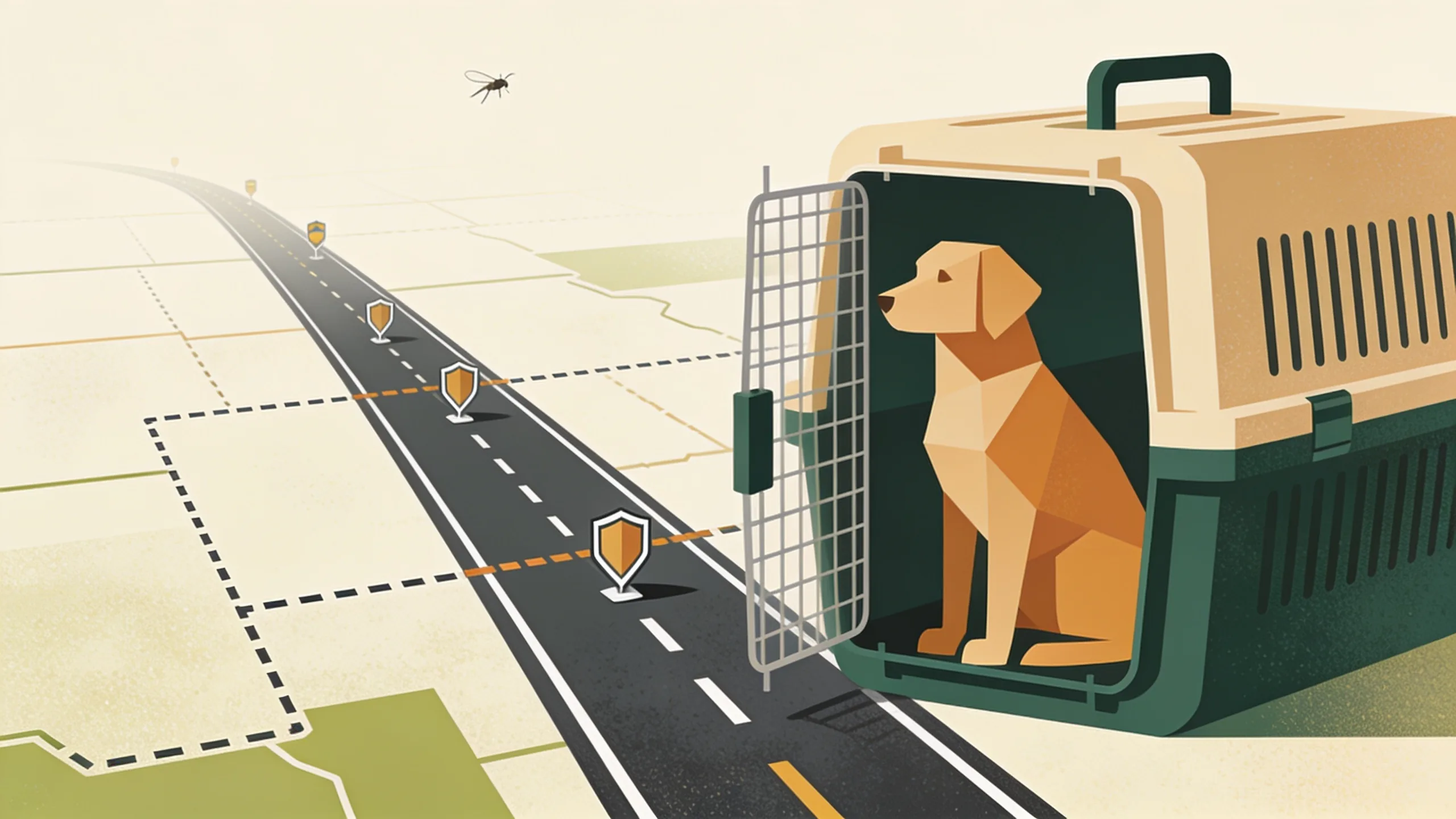
Screwworm Rules Are Stranding Texas Shelter Pets as States Tighten Animal Transport
For four years, Denisse Prater's box truck has rolled out of Texas most weekends with 30 to 40 dogs aboard, bound for adoptive homes along both coasts and across the Midwest. Last month, that number was cut in half — not by fuel costs or a lack of dogs, but by a flesh-eating fly.
For the running case count and the affected-county map, follow our Texas screwworm tracker.
The New World screwworm, detected in the United States in June for the first time in decades, has prompted nearly every state to impose new entry requirements on animals traveling from Texas or from counties near confirmed cases. U.S. agriculture officials have confirmed just over 40 infestations in Texas and New Mexico, mostly in cattle, sheep and goats — but three cases involved dogs, and that was enough to put the entire shelter-rescue pipeline under a regulatory microscope.
Permits, paperwork and a five-day window
Each state's order reads a little differently, which is part of the problem. Most now demand an entry permit plus documentation that a veterinarian inspected the animal five to seven days before travel. Minnesota, Illinois and Michigan go further, requiring some animals to receive preventive medication capable of killing screwworm maggots before they cross state lines.
The medication approach came from a coalition of national rescue groups, including the ASPCA and university shelter-medicine programs, after several states initially banned Texas animals outright. Sandra Newbury, who directs the University of Wisconsin's Shelter Medicine Program and helped lead that effort, argues the parasite is actually straightforward to manage in pets because common flea and tick preventives do the job. Treat the animal before it leaves an infested zone, she says, and the risk largely disappears.
Two hundred shelters without a vet
Simple on paper does not mean simple in practice. Ellen Jefferson, president and CEO of Austin Pets Alive and a veterinarian herself, estimates that more than 200 Texas shelters have no access to a veterinarian at all — meaning they cannot legally administer even the basic medication some states now require. Her organization has been signing on as the "vet on record" for as many small rural shelters as it can, while pressing Texas regulators to allow remote veterinary supervision or let trained volunteers and out-of-state vets administer treatments.
The stakes are not abstract. Rural shelters were already euthanizing animals for lack of space before the screwworm arrived, operating on budgets of roughly $100 per animal — enough for food and little else. Transports to better-funded northern facilities were the pressure valve. "Everybody uses transport as a Band-Aid," Jefferson said, arguing Texas ultimately needs to solve adoption within its own borders.
Even rescues with veterinary access are struggling with the logistics. Groups once had a 30-day window to get a dog seen before a trip; the new five-to-seven-day inspection window has created an appointment crunch that forced some clinics to extend hours. Prater, who also works as a nurse, compared the chaotic June rollout — conflicting orders, unclear guidance — to the early weeks of the COVID-19 pandemic. She now checks state orders twice a week to keep current.
Federal officials continue to attack the outbreak itself with surveillance and sterile-fly releases. But Prater expects the travel rules to outlive the emergency. "How can you tell a fly not to cross state lines?" she said. "I think it's going to be something we're always going to have to deal with."
Sources
Texas Bug Slayers Editorial Team
Editorial Board
The Texas Bug Slayers editorial team brings together licensed pest control professionals, entomologists, and writers dedicated to helping Texans protect their homes and families from pests.
Related Articles
USDA Opens $90 Million Funding Pool to Combat Invasive Pests Threatening Texas Agriculture
USDA APHIS announces $90M in FY 2027 funding through Plant Protection Act Section 7721 to protect farms and forests from invasive pests, with applications open through September 21.
Texas A&M AgriLife Launches Statewide Alert System for Agricultural Threats and Invasive Pests
New Texas Agriculture Alert System delivers real-time notifications about pest outbreaks, wildlife diseases, and quarantine actions to farmers, ranchers, and residents across the state.

Travis County Declares Disaster Over Screwworm Threat Before First Case Appears
Austin-area county takes unprecedented proactive step, signing disaster declaration to streamline response resources as New World screwworm spreads through South Texas.