
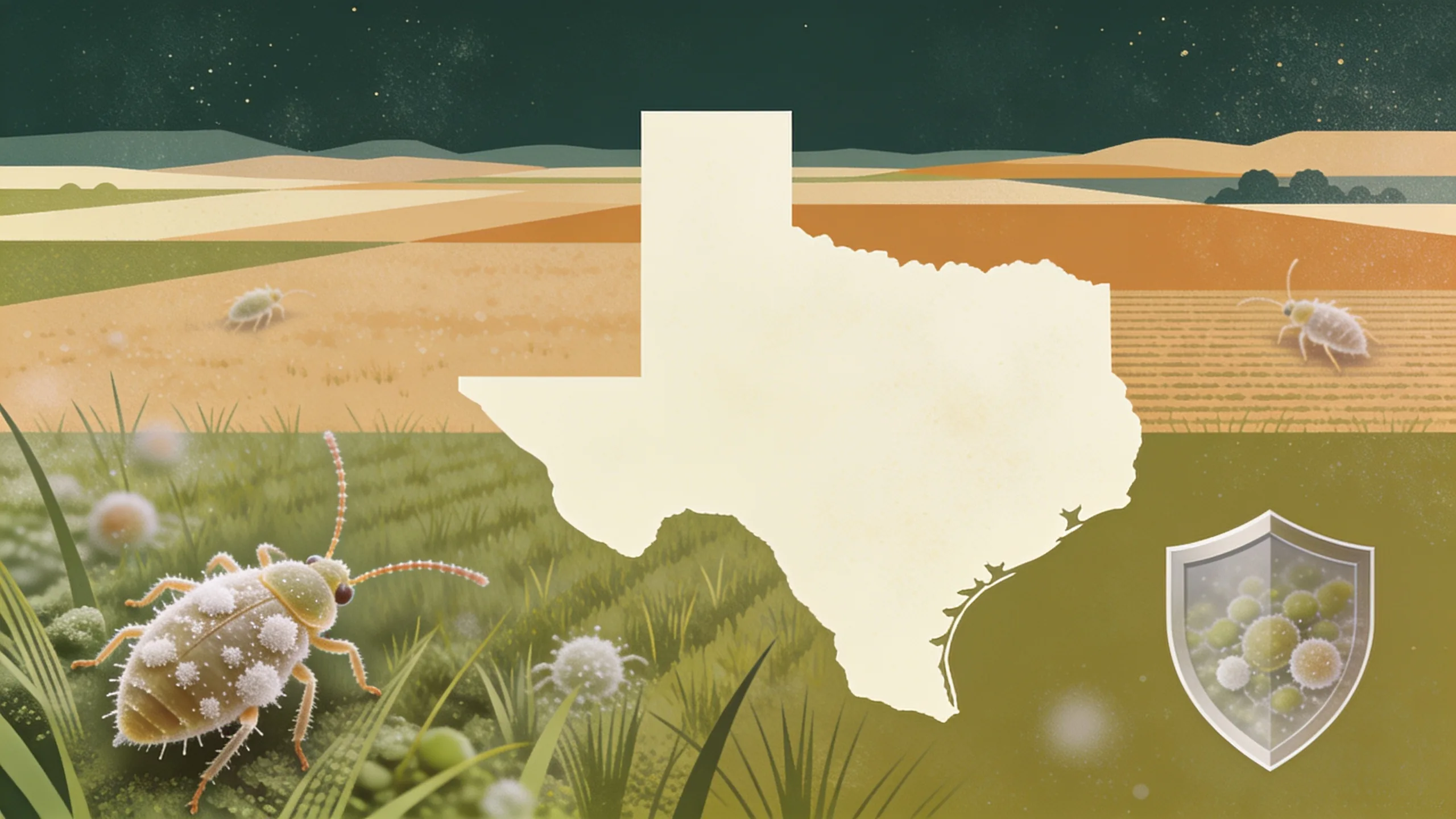
EPA Approves Emergency Insecticide for Pasture Mealybug as Texas Counties Hit 79
Texas cattle producers have a new weapon against one of agriculture's most damaging emerging threats. The U.S. Environmental Protection Agency has granted a crisis emergency exemption for the insecticide Centric 40WG, allowing its use on Texas pastures to combat the rapidly spreading pasture mealybug.
The approval marks the first effective chemical tool available to ranchers battling an invasive pest that has already infiltrated 79 counties since its initial detection in July 2025. Texas A&M AgriLife Extension Service quickly updated its pasture mealybug fact sheet with science-based recommendations for deploying the newly authorized treatment.
From Lab to Pasture
Dozens of field trials conducted across infested areas demonstrated Centric 40WG's consistent performance against the pest, according to David Kerns, Ph.D., AgriLife Extension entomologist and associate department head at Texas A&M.
"This has been the top performer in all our trials," Kerns said. "We're glad Texas producers now have an effective tool against this devastating pest."
The emergency exemption process required extensive documentation. AgriLife Extension filed for the exemption based on research data, while the Texas Department of Agriculture contributed supporting toxicology and environmental information. Producer letters backing the request helped demonstrate the urgent need for intervention.
The Growing Threat
Pasture mealybug presents a unique challenge to Texas agriculture. The pest attacks forage grasses—including Bermuda grass, Bahia, and bluestem—causing a condition known as "pasture dieback." Affected areas show reddening or yellowing leaves, stunted growth, and root reduction. Even turfgrasses like St. Augustine fall victim to the invasive insect.
The economic stakes are substantial. Texas leads the nation in both cattle inventory and hay production, with pastures and rangelands covering approximately 126 million of the state's farmland acres. AgriLife Extension economists project annual losses ranging from $100 million to over $1 billion, depending on how extensively the infestation spreads and the severity of damage in affected areas.
Prevention and Monitoring
The updated fact sheet provides more than chemical recommendations. Producers will find identification guidance, monitoring protocols, and additional approved treatment options alongside the new Centric 40WG specifications.
Controlling the pest's spread requires vigilance. Equipment contamination poses a significant transmission risk—producers moving machinery between pastures should thoroughly clean vehicles, tools, and boots when transitioning between infested and clean areas. Hay bales may also carry the pest to new locations.
Wind dispersion adds another layer of complexity. Kerns suspects early life stage mealybugs can travel significant distances on prevailing winds, explaining the rapid expansion across county lines.
Ongoing Research
The emergency exemption represents one component of a broader response. AgriLife Extension specialists continue collaborating with the Texas Department of Agriculture and USDA Animal and Plant Health Inspection Service to evaluate management strategies, explore biological controls, and refine recommendations as the situation evolves.
For producers in counties without confirmed infestations, early detection remains critical. Suspected cases should be reported to local AgriLife Extension offices for identification and guidance.
The fact sheet and updated recommendations are available through the Texas A&M AgriLife Extension pasture mealybug resource page.
Sources
Texas Bug Slayers Editorial Team
Editorial Board
The Texas Bug Slayers editorial team brings together licensed pest control professionals, entomologists, and writers dedicated to helping Texans protect their homes and families from pests.
Related Articles

Spinach Peptide Discovery Yields First Approved Treatment for Citrus Greening
Texas A&M AgriLife researchers celebrate federal registration of citrus greening treatment derived from spinach peptides, offering hope for Florida and Texas citrus growers.
Texas A&M Engineers $1.86M Push for Fast-Acting Screwworm Wound Treatments
Texas A&M System researchers develop rapid wound treatments for New World screwworm infestations, backed by $1.86 million to protect livestock from the invasive parasite.

USDA Commits $105 Million to 40 Breakthrough Projects Combating New World Screwworm Threat
USDA announces $105 million in funding through the NWS Grand Challenge, including Texas A&M's electron beam sterilization research, to bolster defenses against the parasitic pest.