

After the Hill Country Floods, the Pests Arrive Next: Fire Ant Rafts Now, Mosquitoes in Two Weeks
The water is going down across southern and central Texas. The pest problem it left behind is just getting started.
For the running case count and the affected-county map, follow our Texas screwworm tracker.
A week of downpours dumped more than two feet of rain on parts of the Hill Country and the border region, killing at least two people and forcing the rescue of more than 570, according to Gov. Greg Abbott. Nearly a trillion gallons fell on the three hardest-hit counties in three days. A bridge section collapsed over the Nueces River in Uvalde County, floodwaters spilled over Interstate 10 near Ozona, and roughly 6 million Texans sat under a flood watch at some point during the week.
Now come the shovels, the wet drywall, and the muck-out crews. Texas A&M AgriLife Extension entomologists have warned for years that this phase of a flood carries its own hazards — ones that arrive on two very different schedules.
The Hazard That Is Already Floating
Fire ants do not drown easily. When water rises into a mound, workers link legs and tarsi into a living raft that carries the colony, brood and queen across open water until it snags on something solid. That something is often a fence post, a pile of debris, or a person wading through a flooded yard.
"Fire ant colonies floating through floodwaters are dangerous, as they are alive and will 'explode' upon contact with an object or person," AgriLife Extension entomologist Paul Nester has cautioned, describing how the mass engulfs whatever it touches and stings relentlessly to protect the queen at its center. Ants in raft formation are measurably more aggressive than ants in a mound.
Nester's advice for anyone working in standing water is unglamorous and effective: cuffed gloves, rain gear, rubber boots. Watch what is drifting toward you. If ants do reach skin, rub them off rather than trying to flick or wash them away — a raft that has already made contact does not disperse on its own.
The threat lingers past the flood crest, too. Displaced colonies pile under debris and inside structures on higher ground, which means the yard being cleaned out next week may hold mounds that were not there in June.
The Hazard That Shows Up in Two Weeks
Mosquitoes work on a delay, and the delay fools people.
The counterintuitive part is that a violent flood initially reduces some mosquito breeding. Heavy, fast-moving water flushes out the small stagnant pools where the southern house mosquito — the state's primary West Nile carrier — lays eggs. Urban entomologist Mike Merchant has described the pattern plainly: the rains wash the habitat away, and then, as waters subside and puddles dry down and stagnate, those mosquitoes return after a few weeks.
That two-to-three-week lag is the reason post-flood mosquito complaints tend to peak after the news trucks leave. Floodwater mosquitoes and saltmarsh species emerge first and in punishing numbers, but they are mostly a nuisance; the disease risk builds afterward, quietly, in the residue of the flood.
The timing this year is unusually bad. Federal health officials have already flagged 2026 as the earliest and most intense West Nile season in roughly two decades, and Texas has been reporting human cases since spring. A statewide flush of new larval habitat arriving in late July, at the front edge of peak transmission season, is the opposite of what vector control districts wanted.
For anyone doing cleanup, that means repellent belongs in the toolbox alongside the gloves, and it matters most at dusk and after dark. It also means the standing-water audit — buckets, tarps, tires, saturated debris piles, clogged gutters, and the pool that lost power — has a deadline of roughly the first week of August, not September.
Shelters, Livestock, and the Quieter Problems
Two other flood-season pest issues rarely make the coverage.
Evacuation centers and temporary housing concentrate belongings and bedding from dozens of households in one room, which is exactly how bed bugs travel. Merchant's guidance to shelter operators has been to assume the possibility rather than react to it: know what the insects look like, inspect sleeping areas on a schedule, and have a pest control company lined up before there is anything to treat.
On the agricultural side, AgriLife Extension's Disaster Assessment and Recovery team, whose specialists deployed as rivers rose last week, flagged biting pests as a longer-term concern for producers in low-lying country. "It's important to make sure all livestock vaccinations are current and to apply insect repellents to protect livestock from what will likely be increased mosquito and fly populations," said Bryan Davis, the program's South region chief.
There is one more wrinkle specific to this summer. Ozona, where seven boat teams pulled residents out of flooded neighborhoods, is the seat of Crockett County — the same county that has carried the heaviest concentration of Texas's New World screwworm cases this year. Screwworm flies lay eggs in open wounds, and floods produce exactly that: livestock and wildlife cut on debris, fencing, and washed-out creek beds. Ranchers in the affected zone have reason to inspect animals for wounds sooner and more often than usual over the next month.
What Actually Helps
Flood recovery is triaged by what is most urgent, and insects almost never win that contest in week one. But the two things worth doing early are cheap. Gear up before stepping into standing water, and start draining and drying anything that holds water the moment it is safe to move around the property — because the mosquito problem being created right now will not announce itself for another fortnight.
By then, the water will be a memory. The eggs it left will not be.
Sources
Texas Bug Slayers Editorial Team
Editorial Board
The Texas Bug Slayers editorial team brings together licensed pest control professionals, entomologists, and writers dedicated to helping Texans protect their homes and families from pests.
Related Articles
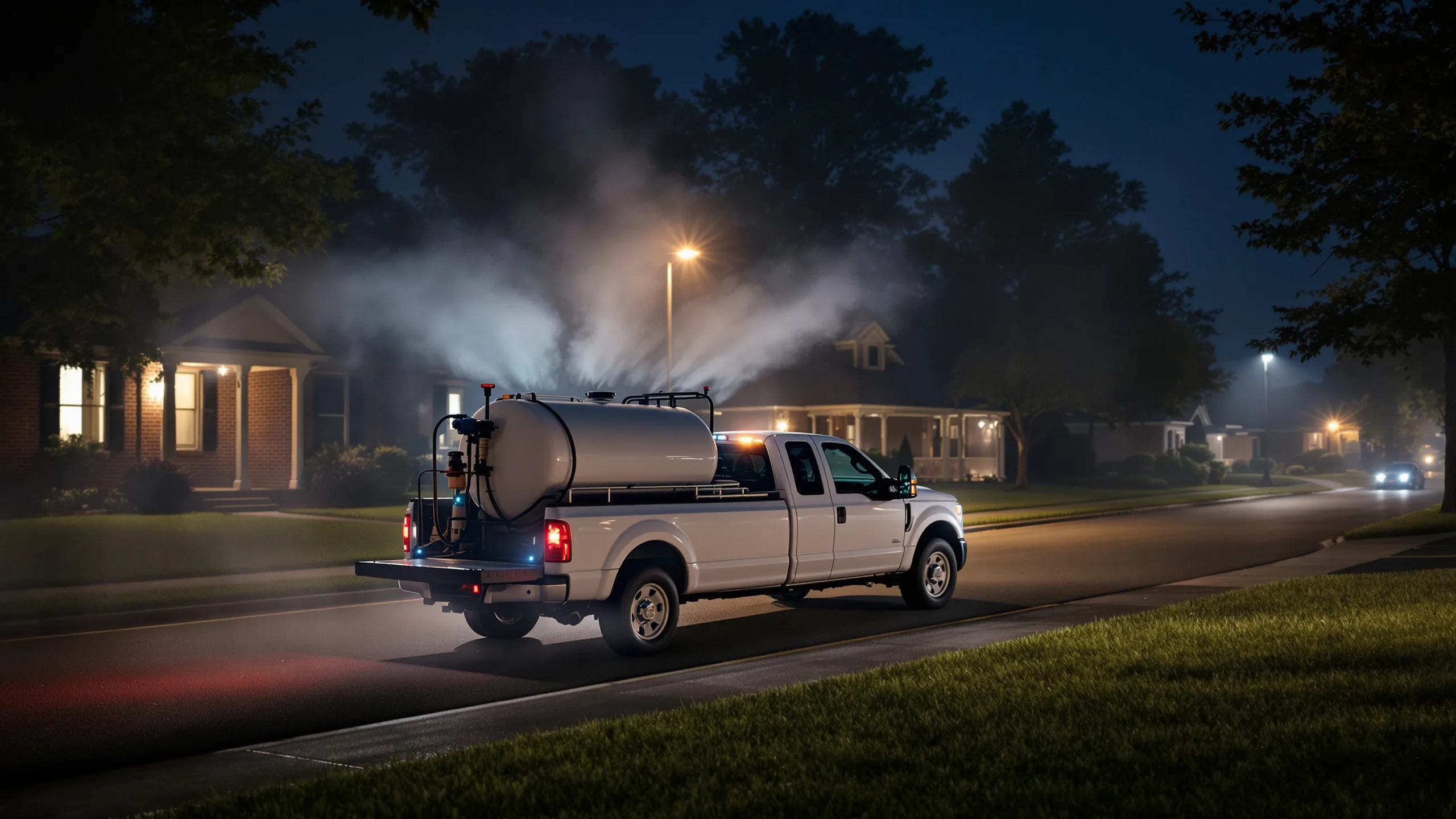
Arlington Sprays Two Nights for West Nile as Texas Case Count Reaches 46 at Season's Peak
Arlington crews sprayed two nights near Caliente Drive after a mosquito trap tested positive for West Nile, as CDC's Sept. 1 update put Texas at 46 human cases.

St. Louis Encephalitis Surfaces in Coastal Bend Mosquitoes as Kingsville Sprays for Three Straight Nights
Kingsville and Robstown detected St. Louis encephalitis virus in mosquito pools, triggering targeted spraying across the Coastal Bend. No regional human cases confirmed.

Galveston County Reports First West Nile Case of 2026 as Neuroinvasive Virus Hospitalizes Resident
Galveston County confirms its first West Nile virus case of 2026, a severe neuroinvasive infection requiring hospitalization. Health officials urge immediate prevention measures.