
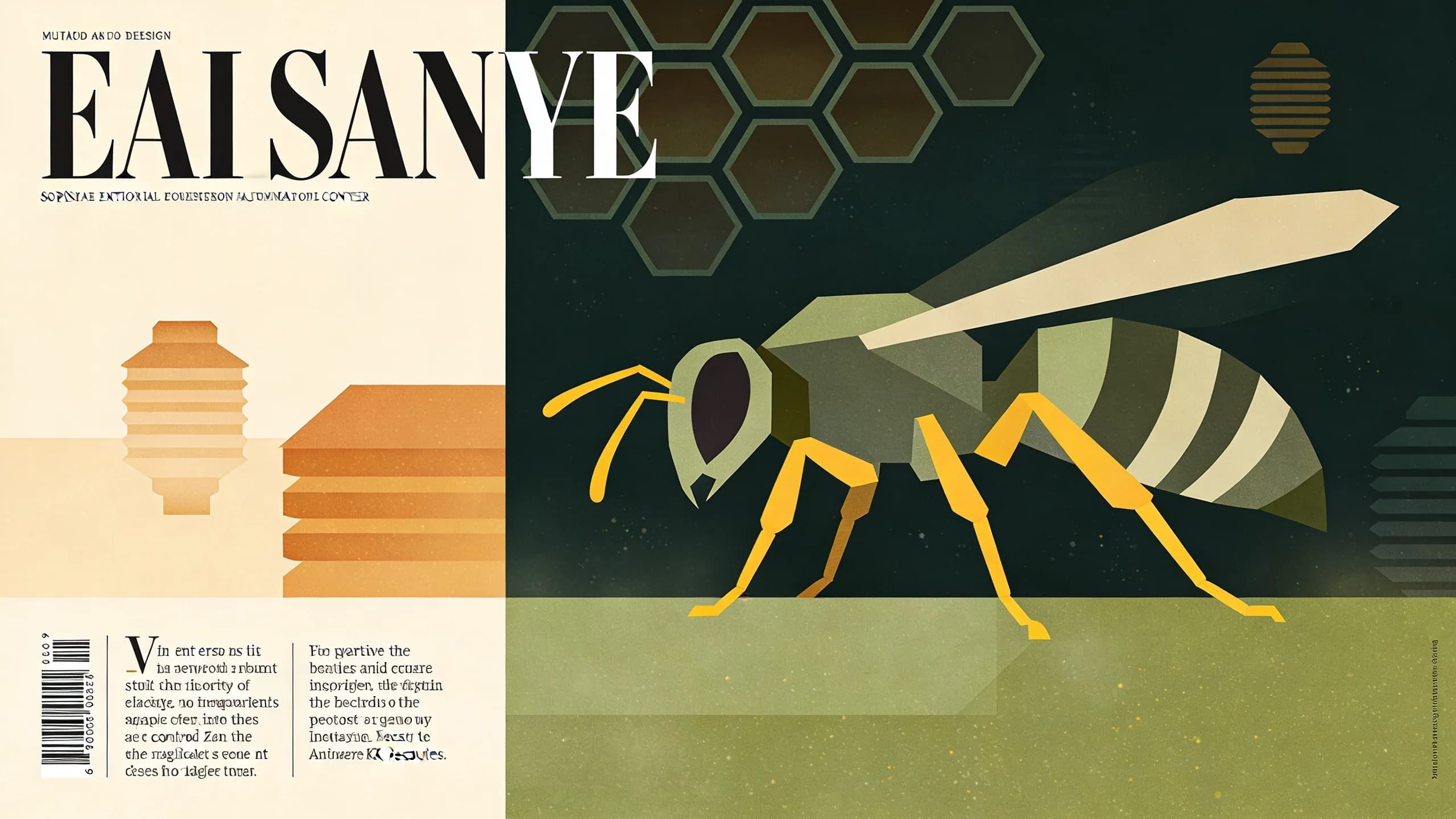
Yellow-Legged Hornet Intercepted at U.S. Port: Texas Beekeepers on Alert for Invasive Predator
A live yellow-legged hornet discovered at the Port of Vancouver, Washington last month has put agriculture officials on high alert across the United States, including Texas, where the state's $90 million honey industry and countless native pollinators face a potential new threat.
The interception marks the first confirmed detection of Vespa velutina on the West Coast and underscores how easily this invasive predator could spread to new territories. For Texas beekeepers already battling varroa mites, small hive beetles, and environmental pressures, the arrival of another specialized honey bee predator would add significant strain to an already challenged industry.
A Proven Threat Across Continents
The yellow-legged hornet's destructive potential is not theoretical. In Europe, where the species has established itself over the past two decades, beekeepers have documented devastating losses. Washington State Department of Agriculture officials cite a 30% reduction in honey bee hives and honey production in affected European regions—a statistic that keeps Texas apiarists awake at night.
Unlike the northern giant hornet, which made headlines as the "murder hornet" a few years ago, the yellow-legged hornet has demonstrated a remarkable ability to establish persistent populations. The first U.S. detection occurred near the Port of Savannah in 2023, and Georgia officials have been engaged in an ongoing eradication effort since.
How the Hornets Hunt
Yellow-legged hornets pose a direct threat at hive entrances. Workers wait outside honey bee colonies and snatch bees as they leave or return from foraging trips. A single hornet can kill dozens of bees per day through this ambush strategy.
As a hornet nest grows—and these paper-like structures can house up to 6,000 workers—the colony's protein demands increase. The attacks intensify accordingly, with larger hornet forces capable of overwhelming even strong honey bee colonies. The University of Georgia Bee Program has documented how this pressure can weaken hives to the point of collapse, particularly when combined with other stressors like mites or poor nutrition.
Beyond Honey Bees
While commercial beekeepers have the most to lose financially, the ecological implications extend far deeper. Yellow-legged hornets are generalist predators that feed on many insects beyond honey bees. Native pollinators—bumblebees, solitary bees, and other beneficial species—face the same predation pressure.
This matters enormously for Texas agriculture. The state's $100 billion agricultural sector depends heavily on pollinator services, from melons and cucumbers to blueberries and peaches. Wild pollinators provide substantial pollination value that supplements managed honey bee colonies. Losing them to an invasive predator would force farmers to rely more heavily on expensive commercial pollination services.
What Texas Beekeepers Should Watch For
USDA APHIS has issued guidance for identifying yellow-legged hornets before they can establish. Workers measure approximately 0.7 to 1 inch in length, with a mostly dark body and a distinctive yellow-orange abdominal segment. The legs turn yellow toward the ends—a feature that gives the species its common name.
Nests are paper-like and built above ground, often high in trees or attached to outdoor structures. They can be difficult to spot, particularly when concealed in dense foliage.
Officials stress caution in identification. Many native insects, including beneficial pollinators, share superficial similarities with the yellow-legged hornet. Texas beekeepers and gardeners should avoid disturbing suspected nests and instead report sightings through appropriate channels.
The Georgia Precedent
Georgia's experience since 2023 offers a template for response. State agriculture officials there have worked closely with federal partners and university researchers to track, trap, and eradicate detected hornets. The effort requires extensive public cooperation—citizen reports have proven crucial for locating nests before they can produce new queens.
Texas has not yet recorded a yellow-legged hornet detection, but the state's extensive port infrastructure and massive agricultural sector make vigilance essential. The Port of Houston alone handles millions of cargo containers annually, any one of which could harbor a stowaway hornet or an incipient nest.
For now, Texas beekeepers can only monitor and prepare. The state's warm climate and abundant forage would provide ideal conditions for yellow-legged hornets if they arrive. Prevention through early detection remains the best—and cheapest—defense against what could become a transformative pest for Texas agriculture.
Sources
Texas Bug Slayers Editorial Team
Editorial Board
The Texas Bug Slayers editorial team brings together licensed pest control professionals, entomologists, and writers dedicated to helping Texans protect their homes and families from pests.
Related Articles
Screwworm Count Reaches 50 as New Mexico Confirms a Second Horse Case
USDA confirms the 50th U.S. New World screwworm case — a horse in Grant County, New Mexico, the outbreak's second equine case in two weeks — while the Texas count holds at 48 and a border port prepares to reopen to Mexican livestock.
Screwworm Count Reaches 49 as First Horse Case Lands in Presidio County
USDA confirms the 49th U.S. New World screwworm case — a horse in Presidio County, Texas, the outbreak's first equine detection — while TAHC's September orders cut the quarantine map from 19 counties to 14.

USDA Marks Billionth Sterile Fly Release in Texas Screwworm Fight
USDA marked its billionth sterile fly released over Texas as Secretary Rollins reported three active screwworm cases and no cattle case in over a month.