
New Termite Treatment Kills 95% of Colonies Without Harming Humans
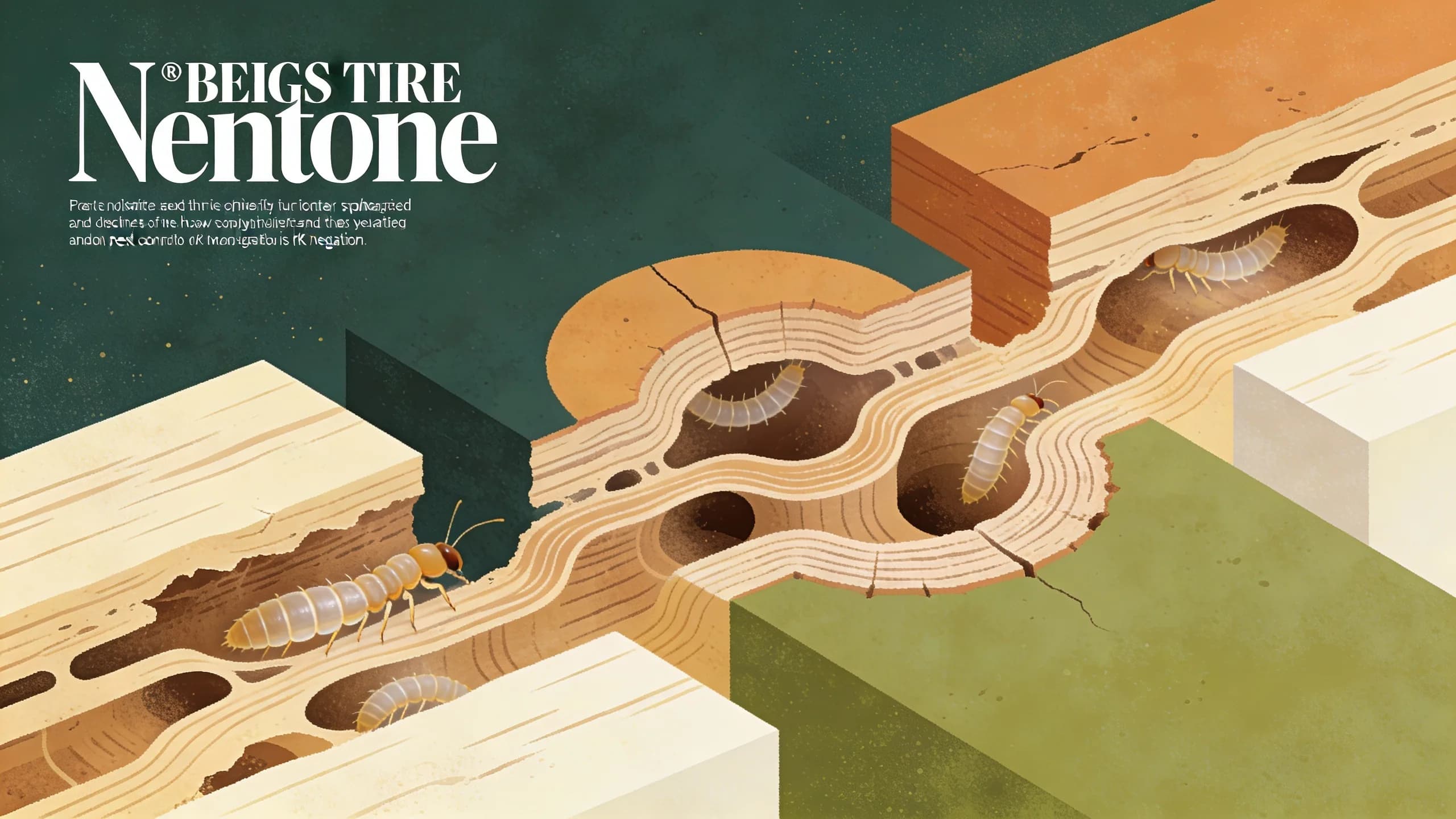
Drywood termites have long been the invisible enemy of Texas homeowners. These pests live entirely within wooden structures, quietly feeding and expanding their colonies until the damage becomes impossible to ignore. Traditional fumigation, while effective, forces families to evacuate their homes, bag all food, and endure toxic chemical exposure. Now, researchers at the University of California, Riverside have demonstrated a radically different approach that could reshape how pest control professionals battle these destructive insects.
The breakthrough centers on bistrifluron, a chemical compound that targets a biological process unique to insects: molting. Unlike conventional termiticides that poison indiscriminately, bistrifluron blocks the formation of chitin, the tough natural material that makes up termite exoskeletons. When termites cannot build new protective shells during their seven molting cycles, the colony collapses from within.
"This chemical is more environmentally friendly than ones traditionally used for drywood termite infestations," explains Nicholas Poulos, the study's corresponding author and a doctoral student at UC Riverside's Department of Entomology. "It's specific to insects and can't harm humans."
The research, published in the Journal of Economic Entomology, revealed striking results. In laboratory testing, bistrifluron eliminated approximately 95 percent of termite colonies. In no-choice trials, the treatment achieved 99 percent mortality over 60 days. Even when termites had the option to avoid treated wood, a 0.1 percent concentration still produced 96 percent mortality.
What makes this approach particularly promising for Texas pest control operators is how the treatment spreads through colonies. Drywood termites engage in proctodeal trophallaxis—a mouth-to-anus feeding behavior that transfers food and essential gut microbes between colony members. When researchers exposed just 5 percent of termites to treated material, the entire colony reached 100 percent mortality within 90 days. Food material moved from exposed donors to unexposed recipients within 24 to 48 hours.
"Once the termites reach a certain stage, they have to molt. They cannot avoid that," notes Dong-Hwan Choe, UC Riverside entomology professor and senior author of the paper. "With a lethal dose of this chemical, they'll try to shed their old exoskeleton but won't have a new one ready to protect them."
The treatment does require patience. Full colony collapse takes roughly two months, slower than some conventional methods. But the tradeoffs are substantial: lower toxicity, more targeted action, and the potential for localized spot treatments that avoid whole-home tenting.
"We believe this method of spot treatment can kill a larger colony and spread more easily than current termite control methods," Choe says. "You don't have to apply too much to get a very good result."
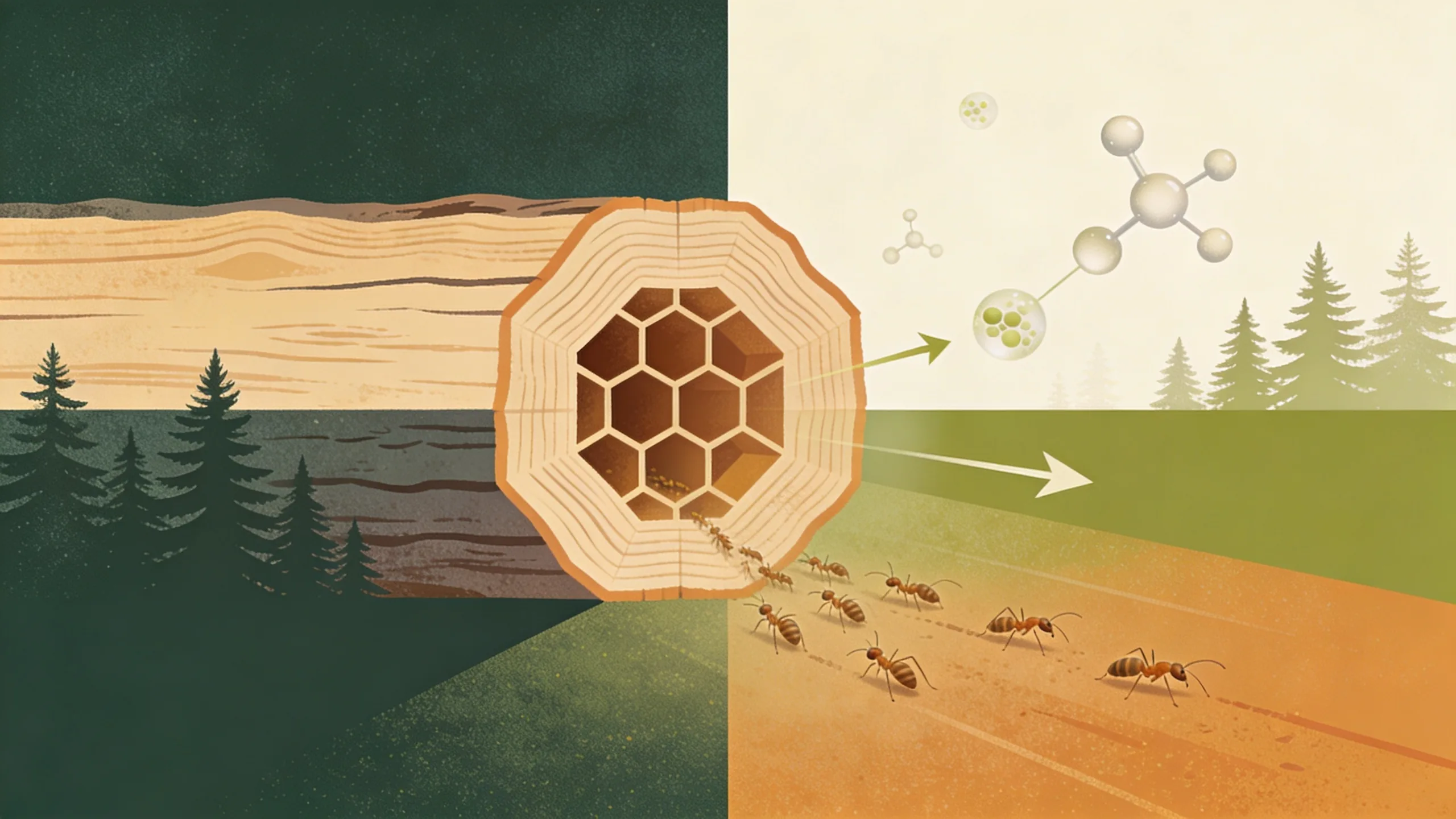
The UC Riverside team has also explored combining bistrifluron with pinene, a pleasant-smelling chemical released by forest trees that attracts termites. Earlier research from Choe's lab found that adding pinene to localized treatments killed termites more quickly and increased final mortality. Without pinene, insecticide alone achieved about 70 percent mortality. With pinene added, mortality exceeded 95 percent.
For Texas homeowners and pest management professionals, the implications are significant. Western drywood termites, native to northern Mexico and California, have established themselves across the Southwest. Climate change may expand their range further as shifting temperatures create new suitable habitats. The concealed lifestyle of these pests makes infestations difficult to detect early, often resulting in extensive structural damage before discovery.
The researchers acknowledge that practical application still needs refinement. The study used acetone to dissolve bistrifluron before applying it to wood—effective for research but problematic for real-world use due to flammability and strong odor. "We are working to make it more feasible for practical application in real life scenarios," Poulos confirms.
Still, the findings represent a meaningful step toward lower-impact termite management. As regulatory pressure increases on traditional fumigants and homeowners demand safer alternatives, chitin synthesis inhibitors like bistrifluron may soon find their way into Texas pest control arsenals. For an industry constantly balancing efficacy with safety, that cannot come soon enough.
Sources
Texas Bug Slayers Editorial Team
Editorial Board
The Texas Bug Slayers editorial team brings together licensed pest control professionals, entomologists, and writers dedicated to helping Texans protect their homes and families from pests.
Related Articles
UC Riverside Scientists Develop Pinene-Based Method to Lure Termites to Their Death
New research shows a 95% success rate using pinene, a natural forest compound, to attract western drywood termites toward insecticide treatments.

Texas A&M Researchers Deploy AI to Predict Crop Pest Outbreaks Before They Strike
New machine learning models from Texas A&M AgriLife can forecast western flower thrips populations with remarkable accuracy, giving farmers critical early warning.

Texas A&M AgriLife Hosts Greenhouse Pest Symposium in Dallas Oct. 1
Integrated Pest and Pathogen Management Symposium for Controlled Environment Agriculture brings experts on biocontrol, AI pest monitoring, and disease-resistant crops to Dallas.