
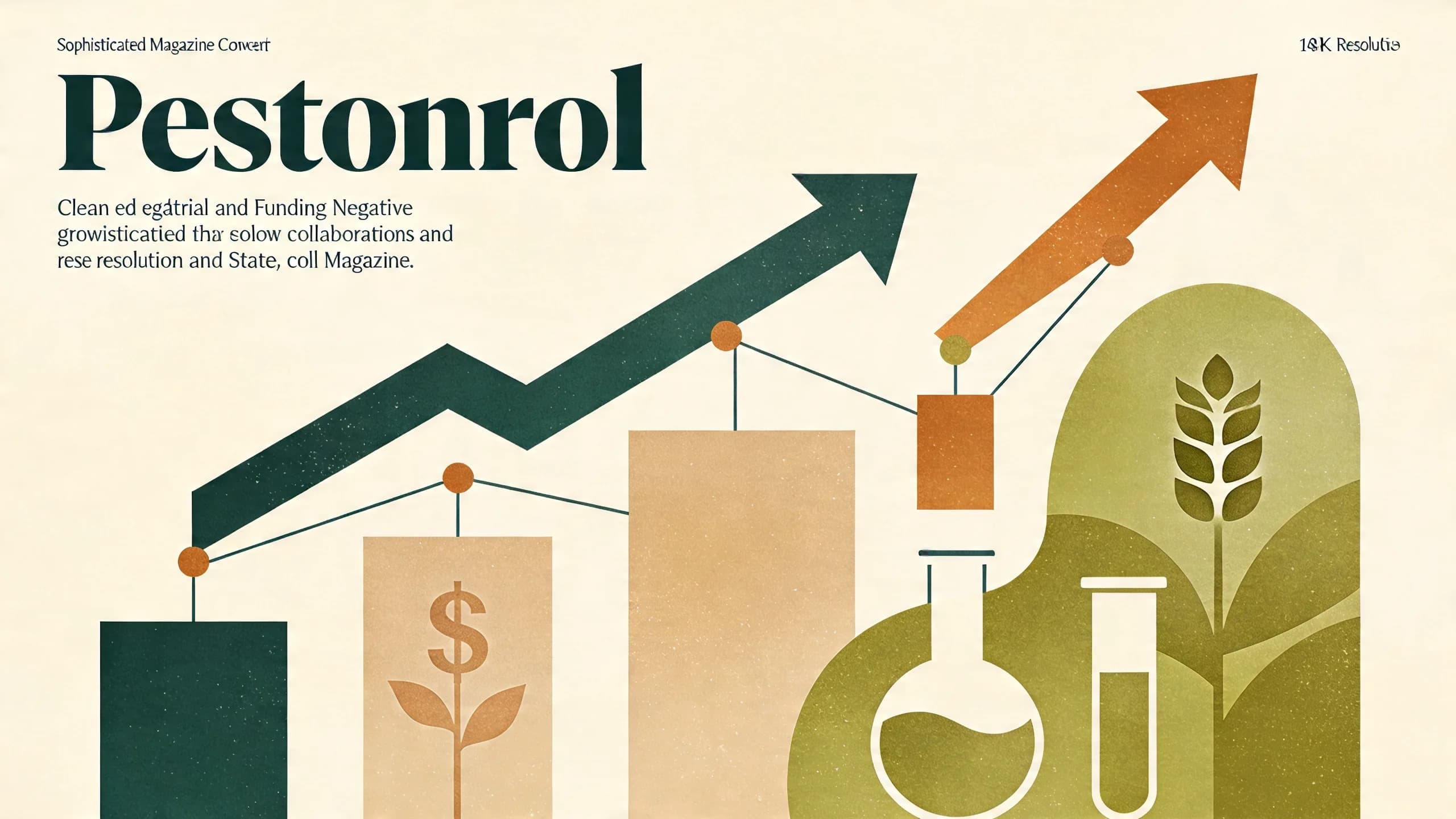
USDA Announces $100.9 Million in Specialty Crop Grants with Pest Management Focus
The U.S. Department of Agriculture has opened applications for $100.9 million in competitive grant funding designed to strengthen America's specialty crop industry, with significant portions allocated to pest management, plant disease research, and food safety initiatives.
The funding, announced this week through the Agricultural Marketing Service, splits between two established programs: the Specialty Crop Block Grant Program (SCBGP) and the Specialty Crop Multi-State Program (SCMP). Both programs target fruits, vegetables, tree nuts, dried fruits, horticulture, floriculture, and nursery crops—agricultural sectors that collectively represent nearly $65 billion in annual U.S. production value.
Program Breakdown and Priorities
The larger allocation, $86.6 million, flows through SCBGP to state departments of agriculture, which then subaward funds to locally led projects. Distribution follows a formula weighing both specialty crop acreage and production value, meaning California, Florida, Washington, and Texas will receive substantial shares.
Texas, as the nation's third-largest producer of specialty crops, stands to benefit significantly. The Texas Department of Agriculture has historically directed SCBGP funds toward research on emerging pests, improved integrated pest management protocols, and market development for crops ranging from citrus to pecans.
The remaining $14.3 million supports SCMP, which funds collaborative projects spanning multiple states. Unlike SCBGP, SCMP accepts applications directly from state agencies, local governments, tribal entities, universities, and nonprofit organizations. The multi-state requirement—projects must involve partners in at least two states—encourages regional approaches to shared challenges.
Pest Management Takes Center Stage
While the grant announcements cover broad competitiveness categories, pest and disease management features prominently in both programs' priorities. SCMP specifically lists "plant pests and disease" as a core focus area, alongside food safety, research, crop-specific issues, and marketing.
For Texas growers, this funding arrives at a critical moment. The state's specialty crop producers face mounting pressure from invasive species: the Asian citrus psyllid and associated Huanglongbing disease threaten the $150 million citrus industry; the spotted lanternfly, though not yet established in Texas, looms as a potential grape and tree fruit pest; and traditional adversaries like pepper weevil and tomato yellow leaf curl virus continue evolving resistance to conventional controls.
The grants support projects that address these challenges through several mechanisms: developing new monitoring tools, testing biological control agents, improving predictive models for pest outbreaks, and training growers on integrated pest management techniques that reduce chemical inputs while maintaining economic viability.
Application Timeline and Requirements
SCBGP applications must reach Grants.gov by 11:59 p.m. Eastern Time on June 8, 2026. State departments of agriculture submit the primary applications, but growers and researchers should contact their state SCBGP coordinators immediately—the internal deadlines for subawards typically fall weeks before the federal deadline.
SCMP operates on a longer timeline, with applications due October 16, 2026. This program's competitive structure means proposals undergo peer review, with funding decisions based on technical merit, economic impact potential, and geographic diversity.
Both programs require matching funds or in-kind contributions, though the ratios vary by project type. Federal funding cannot exceed the total project cost, meaning successful applicants must demonstrate committed non-federal resources.
Historical Impact in Texas
Previous SCBGP rounds have funded numerous Texas projects with direct pest management applications. Recent awards supported research on pecan casebearer monitoring systems, development of grapevine virus detection protocols, and establishment of beneficial insect habitat corridors in the Winter Garden region.
The multi-state program has similarly benefited Texas agriculture. A current SCMP project involving Texas A&M, New Mexico State University, and Oklahoma State University is developing region-specific integrated pest management guidelines for onion thrips, a pest that costs onion producers millions annually in reduced yields and quality degradation.
Looking Ahead
The funding originates from P.L. 119-21, the "One Big Beautiful Bill Act," representing a continued federal commitment to specialty crop competitiveness despite broader budget pressures. For an industry that lacks the commodity program safety nets available to corn, soybean, and wheat producers, these grants provide crucial support for innovation and risk management.
USDA officials emphasize that successful applications will demonstrate clear economic benefits, measurable outcomes, and sustainable practices. Projects incorporating climate adaptation strategies, digital agriculture tools, or supply chain resilience components may receive additional consideration.
Interested applicants can find state coordinator contacts, technical assistance resources, and application guidance through the AMS Specialty Crop Block Grant Program website. With deadlines approaching in less than two months, potential applicants should begin developing proposals immediately.
For Texas producers specifically, the Texas Department of Agriculture's grant office provides pre-application consultation and review services designed to strengthen submissions before they reach federal evaluation.
Sources
Texas Bug Slayers Editorial Team
Editorial Board
The Texas Bug Slayers editorial team brings together licensed pest control professionals, entomologists, and writers dedicated to helping Texans protect their homes and families from pests.
Related Articles
Texas Launches Agricultural Defense Program to Combat Pests and Disease
Commissioner Sid Miller announces AgDefense, a new TAFA-funded initiative to protect Texas farmers from agricultural pests, diseases, and predators.

EPA Unveils New Alternatives to Animal Testing for Pesticide Safety Reviews
EPA announces two major scientific advancements to eliminate mammalian animal testing by 2035, introducing new framework for surfactants and GHS mixtures equation for pesticide risk assessment.

Spinach Peptide Discovery Yields First Approved Treatment for Citrus Greening
Texas A&M AgriLife researchers celebrate federal registration of citrus greening treatment derived from spinach peptides, offering hope for Florida and Texas citrus growers.