
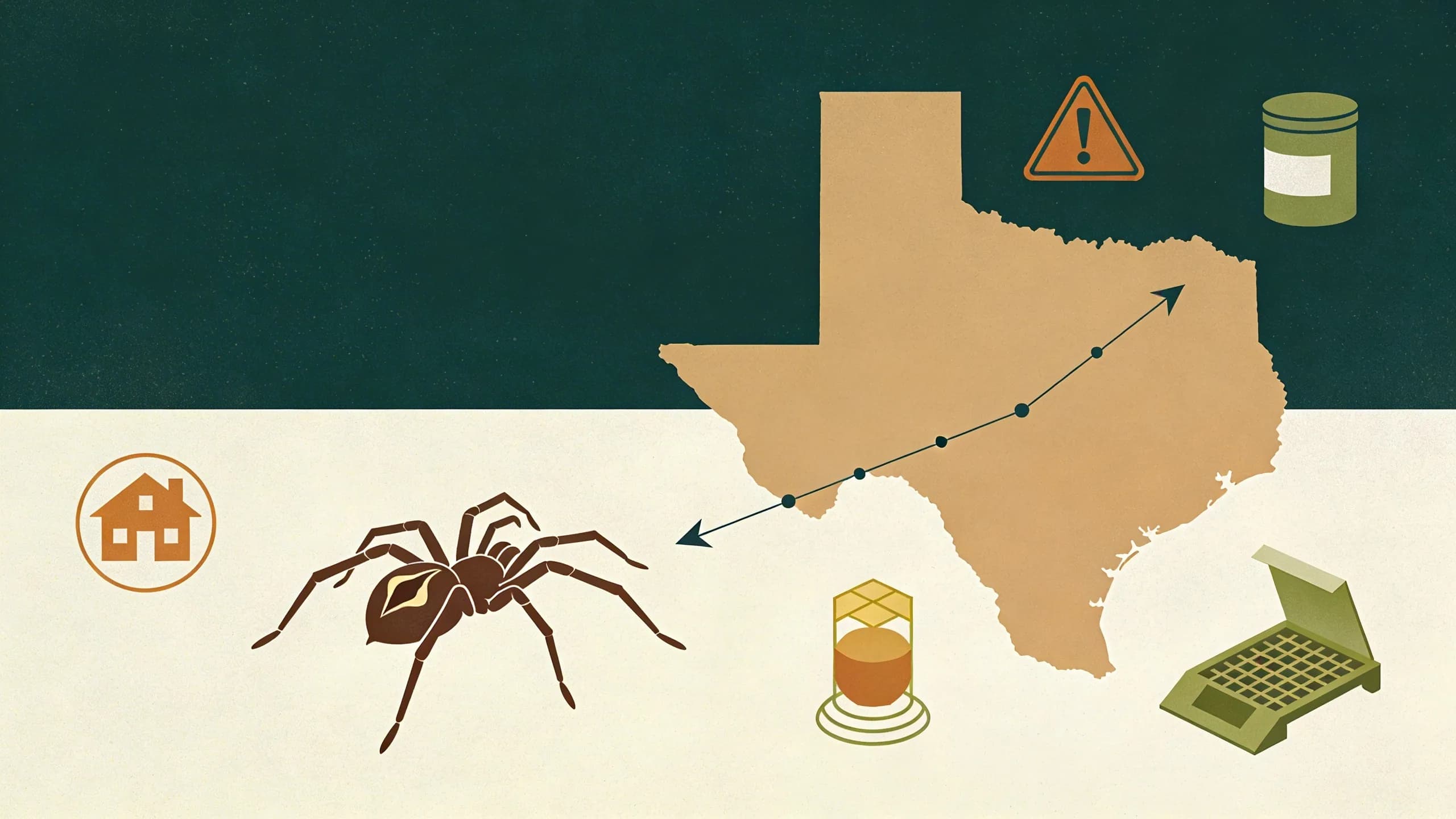
Brown Recluse Spiders Expanding Range Across Texas: Identification and Safety Guide
The brown recluse spider, one of North America's most venomous arachnids, is showing signs of expanding its range across Texas and into new territories. Recent observations indicate these spiders are adapting to slightly cooler climates and establishing populations in areas previously considered outside their traditional range.
Traditionally concentrated in the south-central United States including Texas, Oklahoma, Arkansas, and Missouri, brown recluses (Loxosceles reclusa) are now being reported with increasing frequency in regions where they were historically rare or absent. This expansion has significant implications for Texas homeowners unfamiliar with proper identification and safety protocols.
Why Brown Recluses Are Spreading
Multiple factors contribute to the brown recluse's territorial expansion:
Climate change: Warmer winters and extended warm seasons create hospitable conditions outside the spider's traditional range. Mild temperatures allow populations to survive in areas that previously experienced fatal cold snaps.
Human transportation: The transport of goods, furniture, and building materials provides opportunities for brown recluses to hitch rides to new locations. Once introduced, isolated populations can establish themselves if environmental conditions prove suitable.
Habitat adaptation: These spiders demonstrate remarkable adaptability to human-altered environments, thriving in attics, basements, storage areas, and outbuildings across diverse climate zones.
Proper Identification Is Critical
Accurate identification prevents unnecessary panic while ensuring dangerous encounters are handled appropriately. Brown recluses possess distinctive characteristics that distinguish them from harmless look-alikes:
Six eyes: Unlike most spiders which have eight eyes, brown recluses have only six arranged in three pairs. This feature requires close observation but provides definitive identification.
Violin marking: A dark, violin-shaped patch on the cephalothorax (where legs attach to the body) gives the spider its common name. However, this marking varies in visibility and similar patterns appear on other species, making it an unreliable sole identifier.
Leg appearance: Solid-colored brown legs without stripes, spines, or spots characterize brown recluses. The legs lack significant hair compared to many other spider species.
Size: Adults range from one-quarter to one-half inch in body length, with legs extending significantly beyond this measurement.
Color variation: While typically light to medium brown, coloration can vary from tan to dark brown, making color alone insufficient for identification.
Understanding the Risk
Brown recluse venom contains sphingomyelinase D, an enzyme capable of causing significant tissue damage. However, several factors mitigate the actual danger these spiders pose:
Bites are rare: Brown recluses are not aggressive and bite only defensively when threatened or trapped against skin. Most encounters result in the spider fleeing rather than biting.
Severity varies: According to the University of California Integrated Pest Management Program, only approximately 10% of brown recluse bites cause serious tissue damage. Many bites produce minor symptoms resembling other insect bites.
Misdiagnosis is common: Many reported "spider bites" are actually bacterial infections or other conditions. Confirming a brown recluse bite requires capturing the spider for identification.
Fatalities are extremely rare: While bites can cause significant medical issues, deaths from brown recluse envenomation are exceedingly uncommon.
What To Do If You Find One
Discovering a brown recluse in your home requires calm, methodical action rather than panic:
Immediate Response
Don't touch the spider: Observe from a safe distance to confirm identification if possible. Look for the six-eye arrangement and violin marking without putting yourself at risk.
Contain if necessary: For immediate removal, place a jar over the spider, slide paper underneath, and flip the jar to trap the spider inside. This allows for safe transport or disposal.
Safe disposal options: Once contained, kill the spider by adding rubbing alcohol to the jar or placing the entire jar in a freezer overnight. These methods ensure safe handling without direct contact.
Assessing the Situation
Check for additional spiders: Place glue traps along walls, in corners, and near potential hiding spots to determine population size. Brown recluses prefer undisturbed areas such as:
- Attics and basements
- Closets and storage rooms
- Behind furniture and appliances
- In cardboard boxes and clutter
- Woodpiles and debris outdoors
Protect yourself: Wear long sleeves, pants, and gloves when placing traps or cleaning storage areas. Shake out clothing and bedding before use, especially items stored for extended periods.
Long-Term Management
Reduce harborage: Eliminate clutter, seal cardboard boxes with tape, and store items in plastic containers. Remove debris, woodpiles, and rock piles from around the home's foundation.
Seal entry points: Caulk cracks around windows, doors, and utility penetrations. Install door sweeps and repair damaged screens.
Control insect prey: Brown recluses feed on small insects. Addressing other pest problems reduces the food source supporting spider populations.
Professional intervention: For confirmed infestations or homes with at-risk individuals (children, elderly, immunocompromised), professional pest control services provide the safest and most effective solution. Licensed applicators have access to products and techniques unavailable to homeowners.
Yard and Outdoor Safety
Brown recluses in outdoor environments pose lower direct risk than indoor populations, but precautions remain important:
Maintain clearance: Keep vegetation, mulch, and debris at least 12 inches from foundation walls. Trim shrubs and tree branches away from the house.
Manage woodpiles: Store firewood off the ground and away from structures. Wear gloves when handling firewood and inspect pieces before bringing them indoors.
Wear protection: When working in yards, gardens, or storage areas, wear gloves and long sleeves to minimize accidental contact.
When to Seek Medical Care
If bitten, seek medical attention promptly. Initial symptoms may include:
- Redness and mild pain at the bite site
- Development of a blister within 24 hours
- Formation of an ulcer or lesion as tissue damage progresses
Severe reactions requiring immediate emergency care include:
- Fever, chills, or rash spreading beyond the bite area
- Nausea, vomiting, or joint pain
- Rapidly expanding lesion or signs of infection
No specific antivenom exists for brown recluse bites, but medical professionals can provide supportive care to minimize complications and promote healing.
Prevention for Texas Homeowners
Given the expanding range and established populations across Texas, proactive prevention offers the best protection:
Regular inspections: Periodically check attics, basements, and storage areas for spider activity, especially during spring and fall when spiders seek shelter.
Declutter systematically: Reduce hiding spots by eliminating unnecessary stored items and organizing remaining belongings in sealed containers.
Educate household members: Teach family members to recognize brown recluses and understand appropriate responses. Children should know to alert adults rather than attempting to handle spiders themselves.
Monitor high-risk areas: Pay special attention to rooms used infrequently, such as guest rooms, storage areas, and utility spaces where spiders can establish undisturbed populations.
Living With Awareness, Not Fear
The brown recluse's expanding range across Texas warrants increased awareness but not panic. These spiders play valuable ecological roles controlling insect populations and generally avoid human contact. Through proper identification, sensible precautions, and appropriate response when encounters occur, Texas homeowners can coexist safely with these native arachnids while protecting their families from the small but real risk they present.
For homeowners uncertain about spider identification or dealing with suspected infestations, Texas A&M AgriLife Extension resources and licensed pest management professionals provide expert guidance tailored to specific situations and locations.
Sources
Texas Bug Slayers Editorial Team
Editorial Board
The Texas Bug Slayers editorial team brings together licensed pest control professionals, entomologists, and writers dedicated to helping Texans protect their homes and families from pests.
Related Articles

Mosquito Spraying in the Houston Area: How to Request County Service
How to request mosquito control — inspections, treatment, and spraying — from county health departments in Harris, Brazoria, Fort Bend, Galveston and surrounding counties, with contacts for each.

Screwworm in Texas: AgriLife Fact Sheets, Warning Signs & How to Report a Case
Where to get Texas A&M AgriLife's free screwworm fact sheets, how to check your animals for warning signs of myiasis, and the steps to report a suspected case in Texas.

Chigger Season Arrives in Texas: Expert Tips to Beat the Itch
Texas A&M AgriLife Extension entomologist Molly Keck explains how to avoid chigger bites during peak season and what to do if you get bitten.