
Dallas Launches West Nile Virus Spraying in District 13 After Positive Mosquito Tests
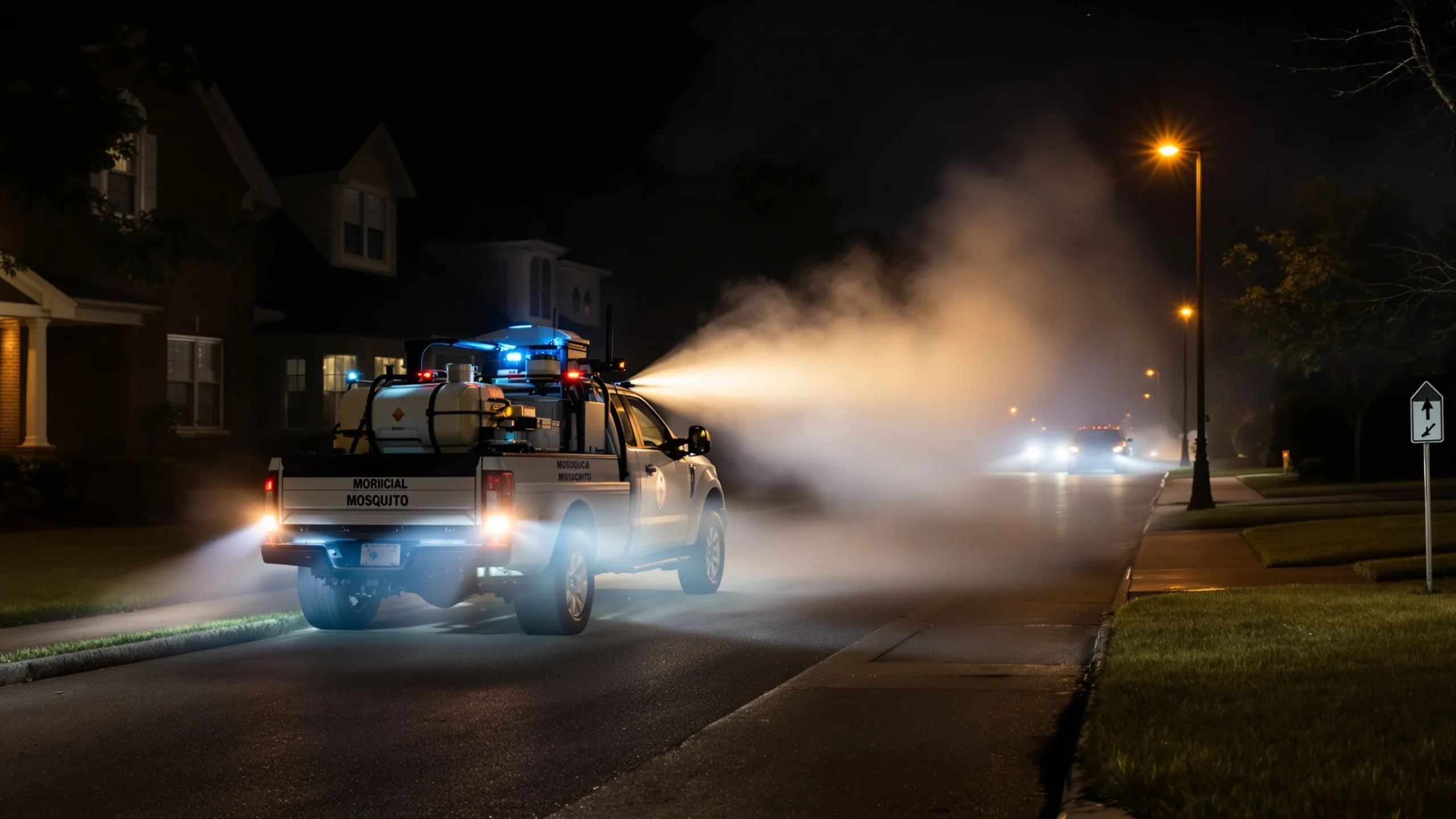
Dallas health officials have scheduled targeted mosquito control spraying in District 13 after routine surveillance detected West Nile virus in local mosquito populations, signaling an early start to the 2026 vector-borne disease season in North Texas.
The spraying operation, planned for the overnight hours of June 2–3, covers an area generally bounded by Calculus Drive and represents the city's first ground-based mosquito control response of the summer. Weather permitting, trucks will deploy EPA-registered adulticides between 9 p.m. and 5 a.m. when mosquito activity peaks and human exposure is minimal.
Early-Season Detection
The positive mosquito samples mark Dallas's first confirmed West Nile virus activity of 2026, coming just days after the Texas Department of State Health Services announced the state's first human neuroinvasive case in Harris County. The clustering of early detections across multiple Texas counties suggests an active transmission season may be developing.
Dallas County health officials expanded surveillance capacity this year in preparation for the 2026 FIFA World Cup, which will bring hundreds of thousands of international visitors to the region. The enhanced monitoring has already identified virus-positive pools earlier in the season than in recent years.
What Residents Should Know
The City of Dallas is urging residents in and around District 13 to take precautions during and after the spraying operation:
During spraying hours:
- Avoid outdoor activities during evening and nighttime hours when possible
- Keep windows and doors closed while spray trucks are in the area
- Bring pets indoors during treatment periods
Ongoing prevention:
- Apply EPA-registered insect repellent containing DEET, picaridin, or oil of lemon eucalyptus
- Wear long sleeves and pants during dawn and dusk when mosquitoes are most active
- Eliminate standing water around homes where mosquitoes breed
The Four D's Framework
Dallas County continues to promote its "Four D's" mosquito prevention strategy:
DEET: Use insect repellents containing DEET, picaridin, or other EPA-approved ingredients Dress: Wear long sleeves and pants in mosquito-prone areas Dusk/Dawn: Limit outdoor exposure during peak mosquito activity hours Drain: Empty standing water from containers, gutters, and outdoor equipment weekly
Broader Context
The District 13 spraying follows a pattern of early West Nile activity already documented across Texas. Tarrant County reported its first positive mosquitoes in mid-May, while Brazoria County confirmed virus presence in Manvel and Sweeny shortly after Memorial Day.
Climate factors may be contributing to the early season. A warm, wet spring across much of Texas has created favorable breeding conditions for Culex mosquitoes, the primary vectors for West Nile virus. Texas A&M AgriLife Extension experts have noted that such conditions often correlate with increased mosquito pressure throughout the summer months.
About West Nile Virus
Most people infected with West Nile virus experience no symptoms. Approximately 20% develop mild illness characterized by fever, headache, body aches, or rash. Less than 1% develop neuroinvasive disease — inflammation of the brain or surrounding tissues — which can be life-threatening, particularly for older adults and those with compromised immune systems.
There is no vaccine for West Nile virus, making personal protection and community mosquito control the primary defense against infection.
Looking Ahead
Dallas County mosquito control teams will continue surveillance throughout the summer, with additional ground or aerial treatments possible if virus activity spreads to new areas. Residents can report mosquito concerns to 311 and sign up for spray notifications through the city's emergency alert system.
With summer officially underway and temperatures climbing, health officials expect mosquito activity to intensify in the coming weeks. The early detection and rapid response in District 13 represent the first of what may become multiple interventions as the 2026 West Nile season unfolds.
For current mosquito spray schedules and surveillance data, visit the City of Dallas mosquito control page. Residents can also access Texas DSHS West Nile virus tracking at dshs.texas.gov.
Sources
Texas Bug Slayers Editorial Team
Editorial Board
The Texas Bug Slayers editorial team brings together licensed pest control professionals, entomologists, and writers dedicated to helping Texans protect their homes and families from pests.
Related Articles

Arlington Sprays Two Nights for West Nile as Texas Case Count Reaches 46 at Season's Peak
Arlington crews sprayed two nights near Caliente Drive after a mosquito trap tested positive for West Nile, as CDC's Sept. 1 update put Texas at 46 human cases.
Denton County Reports First Neuroinvasive West Nile Case as Virus Spreads Across North Texas
Denton County confirms its first severe neuroinvasive West Nile virus case of 2026, marking the second human infection in the county as health officials urge prevention measures.

Tarrant County Reports First Human West Nile Case of 2026 — and It Is the Neuroinvasive Form
Tarrant County Public Health confirmed its first human West Nile case of the season on July 24, after 86 positive mosquito pools. Texas has doubled its case count in three weeks as spraying expands from Kingsville to Lake Jackson.