
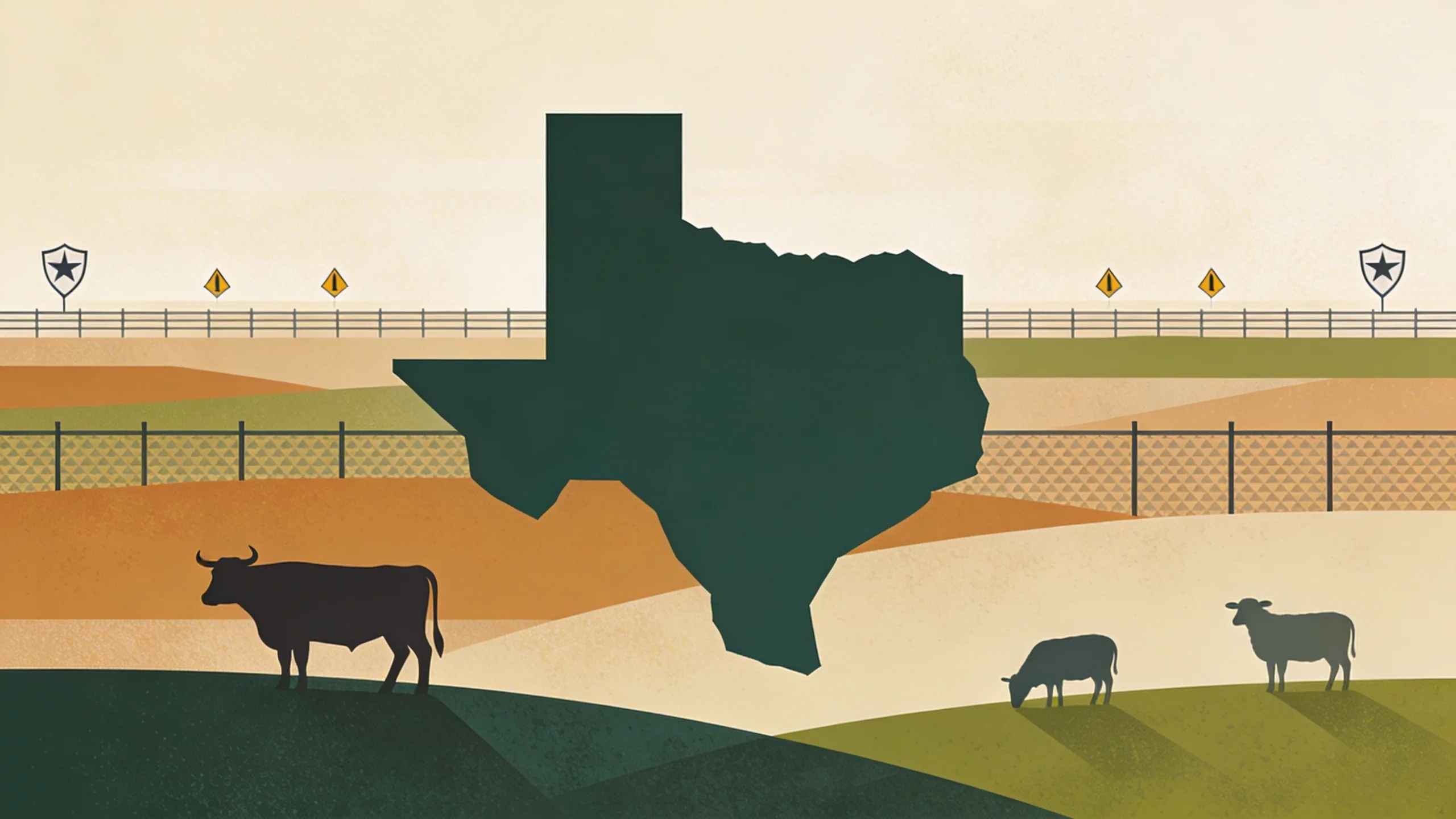
New World Screwworm Approaches Texas Border: What Livestock Producers Need to Know
The New World screwworm (NWS) is steadily approaching the Texas-Mexico border, with industry experts warning that the invasive pest could arrive as early as this summer. U.S. Secretary of Agriculture Brooke Rollins confirmed at the Texas & Southwestern Cattle Raisers Convention in Fort Worth that the screwworm is still advancing toward the United States.
Our live Texas screwworm case tracker keeps the running count and county map as USDA updates land.
While currently not present in the U.S., the threat has prompted urgent preparedness guidance from the Texas A&M AgriLife Extension Service. Livestock specialists are urging producers to act now across three critical areas: plan, prepare, and monitor.
Understanding the Threat
New World screwworm is a parasitic fly whose larvae feed on living tissue of warm-blooded animals. Infestations can quickly become fatal if untreated, posing severe economic and welfare risks to cattle, sheep, goats, and other livestock operations across Texas.
The pest was successfully eradicated from the United States in the 1960s through a massive sterile insect technique (SIT) program. Its potential return represents one of the most significant invasive species threats to American agriculture in decades.
Border Status and Timeline
The U.S.-Mexico livestock border has remained closed since July 9, 2025, following detection of screwworm cases approaching the boundary. A brief phased reopening at the Douglas, Arizona port in early July was quickly reversed after a case was reported 370 miles from the border—160 miles north of the sterile fly dispersal zone.
At the March convention, officials indicated that containment efforts are successfully maintaining distance from the U.S. border for now, but preparedness remains critical as summer approaches.
What Producers Should Do Now
Texas A&M AgriLife Extension livestock specialists Ron Gill and colleagues recommend immediate action:
Daily Monitoring
Inspect livestock daily for wounds, scratches, or unusual behavior. Early detection is crucial for preventing spread.
Wound Care Protocols
Treat all wounds immediately, no matter how minor. Screwworm flies are attracted to open wounds and can infest animals within hours.
Record Keeping
Document livestock movements, veterinary treatments, and potential exposure events. These records will be essential if detection occurs.
Emergency Planning
Develop response protocols now, including veterinary contacts, isolation facilities, and communication plans with neighboring operations.
Industry Response
The cattle industry is mobilizing resources ahead of potential arrival. Research institutions are accelerating development of new control technologies, while veterinary diagnostic labs across Texas are preparing enhanced surveillance protocols.
The U.S. Department of Agriculture's Animal and Plant Health Inspection Service (APHIS) continues coordinating with Mexican authorities on containment and sterile fly releases along the barrier zones.
Looking Ahead
While the screwworm remains outside U.S. territory, the threat underscores the importance of biosecurity and rapid response capabilities. Texas producers who establish monitoring and treatment protocols now will be best positioned to protect their operations if detection occurs.
The Texas A&M AgriLife Extension Service continues to provide updated guidance and educational resources through county extension offices statewide. Producers are encouraged to attend local workshops and stay connected with regional livestock specialists as the situation develops.
Sources
Texas Bug Slayers Editorial Team
Editorial Board
The Texas Bug Slayers editorial team brings together licensed pest control professionals, entomologists, and writers dedicated to helping Texans protect their homes and families from pests.
Related Articles
Texas Screwworm 2026: How the Season Unfolded — 50 Cases, a Billion Sterile Flies, and What Winter Brings
From one calf in Zavala County to 50 U.S. cases and a billion sterile flies: the full 2026 Texas screwworm season recap, and why winter is the response's best ally.

USDA Unveils Quarterly Review Roadmap for Screwworm Response Playbook
USDA APHIS shares comprehensive roadmap for quarterly reviews of New World Screwworm Response Playbook as parasite cases reach 45 infestations across Texas and New Mexico.
Screwworm Count Reaches 44 as Brewster County Adds Two More Cases and the Infested Zone Extends Into Presidio
USDA's dashboard now lists 44 confirmed New World screwworm cases — 43 in Texas — after two cattle cases in Brewster County and a sheep in Pecos County closed out July. TAHC has extended the infested zone into Presidio County, bringing movement restrictions to parts of 23 counties.