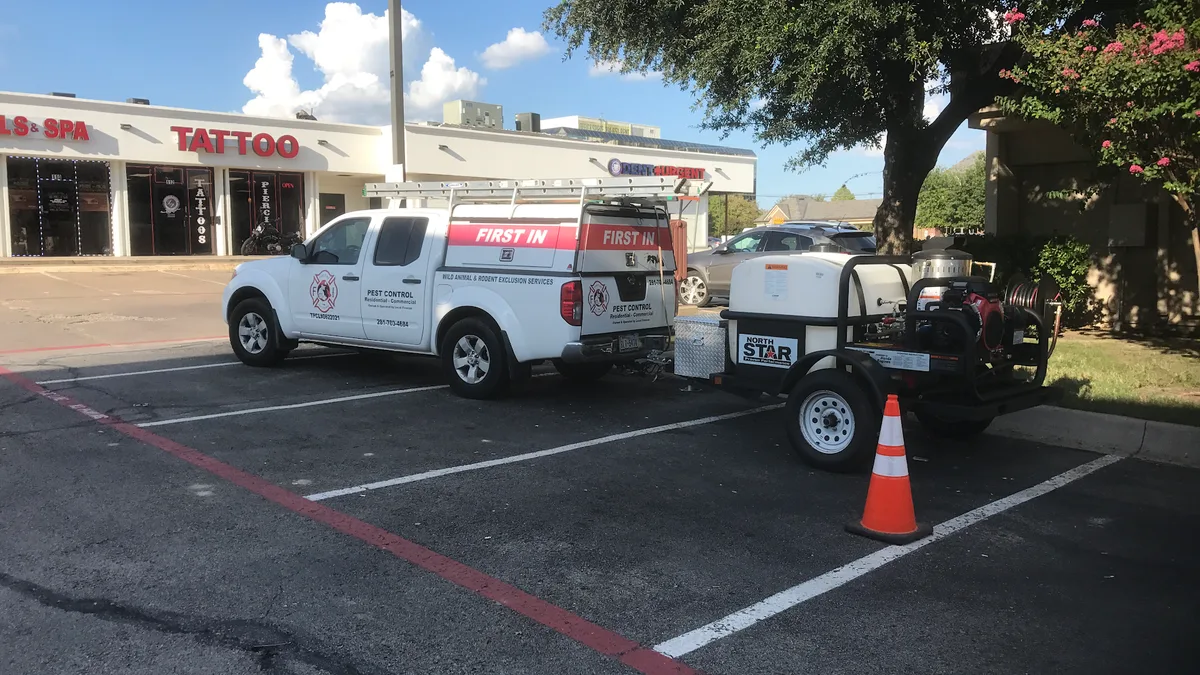
First In Rodent and Pest Services
DBA of VICTOR PESCHKE III
About First In Rodent and Pest Services
First In Rodent and Pest Services has been providing licensed pest control services in Dallas, Texas since 2020. With 6 years of operation under Texas Department of Agriculture license TPCL #814124, they serve residential and commercial customers across Dallas County.
Their licensed service areas include pest control.
First In Rodent and Pest Services maintains a strong 5-star rating based on 100+ customer reviews, placing them among the highest-rated pest control providers in the Dallas area.
The designated certified applicator for First In Rodent and Pest Services is VICTOR M PESCHKE III. Texas law requires every pest control company to have a certified applicator responsible for supervising all pest management activities.
How First In Rodent and Pest Services Compares in Dallas
Computed from Texas Department of Agriculture license records and public Google review data for 124 active licensed companies in Dallas
#9 of 114
by Google rating among rated companies in Dallas
100+
reviews — more than 65% of rated companies in Dallas
Since 2020
TPCL licensed — earlier than 27% of 124 active licenses in Dallas
The average Google rating across 114 rated pest control companies in Dallas is 4.7 stars; First In Rodent and Pest Services stands at 5 based on 100+ reviews. Its business license was first issued in 2020, earlier than 27% of the 124 active licenses held in Dallas today.
What Customers Say About First In Rodent and Pest Services
Aggregated from public Google reviews of First In Rodent and Pest Services in Dallas, TX
Customers mention
Topics Google aggregates from review text — the number shows how many reviews mention each topic
Pest Control Services in Dallas, TX
Licensed for 1 service category under TPCL #814124
Pest Control
P24 pestsGeneral pest management for common household pests including roaches, ants, spiders, and more
Also listed on Google as
Pests Treated
Based on the licensed service categories above
Pest Control
· 24 pestsService Area in Dallas County
First In Rodent and Pest Services serves customers across Dallas County, Texas. A street address is not on file with the Texas Department of Agriculture for this license.
Open in Google Maps
+2 more photos
Texas Pest Control License
- License #
- TPCL #814124
- Issued
- Renewed
- Expires
- Certified Applicator
- VICTOR M PESCHKE III
Pest control businesses in Texas are required to hold a Structural Pest Control Business License (TPCL), issued and regulated by the Texas Department of Agriculture (TDA). The information shown here reflects the public TDA licensee record. Last verified: . View on Texas Department of Agriculture
Authorized service category under this license
General Pest Control (Category P)
Category P authorizes the company to perform general structural pest control services. This is the most common license category and covers the identification, treatment, and prevention of common household and commercial pests.
What this license covers:
- Cockroaches, ants, spiders, silverfish, and crickets
- Bed bugs, fleas, ticks, and mosquitoes
- Wasps, hornets, and other stinging insects
- Scorpions, centipedes, and occasional invaders
- Interior and exterior perimeter treatments
- Preventive pest management programs
Why it matters: Category P is the foundation license for most pest control companies. It ensures the company has trained technicians who understand pest biology, proper pesticide application, and safety protocols for treating homes and businesses.
Frequently Asked Questions
Common questions about pest control services in Dallas, TX
Is First In Rodent and Pest Services a licensed pest control company?
Yes. First In Rodent and Pest Services holds an active Structural Pest Control Business License, TPCL #814124, issued by the Texas Department of Agriculture. The license was first issued on May 19, 2020 and is valid through May 31, 2027. The certified applicator responsible for the license is VICTOR M PESCHKE III.
What services is First In Rodent and Pest Services licensed to provide?
First In Rodent and Pest Services is licensed by the Texas Department of Agriculture for 1 service category: pest control. Each category is a separate authorization on TPCL #814124, so the company may only perform work it is explicitly licensed for.
How does First In Rodent and Pest Services compare to other pest control companies in Dallas?
Among the 114 rated pest control companies in Dallas, First In Rodent and Pest Services ranks #9 by Google rating (5 stars vs. a local average of 4.7). Its 100 customer reviews put it ahead of 65% of local rated companies by review volume. The company has held its TPCL license since 2020, longer than 27% of active licensees in Dallas.
What areas does First In Rodent and Pest Services serve?
First In Rodent and Pest Services operates out of Dallas in DALLAS County, Texas. No street address is on file with the TDA for this license, which is common for home-based or service-area businesses. Pest control companies typically serve customers within a 20–30 mile radius, so nearby communities across DALLAS County are usually within its service area. Call ahead to confirm coverage for your address.
Do I need a contract for pest control services?
Not necessarily. Many Texas pest control companies offer both one-time treatments and ongoing service plans. Contracts with quarterly or monthly service often include re-treatment guarantees and lower per-visit costs. Review cancellation terms and satisfaction guarantees before signing.
What does it mean when a pest control license is inactive?
An inactive license means the company has not renewed their TPCL with the Texas Department of Agriculture. This could be due to business closure, failure to meet insurance requirements, or voluntary non-renewal. Companies with inactive licenses cannot legally perform pest control services in Texas.
What pests does general pest control cover?
General pest control (Category P) covers common household pests including cockroaches, ants, spiders, silverfish, earwigs, crickets, centipedes, and occasional invaders. Some companies include mosquito and flea treatments in their general service, while others offer these as add-ons.
How should I handle a wasp nest near my home?
Do not attempt to remove wasp nests yourself, especially paper wasp nests, yellow jacket ground nests, or large hornet nests. Wasps can sting repeatedly and attack in numbers when their nest is threatened. A licensed pest control professional can safely remove the nest and treat the area to discourage rebuilding.
- TPCL #
- 814124
- License Type
- P — Pest Control
- Issued
- Renewed
- Expires
- Insurance Exp.
- Operator
- VICTOR M PESCHKE III
- Applicator
- VICTOR M PESCHKE III
- Legal Name
- VICTOR PESCHKE III
Licensed by the Texas Department of Agriculture. Verify at texasagriculture.gov
Pest Control Companies Near First In Rodent and Pest Services
The closest licensed alternatives by straight-line distance from First In Rodent and Pest Services in Dallas
White Knight Pest Control

EcoStar Pest Control: Pest Control Services Near Dallas & Carrollton, TX
Armor Inspections
Doffdon Bedbug Exterminator
Sovereign Pest Control