
The Mealybug Doesn't Drink More. It Spits More, and Heat Decides How Often
Two ranches twenty miles apart can carry the same insect at what looks like the same pressure and end the season in completely different condition. One keeps grazing. The other goes brown and thin and stops paying for itself. Pasture mealybug has been in Texas for roughly sixteen months, and that gap has been one of the harder things for researchers to explain.
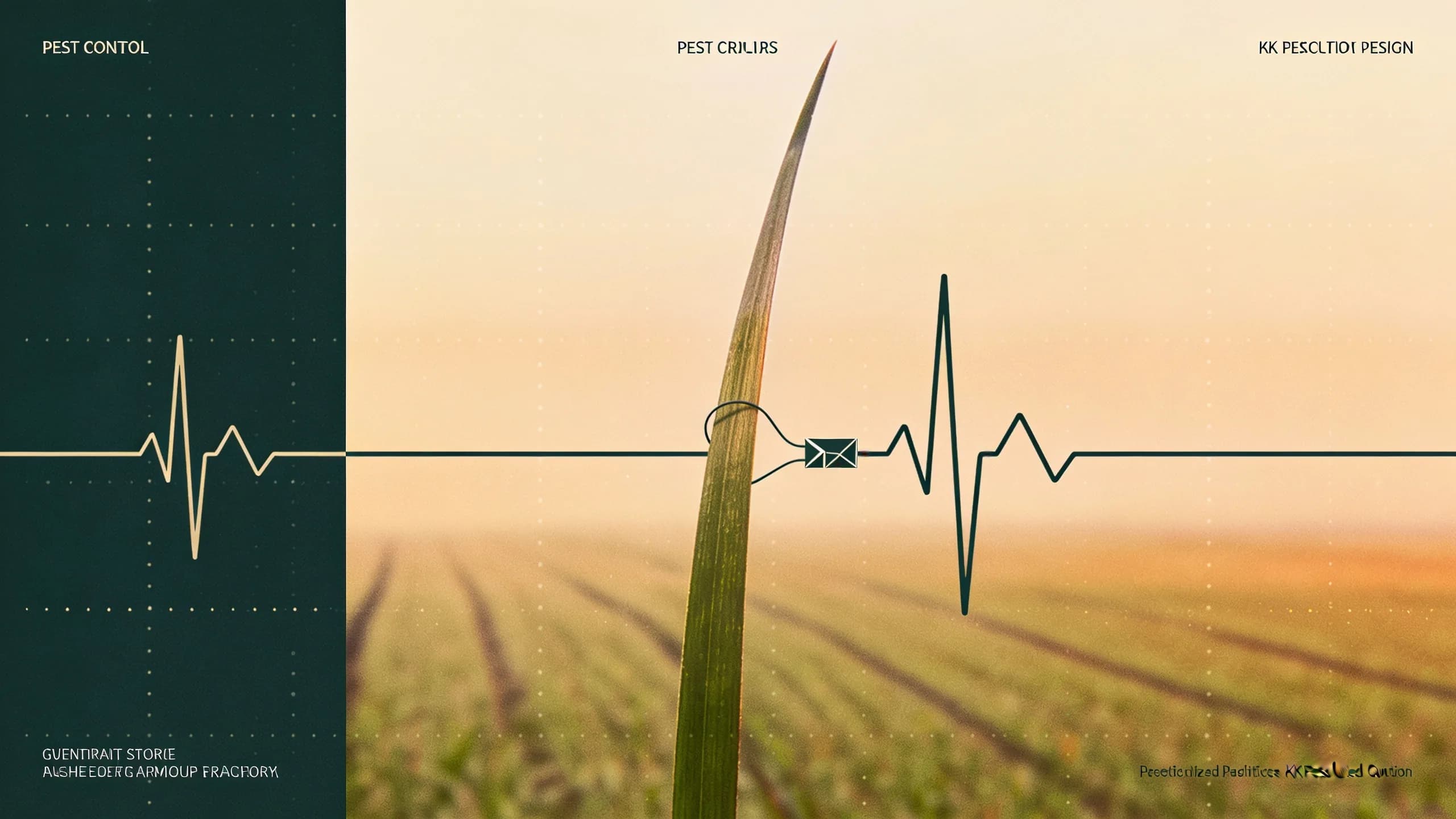
Early work out of College Station suggests the answer may be in how the insect behaves on a hot day rather than how many of them there are. Ashley Zavala, a doctoral student in the lab of Thomas Chappell, an epidemiologist in the Texas A&M Department of Plant Pathology and Microbiology, has been measuring mealybug feeding under controlled temperatures using a technique called electropenetrography. A sensor and a thin wire connect insect to plant, and every probe, puncture and withdrawal is recorded as a waveform. Chappell describes reading it the way a cardiologist reads an electrocardiogram.
What the traces show so far is a division of labor inside the insect's mouthparts. Mealybugs feed by piercing plant tissue and drawing fluid. Normally that means the sugar-rich sap in the phloem. When temperatures climb, Chappell said, the insects drink more from the xylem — the tissue that carries water — presumably to stay hydrated, which does little direct damage. The damage comes from the other half of the behavior. Heat also increased how often the mealybugs salivated into the phloem, and saliva is the delivery mechanism for the enzymes and toxins that wreck plant tissue.
Put plainly: the same number of insects can do more harm in August than in October, because heat makes them inject more often, not because they eat more.
That is the mechanism behind a problem with a large and growing footprint. Pasture mealybug was first confirmed in Texas in July 2025, according to AgriLife Extension entomologists, and has since been recorded in 114 counties. The count has moved fast — AgriLife put it at 70 counties in late July and 79 in mid-August — and the pest has also turned up in Florida, Georgia and Louisiana. Immatures feed on sap and inject toxins that weaken grass, producing the condition growers know as pasture dieback. Severe fields turn brown, thin out or die. The host list runs across native and improved warm-season grasses: Bermuda, Bahia, bluestems and the rest of what carries a grazing operation through a Texas summer. The industry standing behind those acres, cattle, is worth $15.5 billion in the state, and researchers are watching for movement into sugarcane and rice.
One detail about the experiment is worth stating plainly, because it limits how far the finding can be pushed. The lab is running the technique on a related mealybug species feeding on pepper plants, not on pasture mealybug in a pasture. Chappell's argument is that the feeding mechanics transfer, and that the pasture pest's behavior can be inferred and then checked against it. That is a reasonable position for a lab, and it is not the same thing as a recommendation. Nobody has published a temperature threshold at which spraying pays, and this work does not supply one.
What it does supply is a target for the kind of forecasting already used against other pests. If feeding intensity rises with heat and plant stress, a model that combines weather, canopy conditions and varietal susceptibility could tell a grower when an application will actually do something, instead of when the calendar says to spray. Chappell points to intelligent agriculture systems as the processing layer that would make those forecasts useful at field scale.
The research sits inside a broader push. Texas A&M AgriLife formed an Emerging Pest Task Force of subject-matter experts, and its current priority is pasture mealybug — the same task force that recently testified before Texas legislators in Austin on both the mealybug and New World screwworm. A round of AgriLife Research seed grants is going out to several departments in the College of Agriculture and Life Sciences for additional mealybug projects, including work on which forage varieties hold up and how damaged stands recover. Extension, meanwhile, updated its treatment fact sheet in August, the practical document growers actually reach for.
For producers, the near-term advice has not changed. Scout, watch canopy density and soil moisture, and treat where pressure justifies it. What is changing is the explanation for why two pastures can look so different in the same drought: it may not be the number of insects. It may be how often each one is spitting into the plant, and how hot it was while it did.
Sources
Texas Bug Slayers Editorial Team
Editorial Board
The Texas Bug Slayers editorial team brings together licensed pest control professionals, entomologists, and writers dedicated to helping Texans protect their homes and families from pests.
Related Articles
Texas A&M Will Sequence Thousands of Screwworms to Find Out Whether the Drugs Still Work
A $4 million USDA project will read whole genomes from Honduran outbreak samples, hunting the markers that would tell Texas if its main defense is fading.

The Hayfield Picked Up a Second Pest, and It Arrives After the Rain
Texas Farm Bureau urged ranchers to scout pastures for fall armyworms after early-October rain, with a 2-to-3-per-square-foot threshold on an already thin hay crop.

Winter Kills the Fly. It Doesn't Reach What's Already in the Soil.
New Mexico's state veterinarian called the outbreak a marathon, then explained why a cold snap kills adult screwworm flies but spares the pupae in the soil.