
USDA Flew 2,000 Drone Flights Over Texas Looking for Screwworm and Came Back Empty
The U.S. Department of Agriculture has flown drones over Texas more than 2,000 times since June in the hunt for New World screwworm, and the count of infested animals found from the air is still zero.
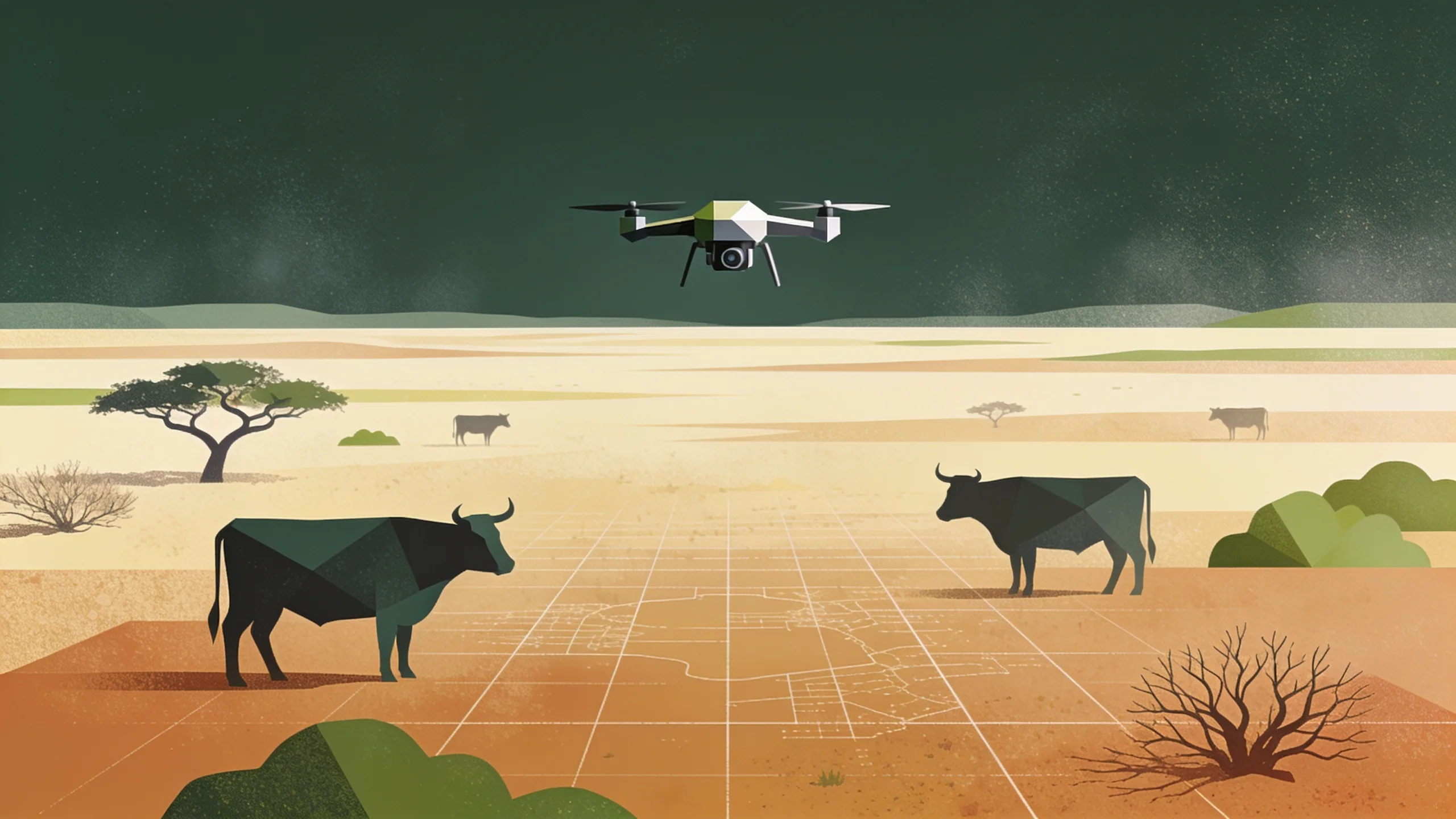
Agency officials told KRGV this week that the flights have put eyes on more than 36,000 animals. The program, announced in August as a partnership with U.S. Customs and Border Protection, borrows CBP's aircraft and mounts cameras that use artificial intelligence to pick out the open wounds where screwworm larvae feed. A USDA official described the setup to the station as an extra set of eyes rather than a replacement for the inspectors, veterinarians and trappers already working the outbreak — capable, but not foolproof.
That caveat is doing real work. A zero on a drone tally is a surveillance result, not an all-clear, and the federal government's own case list bears that out. The USDA APHIS public dashboard, pulled Tuesday, carries 54 confirmed records since June 3, all but two of them in Texas, and three remain active: goats in Crockett County confirmed Sept. 26, a dog in Brewster County on Oct. 2, and cattle in Pecos County on Oct. 10. That last entry, logged two days before the drone numbers went public, took the active count from two to three.
Pecos County had already recorded the fly in a dog and three sheep earlier in the summer, so this is not a new front. It is a reminder of what the outbreak has looked like since the state's first case was announced in a three-week-old Zavala County calf on June 4: a slow scatter across the Edwards Plateau and the border counties, with new confirmations arriving every few weeks rather than in a wave.
The aerial campaign sits alongside a much older technology. Sterile insect technique — releasing irradiated males that father nothing — is what pushed screwworm out of the United States in the 1960s, and it is being rebuilt for the current fight. The USDA has said the new sterile fly plant at Moore Air Base in Edinburg is scheduled for completion in April 2027, with production ramping to 100 million flies a week in its first phase and 300 million once a second phase is finished. Until then, most of the supply is flown in from a facility in Panama and a converted plant in Metapa, Mexico.
Movement rules have not relaxed in step with the fly supply. The Texas Animal Health Commission's Oct. 1 order still governs animals arriving from other affected states, Colorado adopted its own emergency entry rule on Oct. 9, and Canada continues to require a 21-day preconditioning window for live cattle and herd sires coming out of Texas and New Mexico — the layers of paperwork that now travel with a load of cattle.
For anyone working livestock, pets or wildlife in the affected counties, the practical instruction has not changed since June. Inspect wounds, watch for the movement of maggots in a wound that should be healing, and report a suspected case instead of treating it quietly. The Texas Animal Health Commission takes reports at 800-550-8242, and the agency tracks confirmed cases on the same public dashboard that added Pecos County this week.
Drones may yet earn their place in that routine. They have not, so far, produced a detection that a person on horseback could not have found.
Sources
- KRGV — No screwworm cases found after USDA conducts 2,000 drone flights over Texas (Oct. 12, 2026)
- KRGV — Federal officials launch AI-equipped drones to detect screwworm in South Texas livestock (Aug. 10, 2026)
- USDA APHIS — New World screwworm public reporting dashboard (case-level export, fetched Oct. 13, 2026)
- Texas Animal Health Commission — news releases index
Texas Bug Slayers Editorial Team
Editorial Board
The Texas Bug Slayers editorial team brings together licensed pest control professionals, entomologists, and writers dedicated to helping Texans protect their homes and families from pests.
Related Articles

Texas A&M TVMDL Deploys Mobile Lab to Frontline of Screwworm Response
Texas A&M Veterinary Medical Diagnostic Laboratory establishes mobile diagnostic capability to support rapid screwworm detection and response efforts in South Texas.

Texas A&M AgriLife Launches Statewide Alert System for Agricultural Threats
Texas A&M AgriLife Extension debuts AgriLife Alert, a new digital notification system for invasive pests, wildlife diseases, and quarantine updates across Texas counties.

USDA Commits $105 Million to 40 Breakthrough Projects Combating New World Screwworm Threat
USDA announces $105 million in funding through the NWS Grand Challenge, including Texas A&M's electron beam sterilization research, to bolster defenses against the parasitic pest.