
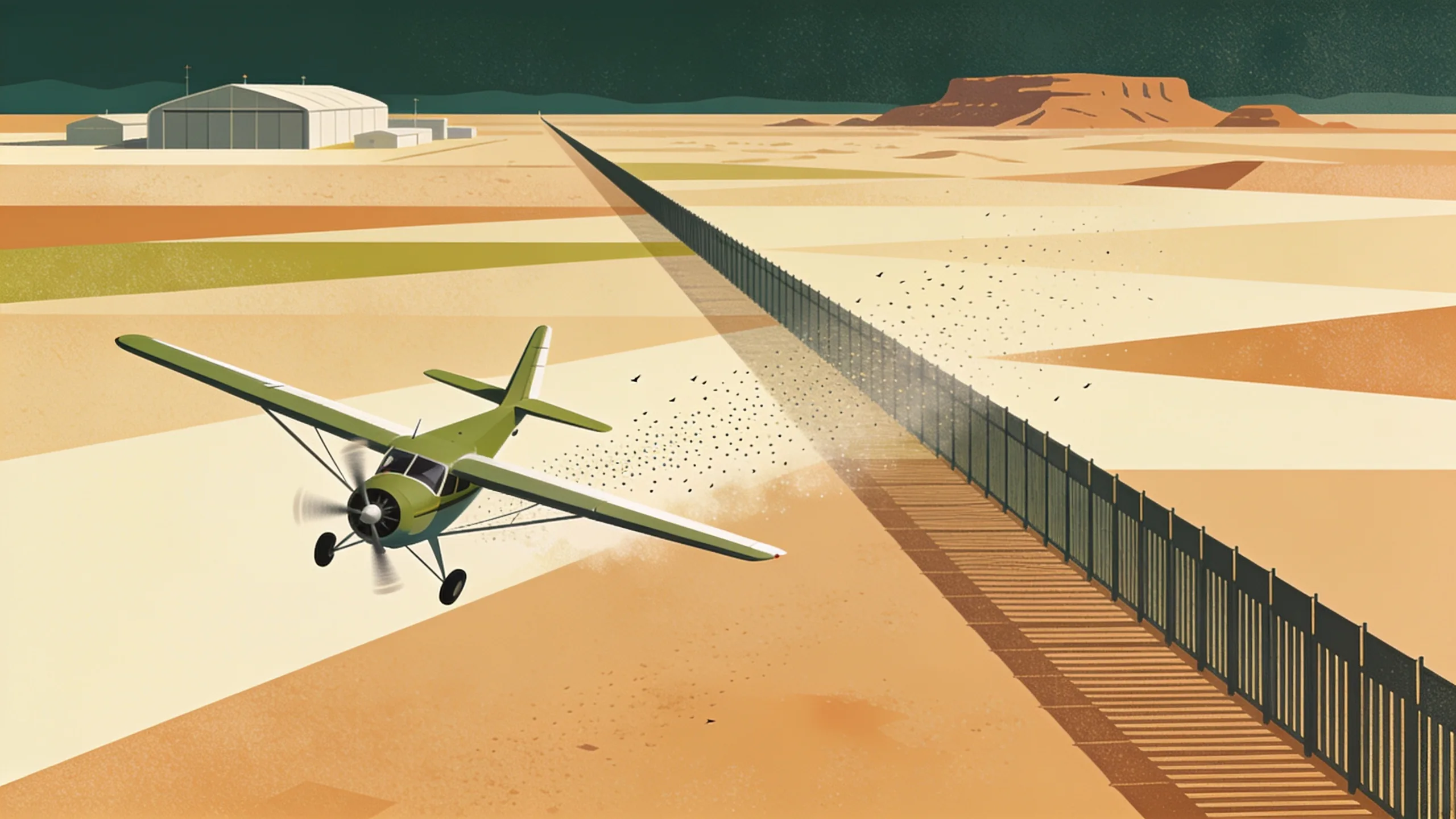
USDA Commits $25 Million to Arizona Sterile Fly Facility as Douglas Port Readies Cattle Reopening
The U.S. Department of Agriculture will spend $25 million on a sterile fly dispersal facility in Douglas, Arizona, expanding the federal government's capacity to flood the Southwest border with sterile New World screwworm flies just weeks before the Douglas port of entry resumes Mexican cattle imports.
For the running case count and the affected-county map, follow our Texas screwworm tracker.
Agriculture Secretary Brooke Rollins announced the commitment Wednesday while touring livestock inspection facilities at the Douglas crossing alongside Arizona lawmakers and state agriculture officials. The port is scheduled to reopen to cattle imports on Aug. 24 — the first to do so under USDA's phased plan after more than a year of restrictions imposed to keep the flesh-eating parasite out of the country.
The facility itself grew out of a proposal from Arizona Governor Katie Hobbs, who sent a letter to the agency the same day urging a dispersal site in Douglas. "The continued threat of New World screwworm, prolonged disruptions to livestock trade, and additional costs for producers could keep beef prices elevated and further strain household grocery budgets," Hobbs said. The import ban, in place for over a year, helped push U.S. beef prices to record highs — though the decision to resume imports has drawn criticism from some American cattle producers who warn it raises the risk of new infestations.
USDA is betting that sterile flies remain the most effective tool against the pest, and that a dispersal hub on the Arizona border will strengthen long-term containment and eradication efforts. The Douglas operation would complement the $8.5 million dispersal facility already running at Moore Air Base in Edinburg, Texas, which has been deploying tens of millions of sterile flies weekly, as well as a much larger domestic production facility under construction in Texas that aims to rear up to 300 million sterile flies per week by late 2028.
Reopening Douglas will not mean business as usual at the border. Under the protocols Rollins outlined, every animal entering through the port will undergo multiple veterinary inspections, including examinations by USDA veterinarians before crossing. Animals that fail to meet import requirements will be turned away, and a single detection of New World screwworm would immediately halt imports through the facility again.
The agency points to a year of surveillance as evidence the region is ready. Federal and state officials have maintained trapping operations near Douglas, testing nearly 1,000 flies with no screwworm detections, and have run preparedness exercises, stakeholder outreach and response training with Arizona officials.
The pressure behind those precautions is visible in the case counts. Since the first U.S. detection on June 3, the parasite has been confirmed in 41 cases in Texas and one in New Mexico, appearing in cattle, sheep, goats and dogs. Texas producers in affected counties remain under quarantine restrictions, with mandatory inspections before livestock can move.
For Texas, the Arizona investment is a second front in a fight that has steadily widened. Alongside the Edinburg dispersal hub and the production plant under construction, the U.S. is also backing Mexico's Metapa facility in Chiapas with $31 million, expected to eventually produce another 100 million sterile flies a week. The emerging picture is a border-long architecture of sterile fly releases stretching from the Gulf of Mexico to the Sonoran Desert — an expensive bet that the same technique which eradicated screwworm from the United States decades ago can do it again.
Sources
Texas Bug Slayers Editorial Team
Editorial Board
The Texas Bug Slayers editorial team brings together licensed pest control professionals, entomologists, and writers dedicated to helping Texans protect their homes and families from pests.
Related Articles
USDA Opens $90 Million Funding Pool to Combat Invasive Pests Threatening Texas Agriculture
USDA APHIS announces $90M in FY 2027 funding through Plant Protection Act Section 7721 to protect farms and forests from invasive pests, with applications open through September 21.

Texas Launches Agricultural Defense Program to Combat Pests and Disease
Commissioner Sid Miller announces AgDefense, a new TAFA-funded initiative to protect Texas farmers from agricultural pests, diseases, and predators.
USDA Unveils Quarterly Review Roadmap for Screwworm Response Playbook
USDA APHIS shares comprehensive roadmap for quarterly reviews of New World Screwworm Response Playbook as parasite cases reach 45 infestations across Texas and New Mexico.