
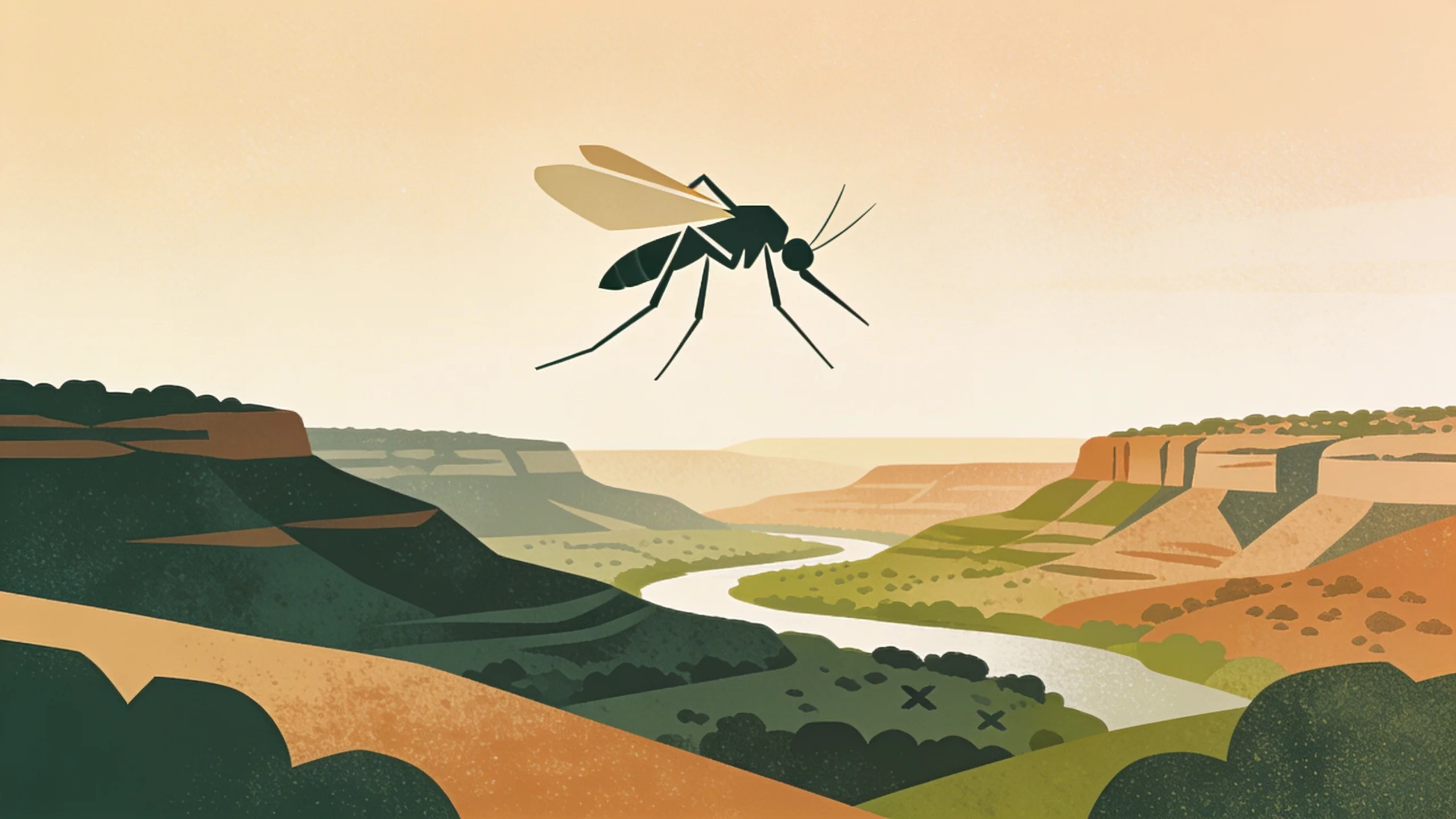
West Nile Virus Detected in Hays County: First Positive Mosquitoes Found Near San Marcos
State health officials have confirmed the first West Nile virus positive mosquito pools in Hays County this season, marking another Central Texas county where the potentially deadly virus has established a presence.
The Texas Department of State Health Services detected the virus in two separate mosquito samples collected July 8 from different monitoring sites near San Marcos. Both traps tested positive during routine surveillance operations, according to county health officials.
Hays County becomes the latest addition to a growing list of Texas jurisdictions reporting West Nile activity in 2026. State data shows 462 positive mosquito traps across Texas so far this year, with human cases concentrated primarily in the Houston metropolitan area. Five human infections have been confirmed statewide, all in the Houston region.
What This Means for Hays County Residents
West Nile virus circulates naturally between mosquitoes and birds, with humans and other mammals becoming incidental hosts when bitten by infected Culex mosquitoes. The virus cannot spread directly from person to person.
Most people infected with West Nile virus experience no symptoms at all. Approximately 20 percent develop West Nile fever, characterized by headache, fatigue, body aches, joint pain, vomiting, diarrhea, or rash. Less than 1 percent develop neuroinvasive disease affecting the brain and spinal cord, which can cause encephalitis or meningitis and carries a mortality rate of roughly 10 percent among hospitalized patients.
Adults over 50 and individuals with compromised immune systems face the highest risk of severe complications. Health officials emphasize that while the risk to any individual remains relatively low, the consequences of neuroinvasive disease warrant serious preventive measures.
Prevention Recommendations
Hays County health officials are urging residents to adopt the "Three Ds" approach to mosquito bite prevention:
Defend yourself by applying EPA-registered insect repellents containing DEET, picaridin, IR3535, or oil of lemon eucalyptus when spending time outdoors. Follow product label instructions carefully, especially regarding application frequency and age restrictions.
Dress in long sleeves and pants, preferably in light-colored clothing, when mosquitoes are most active during dawn and dusk hours. Loose-fitting garments provide better protection than tight clothing.
Drain standing water around homes and businesses where mosquitoes breed. Check flowerpots, gutters, birdbaths, pet water dishes, and any containers that collect rainwater. Even bottle caps can harbor enough water for mosquito larvae development.
Broader Context
The Hays County detection fits a concerning pattern across Texas this summer. Bexar County has recorded four positive traps since early May. The Dallas-Fort Worth metroplex continues its expanded mosquito surveillance program implemented ahead of World Cup 2026 matches, while Travis and Williamson counties have already documented positive samples this season.
The timing aligns with historical patterns. West Nile virus activity typically peaks between July and September in Texas, when hot temperatures accelerate both mosquito reproduction and viral replication rates within mosquito populations.
Climate factors may be amplifying this year's transmission risk. Above-average rainfall in late spring created abundant breeding habitat, while subsequent hot, dry conditions have concentrated both mosquito and bird populations around limited water sources—increasing contact rates between vectors and the reservoir hosts that maintain the virus cycle.
What Officials Are Doing
The Texas DSHS maintains an integrated surveillance network combining mosquito trapping, avian mortality monitoring, and human case reporting. Local health departments use this data to target larval control efforts and, when necessary, authorize adulticide spraying operations.
Hays County has not announced any ground spraying operations at this time. Such decisions typically follow established thresholds combining trap counts, infection rates, and proximity to human populations.
Residents can report dead birds—particularly crows, jays, and raptors—to their local health department, as these species serve as sentinel indicators for West Nile virus circulation in the environment.
For current West Nile virus data across Texas, visit the Texas DSHS surveillance dashboard. Report standing water concerns or request mosquito control services through Hays County Environmental Health.
Sources
Texas Bug Slayers Editorial Team
Editorial Board
The Texas Bug Slayers editorial team brings together licensed pest control professionals, entomologists, and writers dedicated to helping Texans protect their homes and families from pests.
Related Articles

Williamson County Reports First West Nile Virus Mosquitoes of 2026 Season
Health officials confirm first West Nile virus-positive mosquito trap in Williamson County near Georgetown's Geneva Park, urging residents to follow the '3 Ds' of prevention.
Austin Officials Urge Vigilance as Mosquito Season Kicks Into High Gear
Austin and Travis County health officials launch mosquito season awareness campaign, warning residents about West Nile virus risks and promoting the Four Ds prevention strategy.
Heat and Humidity Drive Mosquito Surge Across Central Texas
Unseasonably warm, humid weather creates prime breeding conditions for mosquitoes. Health officials confirm West Nile and dengue cases as experts advise the 'Four D's' of protection.