
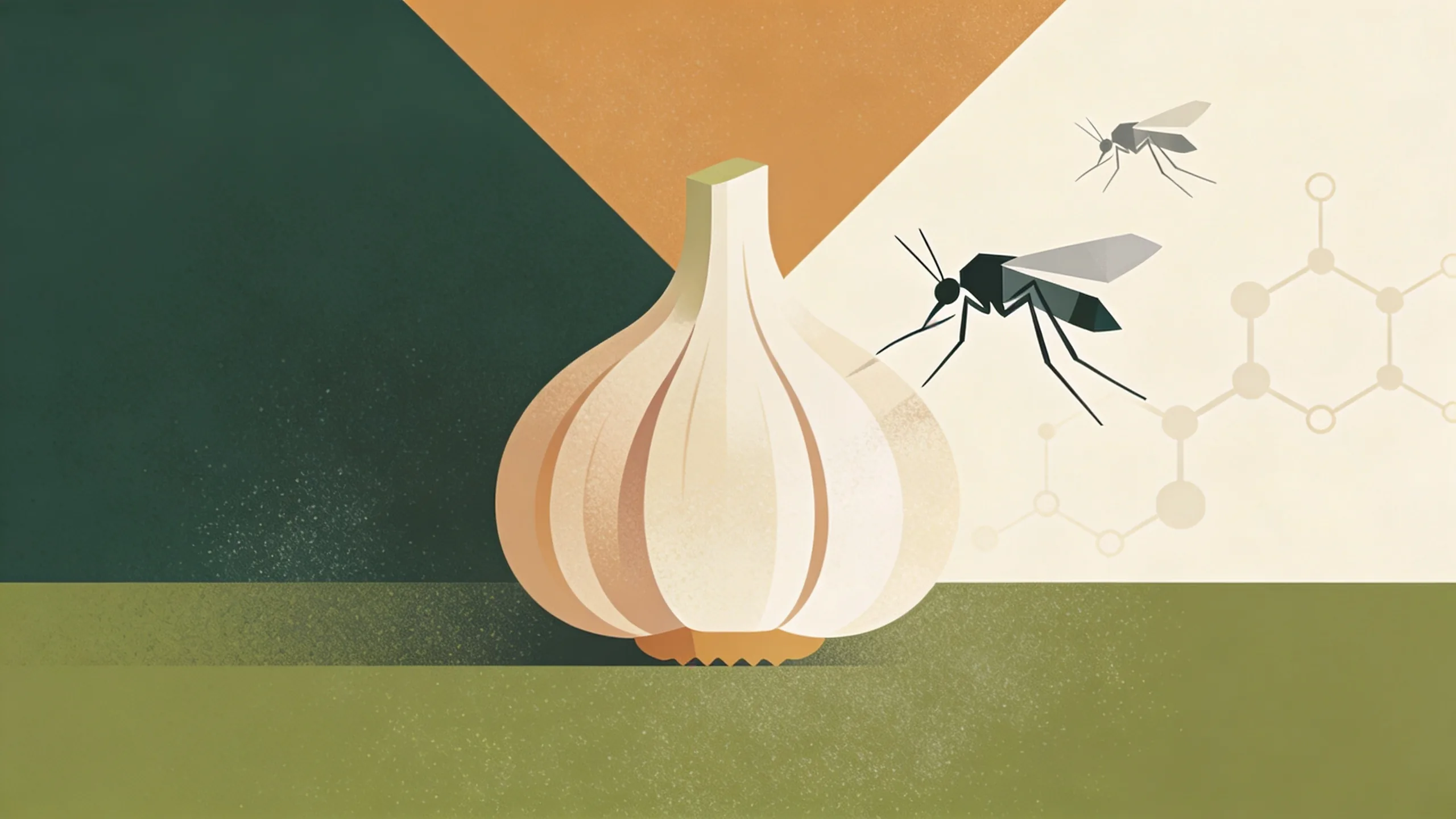
Yale Researchers Discover Garlic Compound That Could Revolutionize Mosquito Control
Scientists at Yale University have identified a naturally occurring compound in garlic that interferes with mosquito reproduction at multiple stages, potentially opening new pathways for environmentally sensitive pest control strategies in Texas and other regions where mosquito-borne diseases pose persistent public health challenges.
The research, published earlier this week, demonstrates that the compound disrupts both mating behavior and egg-laying capacity in mosquito populations. Unlike conventional insecticides that target adult insects through neurotoxic mechanisms, this approach works by interrupting the reproductive cycle itself—a fundamentally different mode of action that could complement existing integrated pest management programs.
From Kitchen Staple to Laboratory Breakthrough
Garlic's reputation as a natural insect repellent stretches back centuries. Gardeners have long planted allium species among vegetables to deter chewing insects, and folklore across multiple cultures suggests garlic offers protection against biting pests. The Yale research moves these observations from anecdote to mechanism, identifying the specific molecular pathway through which garlic compounds affect mosquito biology.
The active compound belongs to a class of organosulfur molecules that give garlic its characteristic odor. While humans process these compounds through digestion and exhalation—producing the well-known "garlic breath"—mosquitoes appear to experience disruption to their olfactory navigation systems and reproductive signaling at exposure levels far below those toxic to humans or other mammals.
This selectivity matters enormously for practical application. Conventional mosquito adulticides often affect non-target insects, including pollinators like bees and butterflies, along with beneficial predatory species that naturally suppress pest populations. A compound that specifically targets mosquito reproduction while sparing other arthropods would represent significant advancement in ecological pest management.
Implications for Texas Mosquito Control
Texas faces unique mosquito management challenges that make novel control methods particularly valuable. The state's diverse geography—from coastal marshes to urban centers to agricultural regions—hosts multiple vector species, each with distinct breeding habits and disease transmission potential.
Culex quinquefasciatus, the southern house mosquito, dominates urban and suburban environments and serves as primary vector for West Nile virus, which has caused annual outbreaks across Texas since 2002. Aedes aegypti, the yellow fever mosquito, has reestablished populations in South Texas and can transmit dengue, Zika, and chikungunya. Anopheles species maintain malaria transmission potential along the Rio Grande despite decades of successful suppression.
Current control strategies rely heavily on source reduction—eliminating standing water where mosquitoes breed—supplemented with larvicide applications and adulticide fogging when disease risk justifies the environmental trade-offs. These methods work but face limitations: urban development creates endless micro-habitats, insecticide resistance develops in treated populations, and public compliance with source reduction varies widely.
A reproductive disruptor derived from garlic compounds could integrate into existing programs as a fourth pillar of control, targeting populations that evade other interventions without adding chemical burden to the environment.
The Science of Reproductive Disruption
Mosquito mating depends heavily on chemical signaling. Females locate males through species-specific sound frequencies produced by wing beats, but successful reproduction requires precise chemical coordination. Males produce pheromones that stimulate female receptivity, and females assess potential oviposition sites through chemical cues indicating water quality and food availability for emerging larvae.
The Yale research indicates that garlic compounds interfere with this chemical communication at multiple points. Exposed males showed reduced mating success even when placed with receptive females. Exposed females that did mate produced fewer viable eggs and demonstrated reduced ability to locate appropriate oviposition sites.
This multi-target effect reduces the likelihood of rapid resistance development—a major problem with single-mechanism insecticides. When selection pressure acts simultaneously on multiple biological processes, evolutionary adaptation requires coordinated genetic changes that occur far less frequently than simple target-site mutations.
From Laboratory to Field Application
Translating laboratory findings into practical mosquito control tools requires substantial additional research. The Yale study establishes proof of concept under controlled conditions; field application introduces variables that complicate efficacy: weather exposure, dilution in water bodies, variable mosquito density, and interaction with existing control measures.
Formulation science will determine whether garlic-derived compounds can be stabilized for commercial application. Raw garlic extracts oxidize rapidly, losing activity within hours of exposure to air. Encapsulation technologies or structural modifications to the active molecule may extend field persistence without compromising selectivity.
Application methods also require development. The compound could potentially be delivered through existing ultra-low volume spraying equipment, incorporated into larvicide briquettes, or applied as barrier treatments to vegetation where mosquitoes rest. Each approach presents different regulatory and logistical considerations.
Regulatory and Market Pathway
The Environmental Protection Agency regulates mosquito control products as pesticides, requiring extensive safety and efficacy data before registration. Naturally derived compounds sometimes qualify for expedited review under biopesticide pathways, though this depends on specific chemical identity and formulation characteristics.
Market timing remains uncertain. Even with favorable regulatory treatment, development timelines for new pest control products typically span several years. The research published this week represents early-stage science rather than immediate product availability.
For Texas mosquito control professionals and public health officials, the significance lies in expanded options rather than immediate solutions. The state's Integrated Vector Management Strategy, developed by the Texas Department of State Health Services, explicitly calls for diversified control methods that reduce reliance on any single intervention. Garlic-derived reproductive disruptors, if successfully developed, would fit naturally into this framework.
The Broader Context of Natural Product Research
The Yale garlic study joins growing scientific interest in botanical pest control agents. Plants have evolved sophisticated chemical defenses against insect herbivory over millions of years, producing compounds that target specific physiological processes without the broad-spectrum toxicity characteristic of many synthetic pesticides.
Research programs at Texas A&M University and other regional institutions have explored similar pathways, investigating plant extracts from native species for mosquito control potential. The Yale findings may accelerate this work by demonstrating that clinically significant effects can emerge from common food crops rather than exotic species.
For Texas homeowners and outdoor enthusiasts, the research offers no immediate practical application. Eating garlic does not provide personal protection against mosquito bites—the compound acts on reproduction rather than biting behavior, and systemic concentrations from dietary consumption fall far below thresholds that would affect nearby insects.
The promise lies in future products that could make Texas summers more comfortable and less dangerous by suppressing mosquito populations through environmentally compatible mechanisms. That possibility, now supported by rigorous science rather than folk wisdom, moves one step closer to reality with this week's publication.
Sources
Texas Bug Slayers Editorial Team
Editorial Board
The Texas Bug Slayers editorial team brings together licensed pest control professionals, entomologists, and writers dedicated to helping Texans protect their homes and families from pests.
Related Articles

Georgia Tech and MIT Scientists Crack the Code on How Mosquitoes Decide to Attack
New research reveals mosquitoes use a deadly combination of visual cues and carbon dioxide to target humans, offering insights for better pest control in Texas.
Google Seeks EPA Permit to Release Wolbachia-Infected Mosquitoes in Texas and Beyond
Tech giant Google applies for experimental use permit to deploy Wolbachia-infected male mosquitoes as biological control against West Nile virus vectors.

Dallas County Records Its First West Nile Death of 2026 With the Season Still Running
A man in his 60s is the county's first West Nile fatality this year. State data shows 1,376 positive mosquito pools and 57 human cases across Texas.