
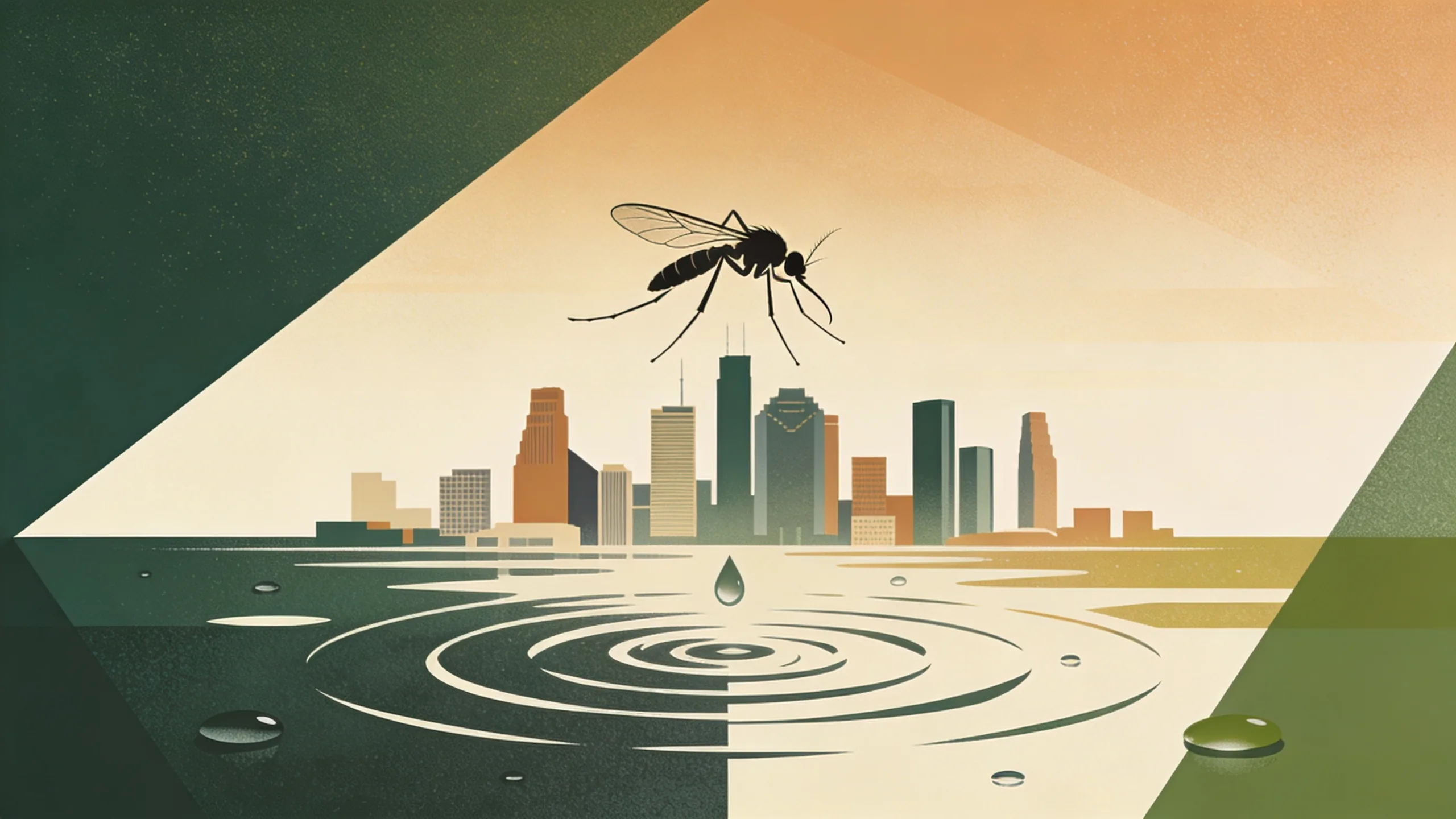
Texas Reports First West Nile Virus Case of 2026 in Harris County
The Texas Department of State Health Services (DSHS) confirmed Tuesday that the state's first West Nile virus case of 2026 has been identified in Harris County, marking an early start to what health officials warn could be an active mosquito season across the state.
The patient was diagnosed with West Nile neuroinvasive disease, the most severe form of the illness. While DSHS did not release additional details about the individual's condition, the case serves as a stark reminder that mosquito-borne diseases remain a persistent threat in Texas even as the calendar shows only mid-May.
Understanding the Risk
West Nile virus follows a predictable pattern in Texas, flourishing in the warmer months when mosquito populations surge. The mathematics of infection tell a sobering story: approximately 80% of those infected never develop symptoms, while roughly 20% experience West Nile fever—a constellation of fever, headache, nausea, body aches, and fatigue that can linger for weeks.
It is the less than 1% who develop neuroinvasive disease who face the gravest danger. This severe form can trigger tremors, disorientation, paralysis, and in the most tragic cases, death. The five-year statistics paint a sobering picture: 976 total West Nile cases reported in Texas since 2021, with 106 fatalities.
"West Nile and other mosquito-borne illnesses are a fact of life in Texas in the warmer months, and all Texans should take precautions against mosquito bites to stay safe and healthy," said DSHS Commissioner Dr. Jennifer Shuford in a statement accompanying the announcement.
The Houston Context
Harris County's emergence as the site of this year's first case carries particular weight. The county, which includes Houston and surrounding communities, has consistently ranked among the most mosquito-prone urban areas in the nation. A recent Orkin report placed Houston among the top ten most mosquito-infested cities in the United States for 2026—a distinction that reflects both the region's humid subtropical climate and its sprawling urban landscape with abundant breeding sites.
The county's mosquito control division operates year-round surveillance and treatment programs, yet the early detection of human illness suggests that infected mosquitoes have already established populations in local neighborhoods. This pattern—human cases appearing before the traditional summer peak—has become increasingly common as climate patterns shift and mosquito seasons lengthen.
Prevention: The Four Ds and Beyond
DSHS emphasizes a multi-layered approach to protection that health officials call the "Four Ds":
Dress in long sleeves and loose-fitting pants when mosquitoes are most active, particularly during dawn and dusk hours when many species feed aggressively.
Defend using EPA-registered repellents containing DEET, picaridin, or oil of lemon eucalyptus. These formulations provide reliable protection when applied according to label directions.
Drain standing water from flowerpots, buckets, pools, pet bowls, gutters, and any other containers where mosquitoes might lay eggs. A single bottle cap of water can harbor hundreds of larvae.
Dusk and Dawn awareness—recognizing that peak mosquito activity often coincides with these transitional hours when temperatures moderate.
Beyond the Four Ds, DSHS recommends ensuring window and door screens are intact and using air conditioning when possible, as mosquitoes are less likely to enter cooled spaces. For those spending extended time outdoors, permethrin-treated clothing offers an additional barrier against bites.
A Broader Landscape of Threats
The West Nile case arrives amid heightened vigilance for other mosquito-borne illnesses. DSHS noted that chikungunya virus—once considered primarily a travel-related concern—has established transmission cycles in parts of the Americas. A vaccine is now available for travelers to affected regions, though no such protection exists for West Nile.
Texas has also seen sporadic cases of dengue and Zika in recent years, though sustained local transmission has been limited. The convergence of these threats, combined with an active 2026 mosquito season already signaled by surveillance data from multiple counties, suggests that vector control will remain a pressing public health priority throughout the summer months.
For Harris County residents and Texans statewide, the first case of 2026 serves as an early warning: mosquito season is here, and the time for precautions is now.
Sources
Texas Bug Slayers Editorial Team
Editorial Board
The Texas Bug Slayers editorial team brings together licensed pest control professionals, entomologists, and writers dedicated to helping Texans protect their homes and families from pests.
Related Articles
West Nile Virus Detected in Three Brazoria County Locations as Mosquito Surveillance Intensifies
Mosquito samples from Pearland, Lake Jackson, and West Columbia test positive for West Nile virus, triggering targeted spraying and renewed public health warnings across Brazoria County.

CDC Warns West Nile Virus Off to Earliest Start Since 2004 as Texas Reports 4 Cases
CDC reports 48 West Nile cases nationwide by June 30—the worst early season in 22 years. Texas ranks second with 4 confirmed cases as health officials urge mosquito precautions.

CDC Issues Urgent July 4 Warning as West Nile Virus Cases Hit Two-Decade High
Federal health officials warn of historic early-season West Nile activity with 48 cases across 23 states, including 38 neuroinvasive infections.