
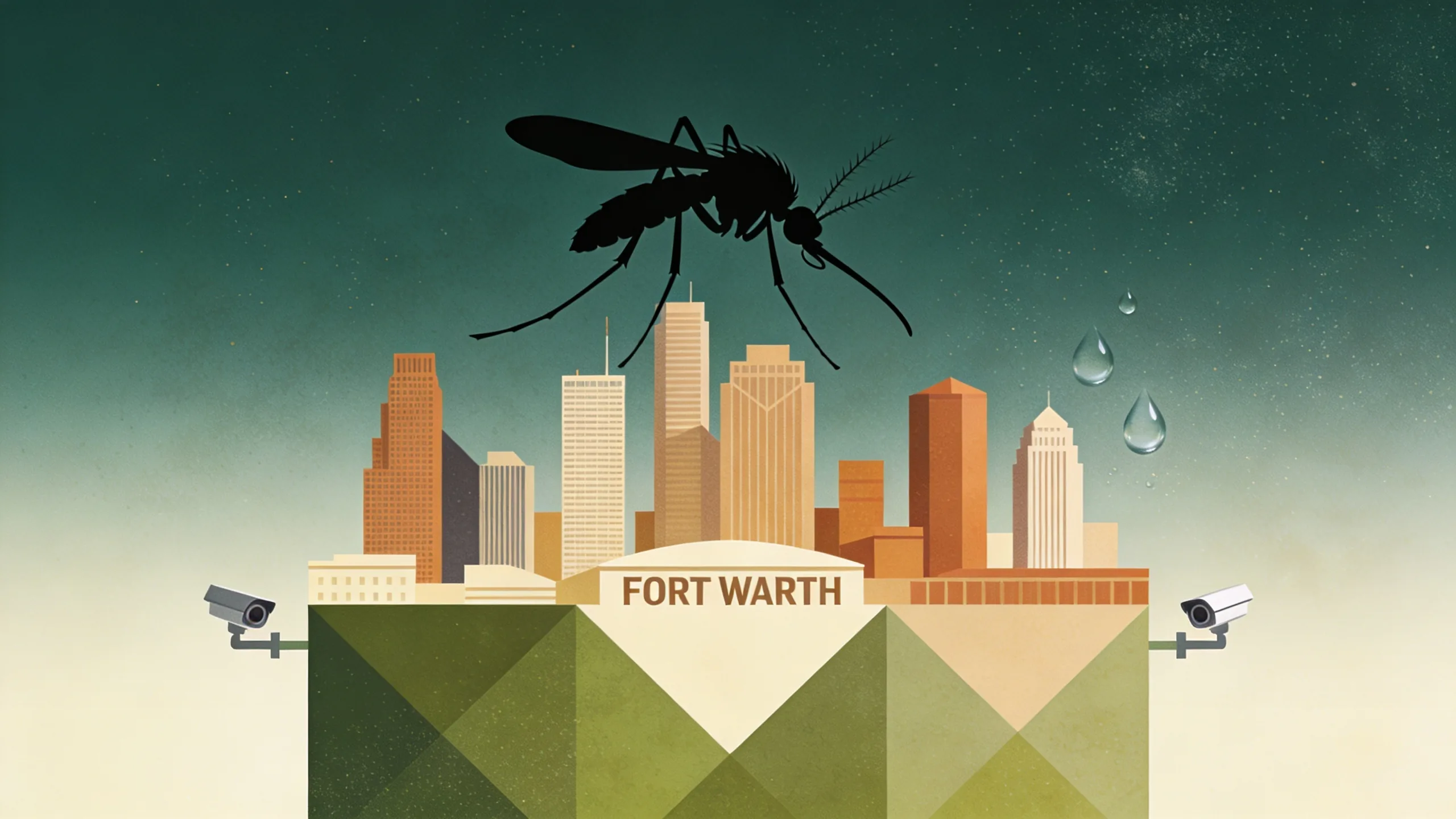
West Nile Virus Season Begins in Tarrant County: First Positive Mosquitoes Detected in Fort Worth and Grand Prairie
Tarrant County Public Health officials have confirmed the first positive mosquito samples for West Nile Virus this year, marking the official start of the 2026 West Nile season in North Texas. The infected mosquitoes were collected in Fort Worth and Grand Prairie during routine surveillance operations.
As of May 14, the county's North Texas Regional Laboratory has tested 314 mosquito samples. While no human cases have been reported in 2026, health officials emphasize that the detection serves as an early warning for residents to take precautions.
The timing aligns closely with last year's season, which also began in early May. In 2025, Texas recorded 127 human cases of West Nile Virus, with 2,076 cases reported nationwide. The virus has been endemic in Texas since 2002, with transmission typically increasing from May through October as warmer temperatures extend mosquito activity into fall.
Heightened Surveillance for World Cup
The announcement comes as Tarrant County intensifies mosquito surveillance ahead of the World Cup kickoff in June. Sabrina Vidaurri, associate director of health protection and response at Tarrant County Public Health, briefed county commissioners on May 12 about expanded monitoring efforts.
The department tests mosquito samples for both West Nile Virus and St. Louis encephalitis, coordinating abatement programs across 36 cities within the county. Last year, Tarrant County implemented heavy larvicide treatments to target mosquito larvae before they mature.
"The best way to protect yourself from mosquitos is to reduce the breeding cycle," Vidaurri told commissioners. The public health department has also distributed $20,000 worth of mosquito dunks to participating cities for standing water treatment.
Understanding the Risk
According to the Centers for Disease Control and Prevention, approximately one in five people infected with West Nile Virus develop symptoms, which include fever, body aches, headaches, and joint pain. In severe cases, known as neuroinvasive disease, symptoms can include disorientation, muscle weakness, tremors, paralysis, and potentially death.
No vaccines or specific treatments currently exist for West Nile Virus in humans, making prevention the primary defense.
Protection Recommendations
Tarrant County Public Health recommends residents take the following steps:
- Apply EPA-approved insect repellent when outdoors
- Wear loose-fitting, long-sleeved clothing and pants
- Eliminate standing water around homes and treat with larvicides
- Limit outdoor activity during peak mosquito hours at dawn and dusk
The last West Nile Virus death in Tarrant County occurred in 2024, when the county reported 28 human cases resulting in 24 hospitalizations. Health officials continue to monitor the situation as temperatures rise and mosquito populations grow.
Sources
Texas Bug Slayers Editorial Team
Editorial Board
The Texas Bug Slayers editorial team brings together licensed pest control professionals, entomologists, and writers dedicated to helping Texans protect their homes and families from pests.
Related Articles

Arlington Sprays Two Nights for West Nile as Texas Case Count Reaches 46 at Season's Peak
Arlington crews sprayed two nights near Caliente Drive after a mosquito trap tested positive for West Nile, as CDC's Sept. 1 update put Texas at 46 human cases.
Denton County Reports First Neuroinvasive West Nile Case as Virus Spreads Across North Texas
Denton County confirms its first severe neuroinvasive West Nile virus case of 2026, marking the second human infection in the county as health officials urge prevention measures.

Tarrant County Reports First Human West Nile Case of 2026 — and It Is the Neuroinvasive Form
Tarrant County Public Health confirmed its first human West Nile case of the season on July 24, after 86 positive mosquito pools. Texas has doubled its case count in three weeks as spraying expands from Kingsville to Lake Jackson.