
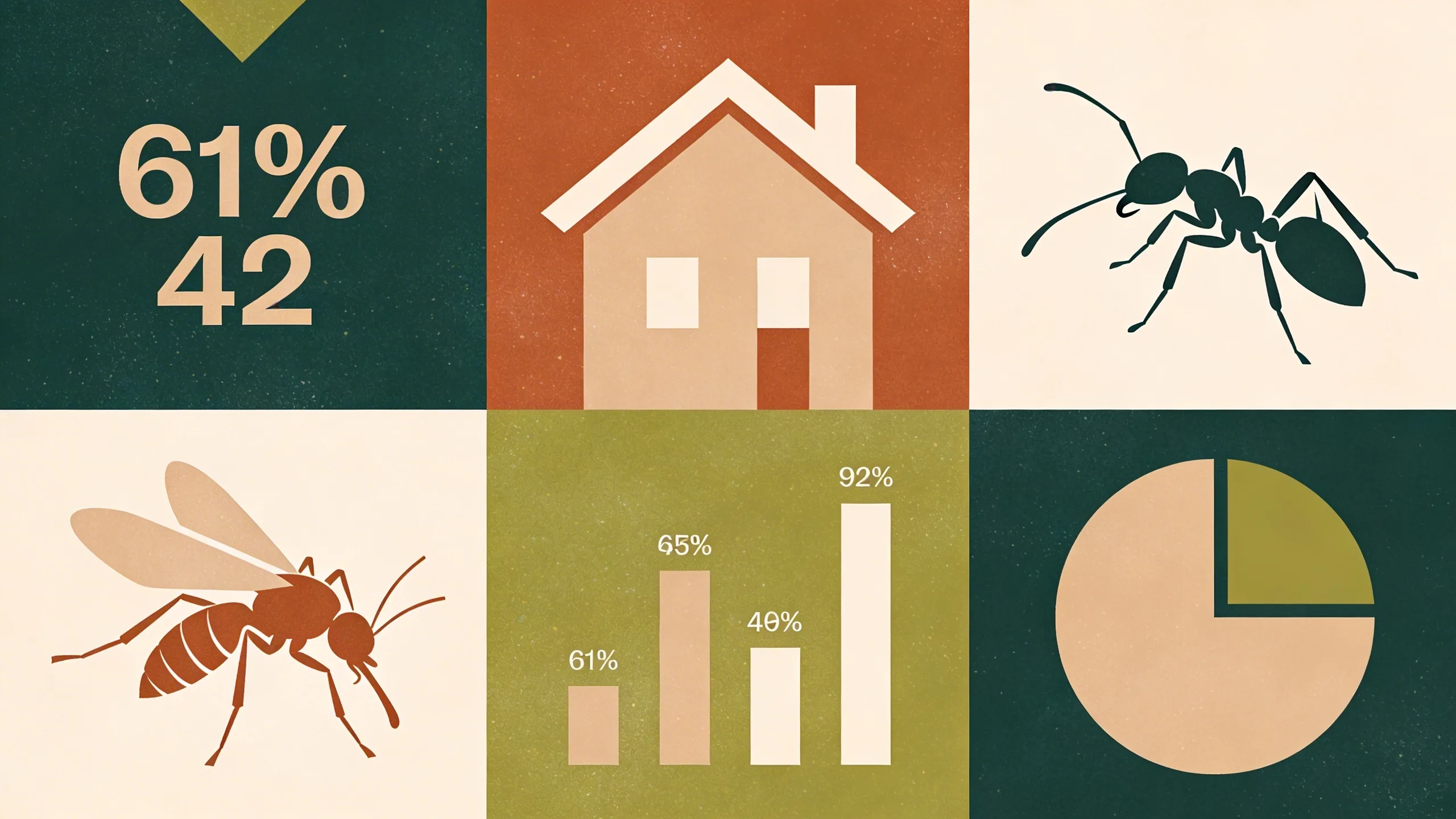
Homeowner Pest Priorities: Mosquitoes and Fire Ants Top Texas Concerns
Mosquitoes have emerged as the top pest concern among American homeowners in 2026, with 61% prioritizing protection against the blood-feeding insects, according to new industry research. Fire ants rank second at 52%, while stinging insects claim third place at 49%.
The findings come from Aptive Pest Control's 2026 Spring Pest Intelligence Report, which analyzes millions of data points including service records, pest migration patterns, and weather trends through the company's Pest Activity Index. The data reveals homeowner priorities align closely with seasonal pest pressures driven by a warmer-than-average winter across much of the United States.
Prevention Mindset Grows
The industry research indicates a significant shift toward preventative pest management among homeowners. Separate survey data from Modern Pest Services found that 60% of homeowners plan to take a preventative approach to pest control this year, with 36% intending to hire professional services.
Among planned actions, homeowners report:
- 49% will seal cracks and entry points
- 44% are turning to natural solutions such as neem oil
- 43% plan to use pesticide sprays
This preventative mindset represents a departure from reactive pest management, where homeowners typically waited until infestations became visible before taking action.
Texas Dominates Wasp Activity
Regional analysis reveals Texas leads the nation in wasp and stinging insect activity, claiming multiple positions among top hotspot markets. The elevated wasp presence aligns with Texas homeowners' reported concerns, as stinging insects rank among their top three pest priorities.
California accounts for all of the top six cockroach hotspot markets, while Florida—specifically Tampa—ranks in the top 10 across all five major pest categories and leads the nation in rodent activity.
Allentown, Pennsylvania ranks first nationally for both ant and spider activity, driven by climate conditions favorable to these species.
Why Mosquitoes Lead Concerns
Mosquito prioritization among homeowners reflects multiple factors converging in 2026:
Health risks: Mosquito-borne diseases including West Nile virus, Zika, and dengue create genuine public health concerns. Texas Department of State Health Services has already reported West Nile virus detection in Harris County mosquitoes for 2026, marking the earliest detection in recent years.
Nuisance factor: Unlike many structural pests that remain hidden, mosquitoes directly interfere with outdoor activities during peak recreation seasons.
Visibility of threat: Media coverage of arbovirus surveillance and public health advisories keeps mosquito-borne disease risks front-of-mind for homeowners.
Regional variation: Southern states, including Texas, experience year-round mosquito activity, creating sustained demand for control services.
Fire Ant Persistence
Fire ants' second-place ranking reflects the species' established presence across Texas and the Southeast. Red imported fire ants (Solenopsis invicta) create unique challenges that drive homeowner concern:
Medical risks: Fire ant stings cause painful reactions, and individuals with allergies face serious health consequences from multiple stings.
Property impact: Large mounds damage landscaping, lawns, and infrastructure. Colonies near homes increase human contact incidents.
Difficulty of control: Fire ant colonies prove resilient against many DIY treatments, driving homeowners toward professional services.
Year-round activity: While spring and fall mark peak visible activity, fire ants remain active throughout the year in Texas, requiring ongoing management.
Knowledge Gaps Present Opportunities
Despite increased awareness, the research reveals significant knowledge gaps among homeowners that Texas pest management professionals can address:
Mulch risks: More than half (56%) of homeowners planning to garden remain unaware that mulch can attract pests indoors without proper buffer zones between mulched areas and foundations.
Travel-related pests: 27% of homeowners report they do not consider bed bug prevention when traveling, despite the species' well-documented association with hotels and other temporary lodging.
Treatment timing: Many homeowners still wait until pests become visible indoors before seeking professional help, missing the optimal window for preventative treatments.
Service Demand Implications for Texas PMPs
The prioritization of mosquitoes and fire ants signals specific service opportunities for Texas pest management professionals:
Mosquito Control Programs
Seasonal mosquito programs addressing both larval sources and adult populations can meet demonstrated homeowner demand. Services may include:
- Property inspections identifying standing water sources
- Larvicide treatments for water features that cannot be eliminated
- Adult mosquito barrier treatments using residual products
- Mosquito misting system installation and maintenance
Fire Ant Management
Two-step fire ant programs combining broadcast baits with individual mound treatments align with both homeowner priorities and Texas A&M AgriLife Extension recommendations. Professional services offer advantages over DIY approaches through:
- Access to professional-grade products not available to consumers
- Expertise in proper application timing and methods
- Whole-property treatments addressing both visible and hidden colonies
- Ongoing monitoring and retreatment protocols
Warmer Winter Drives Activity
Aptive's data shows pest activity rising across all five major household pest categories—ants, spiders, rodents, cockroaches, and wasps—with no projected declines in any market nationwide. The widespread surge stems directly from milder winter temperatures that allowed higher pest survival rates.
"Warmer winters allow more pests to survive and reproduce, which can lead to a noticeable jump in activity once spring arrives," said Aptive entomologist Isaac Rockwell. "With milder temperatures, pest populations remain more active, meaning homeowners may start seeing increased activity earlier and in greater numbers."
For Texas, which already experiences milder winters compared to much of the nation, the 2025-2026 winter's above-average temperatures compound existing favorable conditions for year-round pest activity.
Early Action Recommended
Industry experts emphasize that waiting until pests become visible indoors represents one of the most common homeowner mistakes.
"By the time you notice a pest inside, there's often already a larger population nearby," Rockwell noted. "Winter and early spring are the most important windows for preventative action."
Simple exclusion measures—sealing entry points, clearing yard debris, eliminating standing water—can significantly reduce pest risk when implemented before populations peak. Early professional treatments provide even greater protection by targeting pests before they establish large populations near structures.
Looking Ahead
As Texas progresses deeper into spring, the combination of warmer winter conditions, early seasonal rainfall, and elevated baseline pest populations suggests an active pest season extending through summer and into fall.
Texas pest management professionals positioned to address homeowner priorities—particularly mosquito and fire ant control—while educating clients about preventative approaches and proper timing may see increased service demand throughout the 2026 season.
The industry data confirms what many Texas PMPs observe in the field: homeowners increasingly recognize pest management as an ongoing need rather than an emergency response, creating opportunities for subscription-based programs and comprehensive property protection plans.
Sources
Texas Bug Slayers Editorial Team
Editorial Board
The Texas Bug Slayers editorial team brings together licensed pest control professionals, entomologists, and writers dedicated to helping Texans protect their homes and families from pests.
Related Articles
Texas Pest Control Demand Surges 19.6% in April as Homeowners Brace for Peak Season
New data shows demand for pest control services in Texas jumped nearly 20% in April, driven by early mosquito activity, termite swarming, and fire ant outbreaks.

After the Hill Country Floods, the Pests Arrive Next: Fire Ant Rafts Now, Mosquitoes in Two Weeks
Texas cleanup crews face floating fire ant colonies today and a mosquito rebound in two to three weeks — colliding with the earliest West Nile season since 2004.
Houston and Dallas Rank Among Top 10 Most Mosquito-Infested Cities in 2026
Orkin's 2026 Mosquito Cities List places Houston 7th and Dallas 8th nationally as Texas metro areas remain hotspots for mosquito activity and disease risk.