
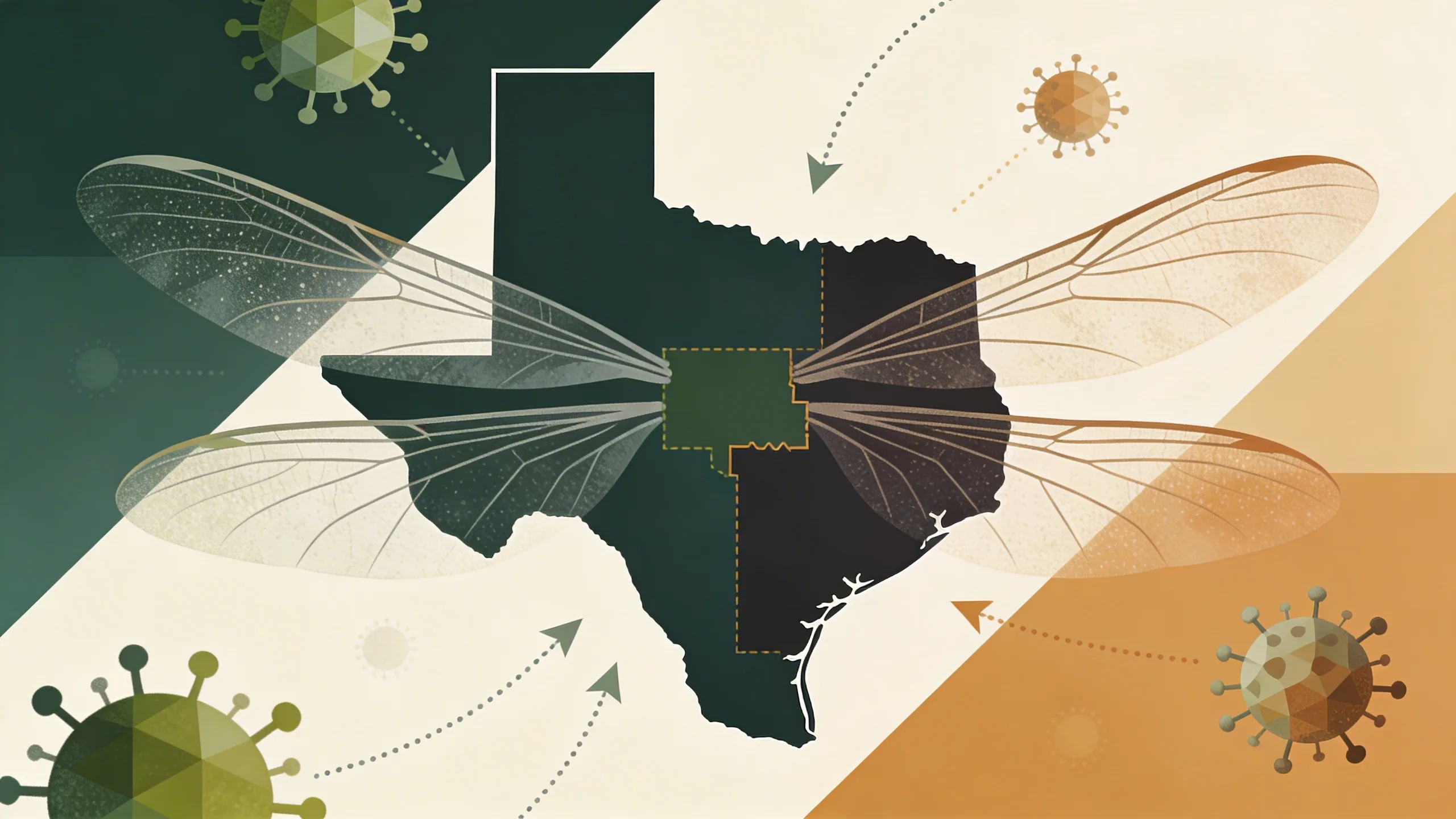
St. Louis Encephalitis Virus Co-Circulates with West Nile in West Texas
A new CDC study published in Emerging Infectious Diseases reveals geographically distinct circulation of St. Louis encephalitis virus (SLEV) across Texas, with significant implications for clinical diagnosis and public health surveillance in West Texas.
The research, analyzing cases from 2009 through 2024, found that SLEV genotypes II and III circulate in different regions of the state, with West Texas showing co-circulation of both SLEV and West Nile virus (WNV). This overlap complicates diagnosis, as both viruses produce similar neurological symptoms.
Clinical Vigilance Required
The study emphasizes the need for heightened clinical awareness in West Texas counties, where physicians must consider both SLEV and WNV when evaluating patients with fever, headache, and neurological symptoms during mosquito season.
SLEV is a mosquitoborne orthoflavivirus that causes encephalitis—inflammation of the brain—in severe cases. While less common than West Nile virus, SLEV can produce serious neurological complications, particularly in older adults.
Geographic Protection
Interestingly, the research suggests the Gulf Coast region may be buffered against introduction of foreign SLEV genotypes, possibly due to environmental factors or mosquito species distribution. This geographic distinction has important implications for predicting future outbreak patterns.
Early Season Mosquito Activity
The CDC findings come as Texas enters peak mosquito season. Harris County has already reported detecting West Nile virus in mosquitoes in 2026, the first Texas county to do so this year according to Department of State Health Services (DSHS) data.
Additionally, a human West Nile case has been confirmed in Shelby County, marking the first human infection of 2026 in the region.
Prevention Recommendations
Public health officials recommend standard mosquito avoidance measures across all Texas regions:
- Use EPA-registered insect repellent containing DEET, picaridin, or IR3535
- Wear long sleeves and pants during dawn and dusk when mosquitoes are most active
- Eliminate standing water around homes and properties
- Ensure window and door screens are in good repair
- Report dead birds to local health departments for surveillance testing
Implications for West Texas
For residents and healthcare providers in West Texas, the co-circulation findings mean diagnostic testing should consider both viruses. Blood tests can differentiate between SLEV and WNV, but clinicians must specifically request SLEV testing—it's not always included in standard arbovirus panels.
The Texas Department of State Health Services maintains active surveillance for both viruses through mosquito trapping and testing programs. County health departments across West Texas are expanding monitoring efforts as temperatures rise and mosquito populations increase.
Looking Forward
As climate patterns shift and mosquito-borne diseases become more prevalent, understanding the geographic distribution of specific viral genotypes helps public health agencies target surveillance and educational efforts more effectively.
West Texas residents should remain vigilant about mosquito protection throughout the warm months. Anyone experiencing fever, severe headache, or confusion after mosquito exposure should seek immediate medical attention and inform healthcare providers about potential arbovirus exposure.
Sources
Texas Bug Slayers Editorial Team
Editorial Board
The Texas Bug Slayers editorial team brings together licensed pest control professionals, entomologists, and writers dedicated to helping Texans protect their homes and families from pests.
Related Articles

El Paso West Nile Cases Climb to Four as Severe Illnesses Emerge in Older Residents
El Paso confirms two additional severe West Nile virus cases, bringing the total to four. Health officials urge residents to follow the 4 Ds as the virus disproportionately affects older adults.
El Paso West Nile Cases Climb to Four as Severe Illnesses Emerge in Older Residents
El Paso health officials confirm four severe West Nile virus cases, with two new patients in their 70s highlighting heightened risks for vulnerable populations during peak mosquito season.

Dallas County Records Its First West Nile Death of 2026 With the Season Still Running
A man in his 60s is the county's first West Nile fatality this year. State data shows 1,376 positive mosquito pools and 57 human cases across Texas.