
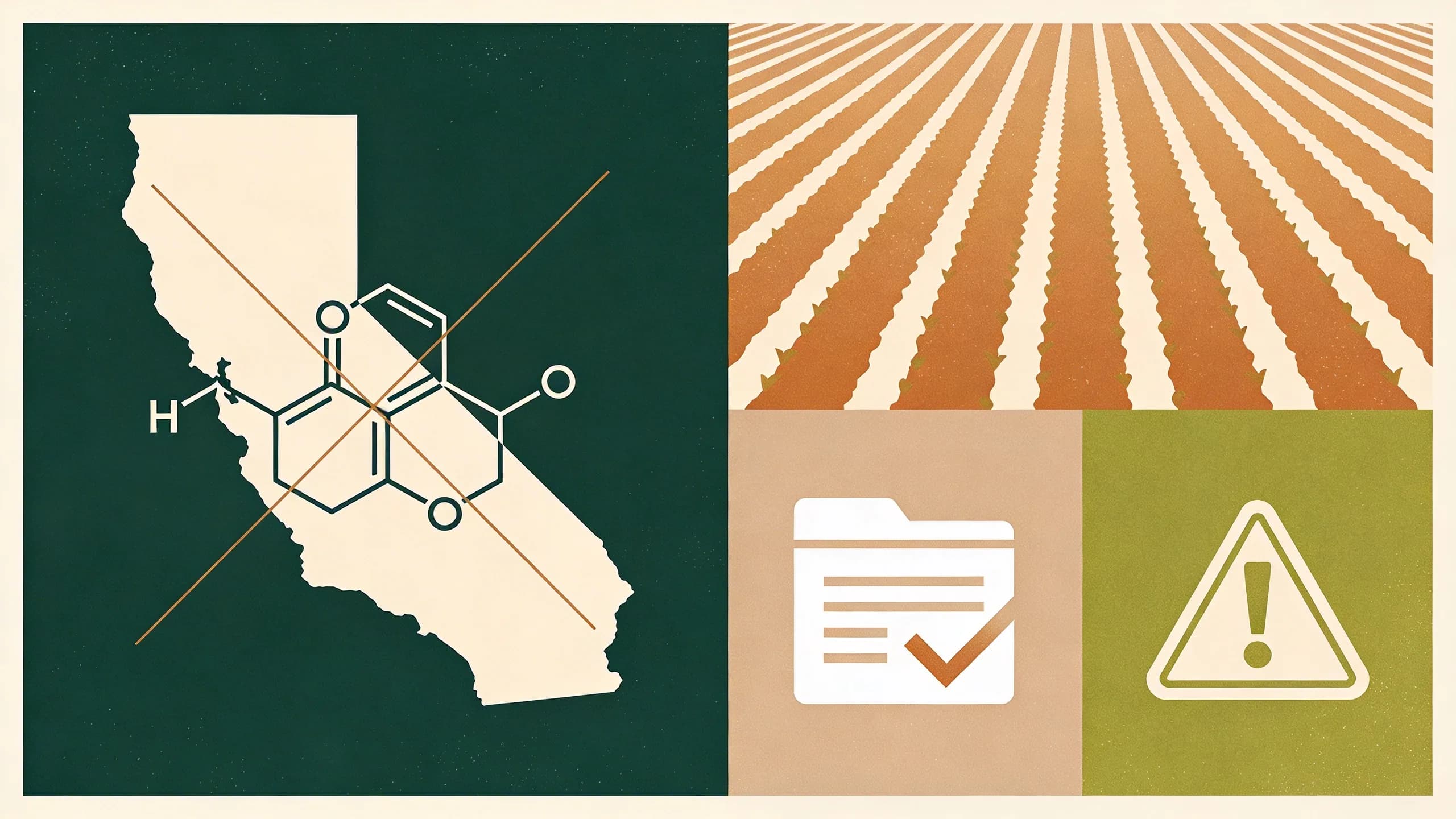
Syngenta Voluntarily Cancels Paraquat Registration in California
Pesticide manufacturer Syngenta has voluntarily cancelled registration of Gramoxone SL 3.0, its primary paraquat-based herbicide product, in California. The cancellation became effective April 1, 2026, ending the legal use of paraquat-dichloride herbicides in the nation's largest agricultural economy.
The California Department of Pesticide Regulation (CDPR) announced the voluntary cancellation, which removes paraquat from the state's list of registered pesticide products. Paraquat is an herbicide used primarily for weed control in agricultural settings and can only be applied by certified applicators due to its high toxicity.
National Implications
While California represents a single state market, its agricultural influence extends far beyond state lines. California produces more than one-third of U.S. vegetables and two-thirds of fruits and nuts, making its pesticide regulations closely watched by growers, manufacturers, and regulators nationwide.
The voluntary cancellation in California follows years of controversy over paraquat's health and environmental impacts. Some European countries and other jurisdictions have banned the chemical, while it remains approved for restricted use in most U.S. states, including Texas.
Texas Status Unchanged
Paraquat remains a registered and legally available herbicide in Texas under current Texas Department of Agriculture regulations. Texas agricultural producers, particularly cotton and soybean growers, continue to use paraquat as a harvest aid and burndown herbicide.
However, Syngenta's decision in California may signal broader market trends that could eventually influence product availability nationwide. Manufacturers often discontinue products when major markets impose restrictions, even if other jurisdictions maintain approval.
Alternatives for Texas Growers
Texas farmers and pest control operators who currently rely on paraquat should monitor the situation and consider:
Alternative herbicides: Glyphosate, 2,4-D, dicamba, and other burndown options remain available, though efficacy and resistance management profiles differ from paraquat.
Integrated weed management: Combining chemical controls with cultural practices and mechanical methods can reduce reliance on any single herbicide.
Label compliance: Products containing paraquat require certified applicator status and strict adherence to safety protocols, including protective equipment and restricted entry intervals.
Safety Concerns
Paraquat is classified as a restricted-use pesticide due to its acute toxicity. Even small amounts can be fatal if ingested, and the chemical has been linked to Parkinson's disease risk in occupational exposure studies, though the EPA maintains it can be used safely when label directions are followed.
California's pesticide regulatory framework is among the most stringent in the nation, often leading manufacturers to voluntarily exit the market rather than navigate complex restriction processes.
What This Means for Pest Control Professionals
While paraquat is primarily an agricultural herbicide rather than a structural pest control product, the California cancellation reflects broader regulatory trends toward increased scrutiny of pesticide active ingredients.
Pest management professionals in Texas should:
- Stay informed about active ingredient reviews and regulatory changes
- Diversify treatment approaches to avoid over-reliance on any single chemistry
- Maintain thorough knowledge of Texas-specific regulations through the Texas Department of Agriculture
- Follow label requirements precisely for all restricted-use products
EPA Federal Review
The U.S. EPA completed its most recent registration review of paraquat in 2021, maintaining federal approval with enhanced safety measures. However, the agency periodically re-evaluates pesticide registrations based on new scientific data.
Manufacturers can voluntarily cancel registrations in specific states or nationwide for business reasons independent of EPA actions. Syngenta has not announced similar cancellations in other states at this time.
Looking Ahead
Texas agricultural and pest management operations should continue monitoring both state and federal regulatory developments. While paraquat remains available in Texas, evolving science, market pressures, and manufacturer decisions can shift product availability over time.
The Texas Department of Agriculture provides current information on registered pesticides and applicator requirements through its Pesticides Division. Certified applicators can access continuing education on herbicide alternatives and integrated weed management strategies through Texas A&M AgriLife Extension.
Sources
Texas Bug Slayers Editorial Team
Editorial Board
The Texas Bug Slayers editorial team brings together licensed pest control professionals, entomologists, and writers dedicated to helping Texans protect their homes and families from pests.
Related Articles

EPA's Atrazine Cleanup Plan Would Leave 99% of the Worst Watersheds Untouched, Study Finds
A Center for Biological Diversity study finds only about 120 of more than 11,000 watersheds would drop below EPA's atrazine harm threshold — a problem for the sorghum country that leans on the herbicide.

Texas Citrus Growers Tell EPA the Neonicotinoids Are the Difference Between Orchards and Subdivisions
Lower Rio Grande Valley growers have filed comments telling EPA that revoking neonicotinoid food tolerances would strip their tools against Asian citrus psyllid — and their reason to keep farming.

Petition Asks EPA to Crack Down on the Herbicide Spray That Dries Grain Before Harvest
The Center for Biological Diversity wants the EPA and HHS to review pre-harvest desiccation and tighten glyphosate residue limits, reopening a fight Texas grain growers are already watching.