
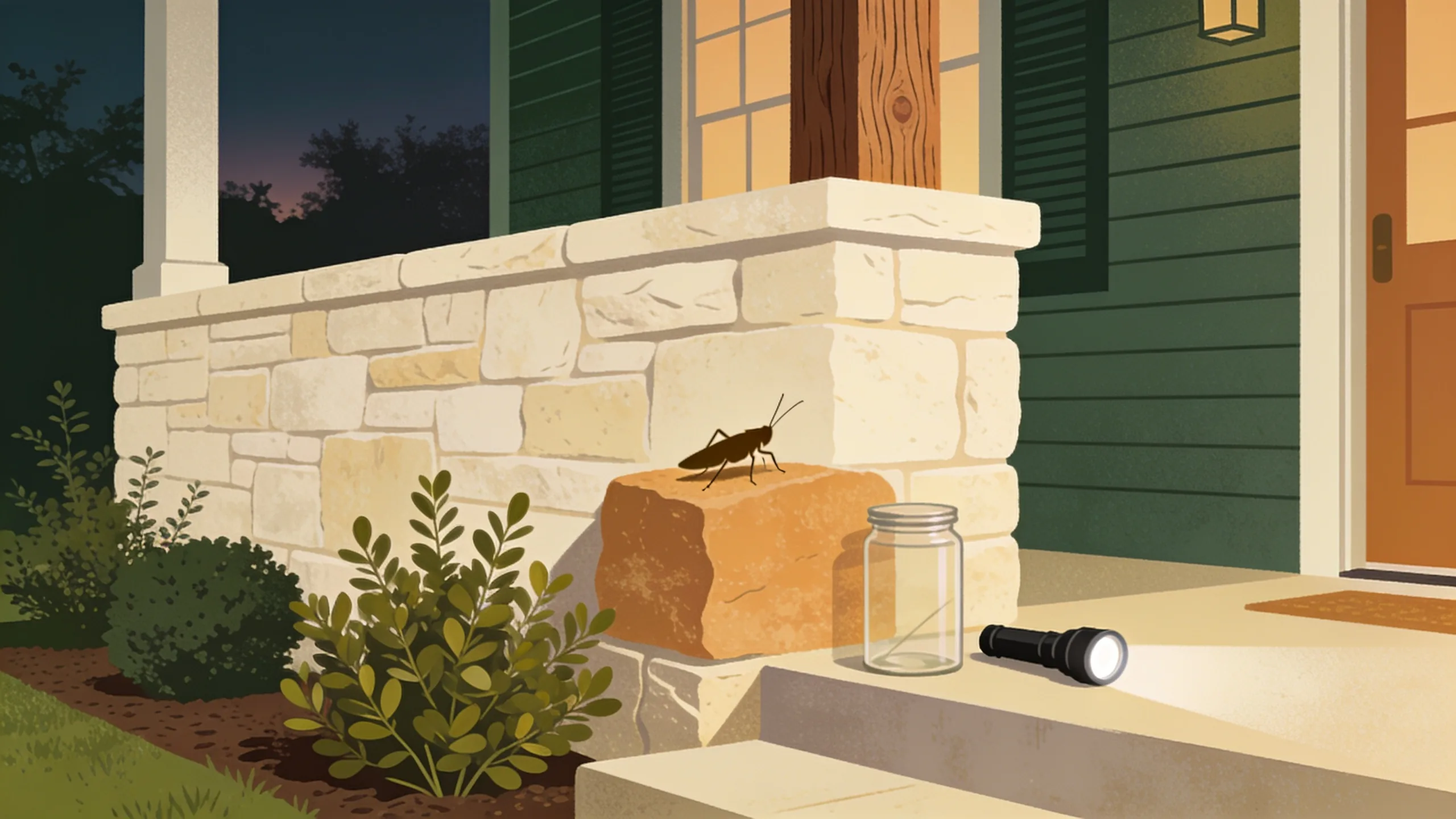
Kissing Bugs in Texas: What Homeowners Actually Need to Know
The bug shows up in the sink at six in the morning, usually after somebody left the porch light on. Flat, dark, an inch long, with a thin orange rim around the abdomen that looks painted on. Half the people who find one in a Texas house flick it into the disposal and forget it. The other half spend an hour online and arrive at Chagas disease, a genuinely frightening phrase attached to an insect most of them have never heard of.
Neither reaction matches the actual risk. Kissing bugs are real, they are common across most of the state, and a fraction of them carry a parasite worth taking seriously. They are also not waiting in every mattress, and the illness they can pass along does not travel the way people assume. Getting the identification right — and working out where the bug came from — settles most of the anxiety in an afternoon.
Reading the shape, not the color
Kissing bugs belong to a group called triatomines, and the silhouette is distinctive once you have seen it: a narrow, cone-shaped head tapering to a straight beak, a collar-like plate behind the head, and a flat, leaf-shaped abdomen that extends past the wings. Adults run three-quarters of an inch to an inch, dark brown to black, often with orange, red or tan markings along the abdominal edge and the legs. Nymphs resemble small wingless adults and are rounder.
That cone head is the giveaway. Wheel bugs and other assassin bugs — close relatives, all in the family Reduviidae — carry a thicker, curved beak and a jagged crest on the thorax. Wheel bugs will happily stab a finger and it hurts, but they do not transmit Chagas. The other regular confusion in Texas is the leaffooted bug and its cousin the western conifer seed bug, which crowd against window screens in autumn by the dozen: plant feeders, with fondness for seeds, a simple tube mouth, and no interest in blood. A broad shield-shaped back and a blunt face rule a kissing bug out entirely.
Texas hosts several triatomine species, and geography shortens the list. Triatoma gerstaeckeri is the one most often collected in Central Texas and fills the Hill Country counties around Austin and San Antonio. Triatoma sanguisuga ranges widely and turns up around houses more than most. West of the Pecos, Triatoma protracta lives in woodrat nests in canyon country. Every one of them is a potential vector. None of them hunt people.
A nest associate, not a house pest
This is the part that reframes the entire problem. Kissing bugs are not a household infestation the way roaches are — they are nest associates. Their populations are built on the nests of pack rats, woodrats and other rodents: the stick-and-cactus middens out in a cedar brake, the debris mound behind a shed, the nest tucked into a stone wall. When a bug leaves that nest at night it is following a blood meal or a light, not moving in.
So the honest answer to "where did it come from" is nearly always somewhere within a few dozen feet of the house. The woodpile along the fence. A dog house that has not been cleaned since spring. A chicken coop with deep litter. A limestone retaining wall or a decorative rock pile with rodent runs behind it. Palm trees, where rats nest in the boots. The crawl space of an older pier-and-beam home where something has been living rent-free for a year. An attic full of rodents does the same thing one floor up.
Brick veneer is everywhere in Texas, and so are the weep holes at its base — deliberate gaps that let moisture escape and hand a flat insect a clean line into the wall cavity. Around Austin and San Antonio, where subdivisions back onto greenbelt and ranch land, houses sit directly against the limestone-and-cedar habitat that supports woodrat nests. Bugs work the exterior wall after dark and slip through a weep hole or the gap under a door sweep.
The Chagas question
The parasite is Trypanosoma cruzi, and infection rates in Texas triatomines swing widely by species and location — some collections test positive well above a third. That figure alarms people until they understand the route. A kissing bug does not inject the parasite while biting. It feeds, then defecates beside the bite, and the parasite rides in the feces. Infection happens when that material is rubbed into the puncture, an eye, the mouth, or a scratch. It is a mechanical accident, not a venom injection, and less efficient than the mosquito-borne diseases Texans already manage.
Nationally the CDC estimates roughly 300,000 people in the United States are living with Chagas disease, the large majority infected in Latin America before they arrived. Locally acquired human cases in Texas are rare enough that a single confirmed infection makes public health news, while infections in dogs get diagnosed more often, particularly in hunting dogs and dogs kept outdoors.
Which gives a homeowner a realistic frame: a kissing bug on the kitchen floor is a reason to wash your hands, not to book a blood test. A colony in the dog house, or bedding stored in an infested shed, is a reason to act this week.
If you find one tonight
Do not crush it against skin or on a bed sheet. Catch it in a clear jar or a zip bag, alive or dead, and freeze it if you want the specimen intact. Photograph the top and the underside — belly markings separate species. Wash any bite with soap and water, skip the scratching, and keep your hands away from eyes and mouth until you have. Texas A&M AgriLife county agents and the state health department both accept submitted specimens for identification, and some counties screen them for the parasite; the DSHS Chagas program publishes where to send one.
Watch for the right symptoms at the wrong time. The acute phase, when it appears at all, resembles flu a week or two after exposure, sometimes with swelling around one eye. If that shows up after a confirmed bite, use the word "triatomine" with the doctor. The CDC's Chagas pages cover testing and treatment properly.
Then deal with the source. Bag rodent nests instead of sweeping them, since dried rodent waste carries its own hazards, and haul the material off site. Pull the woodpile at least twenty feet from the wall and get it up on rails. Clean the dog house, lift it off bare dirt if it sits on the ground, and check the bedding with a flashlight for a few weeks. Trade a bright porch light for a yellow bulb or a motion fixture, and stop leaving the door open to the light. Replace missing weep-hole inserts and worn door sweeps — the insect is flat, not liquid, and a snug seal ends most of the entries.
When the yard needs more than a rake
Repeated finds indoors, or a yard with pack rat middens stacked against the foundation, is a different job: rodent work, exclusion, and a residual applied where the insects actually harbor rather than a baseboard spray that misses everything. A licensed provider who knows triatomines is worth the call. You can find one through our Texas pest control directory, and barrier and exclusion work falls squarely inside standard pest control service in this state. If the house sits on greenbelt or ranch edge, that call earns its keep — homeowners wrestling the same limestone-and-cedar habitat around Austin and San Antonio usually see this insect every year rather than once.
Frequently Asked Questions
Do kissing bugs fly?
Adults do, and they are decent fliers after dark, drawn to porch lights and lit windows. Nymphs have no functional wings and travel by crawling. One in a second-floor bedroom is normal — it flew or hitched a ride, it did not come up the drain.
Can I get Chagas disease from a kissing bug bite?
The bite itself does not transmit the parasite. Infection requires the bug's feces to reach the wound or a mucous membrane, which is why the advice is don't scratch and wash up. Risk is real but low in the United States, and locally acquired Texas cases are uncommon.
What should I do about my outdoor dog?
Check kennels and bedding at night with a light, keep the house off bare dirt, and replace bedding often. Dogs are diagnosed with Chagas more frequently than people in Texas, and a veterinarian can test after known exposure or unexplained lethargy.
Do I need to fumigate if I find one in the house?
No. Fumigation targets structural pests such as drywood termites and bed bugs. It does nothing about an insect whose population lives in rodent nests out in the yard. Source reduction and exclusion are the actual fix.
Texas Bug Slayers Editorial Team
Editorial Board
The Texas Bug Slayers editorial team brings together licensed pest control professionals, entomologists, and writers dedicated to helping Texans protect their homes and families from pests.