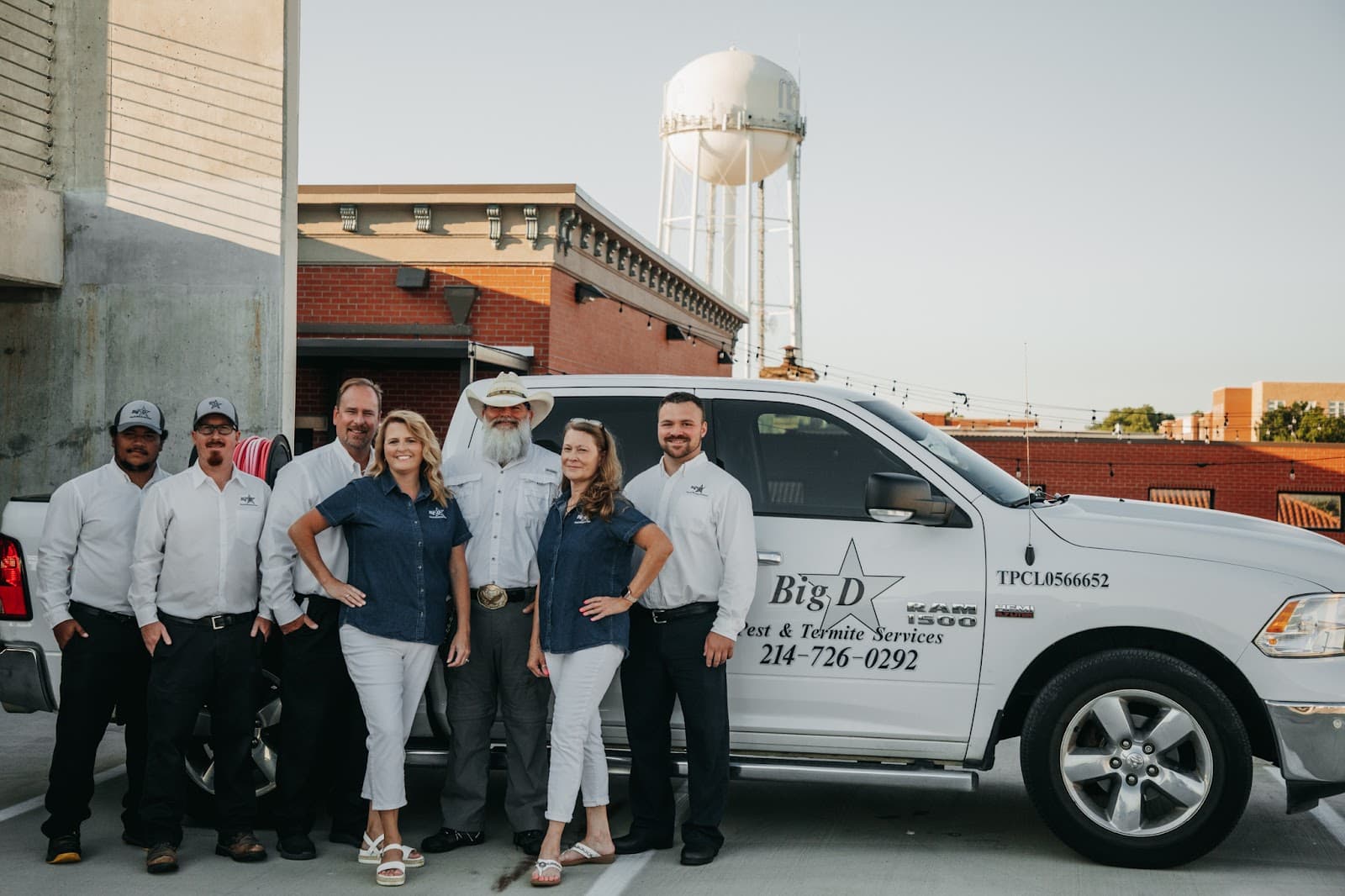
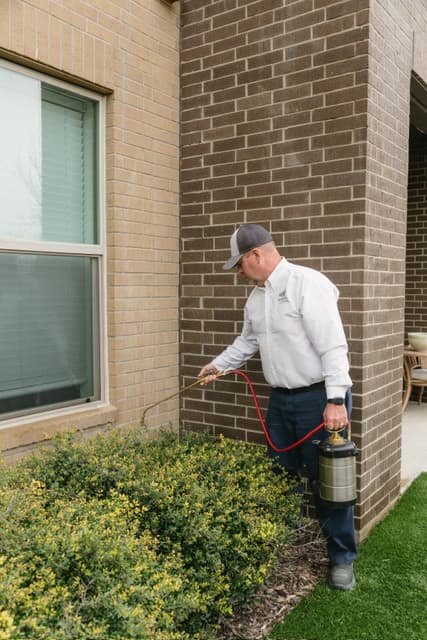
Big D Pest & Termite Services
DBA of DAVID N STIFF
Big D Pest & Termite Services is a pest control provider based in McKinney, COLLIN County, Texas. They operate under Structural Pest Control Business License TPCL #567846, issued by the Texas Department of Agriculture.
Their licensed service areas include termite treatment.
Big D Pest & Termite Services maintains a strong 5-star rating on Google based on 201 customer reviews, placing them among the highest-rated pest control providers in the McKinney area.
Licensed for 1 service category under TPCL #567846
Inspection, treatment, and prevention of subterranean, drywood, and Formosan termites
Also listed on Google as
211 Smith St, McKinney, TX 75069
Open in Google Maps| Day | Hours |
|---|---|
| Monday | 8 AM to 5 PM |
| Tuesday | 8 AM to 5 PM |
| Wednesday | 8 AM to 5 PM |
| Thursday | 8 AM to 5 PM |
| Friday | 8 AM to 5 PM |
| Saturday | 8 AM to 12 PM |
| Sunday | Closed |
Big D Pest & Termite Services holds TPCL #567846 with 1 authorized service category
Termite Treatment (Category T)
Category T authorizes the company to inspect for, treat, and prevent termite infestations. This is a specialized license requiring additional training in termite biology, soil treatment, and structural assessment.
What this license covers:
- Subterranean termite treatment (liquid barriers and bait systems)
- Drywood termite treatment (localized and whole-structure)
- Formosan termite identification and treatment
- Pre-construction termite prevention for new buildings
- Termite inspections and WDI (Wood-Destroying Insect) reports
- Annual monitoring and warranty programs
Why it matters: Termite treatment requires specialized knowledge of soil chemistry, building construction, and treatment techniques. An incorrect application can fail to protect the structure or cause environmental damage. The T category ensures the company meets TDA standards for termite work.
Common questions about pest control services in McKinney, TX
How long does a pest control treatment take?
A standard interior/exterior treatment takes 30–60 minutes for an average-sized home. Termite inspections take 1–2 hours. Full termite treatments may require a full day. Fumigation involves 2–3 days of preparation, treatment, and aeration. Your technician will provide a time estimate based on your property.
What time of year is best for pest control in Texas?
In Texas, pest control is important year-round due to the warm climate. Spring and early summer see increased activity from ants, termites, mosquitoes, and wasps. Fall brings rodents seeking shelter indoors. Winter is ideal for preventive treatments and termite inspections when pest pressure is lowest.
Should I get multiple quotes before choosing a pest control company?
Yes. Getting 2–3 estimates is recommended. Compare not just price but also the scope of service, products used, guarantees offered, and customer reviews. The cheapest option is not always the best — look for licensed, well-reviewed companies that clearly explain their treatment plan.
What does it mean when a pest control license is inactive?
An inactive license means the company has not renewed their TPCL with the Texas Department of Agriculture. This could be due to business closure, failure to meet insurance requirements, or voluntary non-renewal. Companies with inactive licenses cannot legally perform pest control services in Texas.
What are the different pest control license categories in Texas?
The TDA issues licenses with specific category codes: P (General Pest Control), T (Termite Treatment), L (Lawn & Landscape), W (Wildlife Removal), C (Crack & Crevice), S (Structural Fumigation), and D (Waste Disposal). Each category authorizes different types of pest management work.
What types of termites are found in Texas?
Texas has three main termite types: Eastern subterranean termites (most common, found statewide), Formosan subterranean termites (aggressive species in Southeast Texas and coastal areas), and drywood termites (found in attics and furniture, mainly in South and Coastal Texas). Each requires different treatment approaches.
Are termites common in this part of Texas?
Termites are found throughout Texas, but subterranean termites are especially active in the eastern and southern regions with higher moisture levels. The Gulf Coast and East Texas have the highest termite pressure, including aggressive Formosan termites. Regardless of location, annual inspections are recommended for all Texas homeowners.
What are the most common pests in Texas?
The most common Texas pests include fire ants, cockroaches (American and German), termites (subterranean and Formosan), mosquitoes, scorpions, spiders (brown recluse and black widow), wasps, rodents, bed bugs, and fleas/ticks. The warm climate and diverse geography create ideal conditions for a wide variety of pests year-round.
Are eco-friendly pest control methods effective?
Modern eco-friendly methods including botanical insecticides, essential oil repellents, diatomaceous earth, and biological controls can be effective for many common pests. They work best as part of an IPM program that emphasizes prevention and monitoring. For severe infestations, conventional products may be needed initially before transitioning to green maintenance.
- TPCL #
- 567846
- License Type
- T — Termite Treatment
- Issued
- N/A
- Renewed
- N/A
- Expires
- June 30, 2026
- Insurance Exp.
- N/A
- Operator
- DAVID N STIFF
- Legal Name
- DAVID N STIFF
Licensed by the Texas Department of Agriculture. Verify at texasagriculture.gov
More Pest Control in McKinney
Pest Solutions of North Texas

Redstone Pest Control
Bug Commander Pest Control

Pest Me Off

Big D Pest & Termite Services