
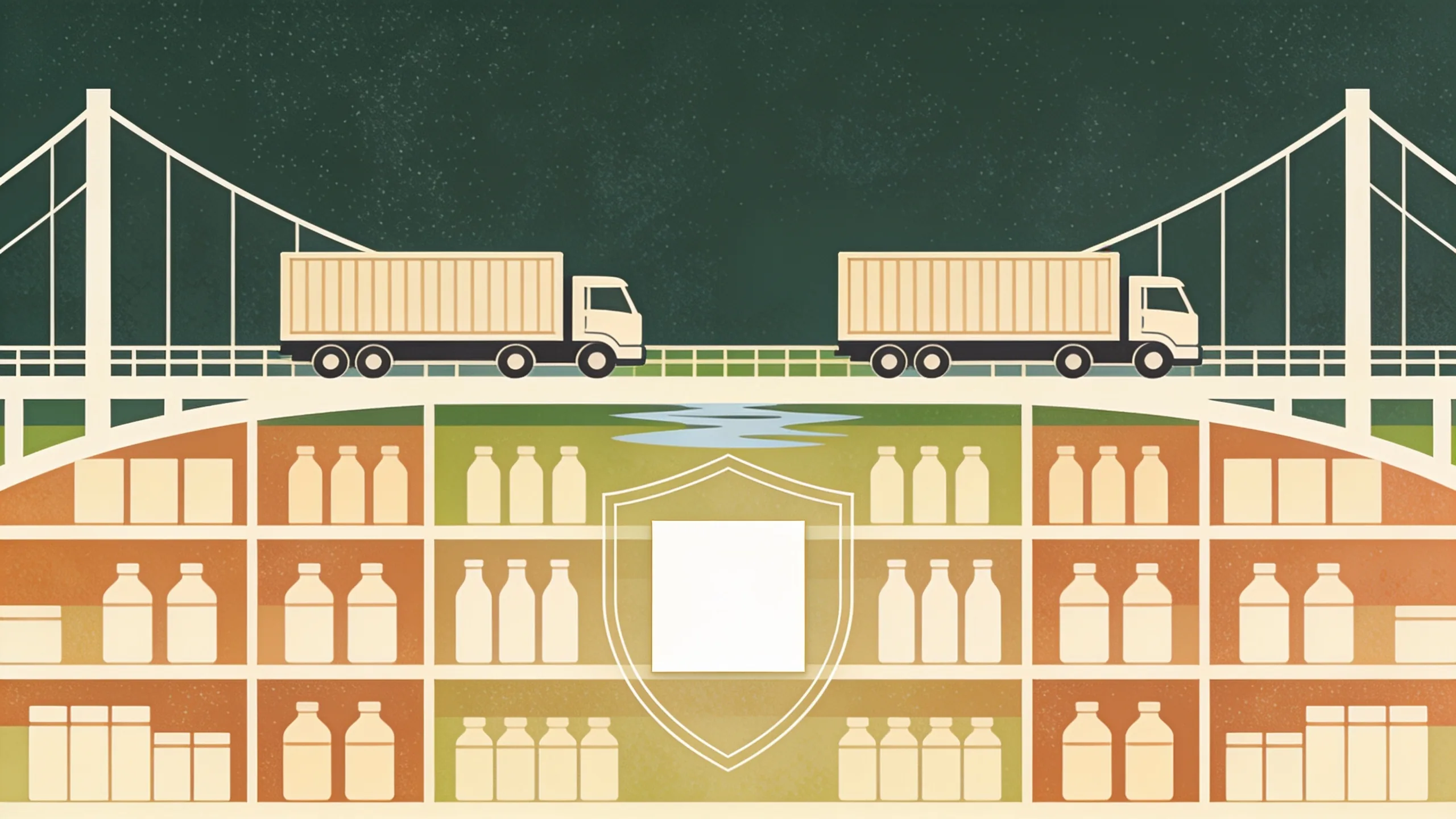
The Port and the Shelf: EPA Brings Its Import Playbook to the Texas Border
Dallas, Nov. 24. The Environmental Protection Agency's press office described a week of work rather than a single case: senior enforcement officials and inspectors joined Customs and Border Protection officers at land ports of entry on the Texas-Mexico line, then inspected retailers in the same two towns. The ports were Brownsville and Pharr, the latter officially the Hidalgo Port of Entry. The stores were in Brownsville and McAllen.
It was the first such push of fiscal year 2027, and the agency framed it as the moment its import inspections stopped being occasional and became a presence. "Although EPA has handled some cases on the southern border, this push to establish a firm and consistent inspection presence with CBP at land ports is critical to systematically curbing the illegal importation of unregistered pesticides and other dangerous products that can cause great harm to American communities," said Jeffrey A. Hall, assistant administrator for the Office of Enforcement and Compliance Assurance, in the release. He traveled to the Valley for it, along with principal deputy assistant administrator Craig Pritzlaff, and both met Carlos Rodriguez, port director for the Hidalgo/Pharr/Anzalduas crossing.
The number the agency attached to its border work starts in January. Since then, the release says, the coordinated inspections have covered 461 products inside 181 shipments and blocked more than 490,000 pounds of violative goods from entering domestic channels of trade. That figure covers everything EPA inspects at a port under six statutes, not pesticides alone, and it is an agency tally rather than an audited count. It is also the only quantitative result in the document.
What the release describes in more detail is the pincer. Inspectors at the bridge stop the shipment. Inspectors at the store follow the bottle. Retail sweeps, in the agency's account, let it trace a product backward through the supply chain to a foreign source, which is the part that turns a shelf in McAllen into evidence about a truck in Pharr. The two halves are not separate programs.
The legal machinery that makes the first half work is older than the initiative and mostly invisible to the people who buy the products. When a shipment of pesticides or devices enters the United States, CBP must be in receipt of a completed Notice of Arrival of Pesticides and Devices, EPA Form 3540-1 or its electronic equivalent, filed concurrently with the entry documentation. Under 19 CFR § 12.113 the form must be signed by the EPA administrator and must indicate what action CBP should take with the shipment; CBP then compares the entry information against the notice and reports discrepancies back to the agency.
If the form is missing, the regulation is blunt. The shipment is detained at the importer's risk and expense, for up to thirty calendar days, extendable once for good cause. Anything still sitting there after that is "treated as a prohibited importation," and CBP destroys whatever the consignee has not exported within ninety days after the detention period runs out.
FIFRA § 17(c) supplies the other half. The Secretary of the Treasury notifies EPA when pesticides and devices arrive and delivers samples on request. If examination shows a product adulterated, misbranded or otherwise in violation, it may be refused admission — and the statute does not leave the refusal discretionary at the back end: the Secretary "shall refuse delivery to the consignee and shall cause the destruction" of anything not exported within ninety days of the refusal notice.
Then there is Texas, which registers pesticides a second time. Agriculture Code § 76.041 requires that a pesticide be registered with the Texas Department of Agriculture before it is distributed in the state, transported in intrastate commerce, or delivered for transportation, and puts the duty on the manufacturer or whoever else appears on the label. A product can be entirely lawful in Reynosa and unlawful on a shelf in Hidalgo County, and it can be unlawful twice.
The dealer license is a narrower hook than it sounds. Section 76.071 requires a pesticide dealer license, issued per location, for distributing restricted-use or state-limited-use pesticides and regulated herbicides — and section 76.075 requires two years of records for each such distribution. Most of what sits on a hardware store shelf is general-use and needs no dealer license at all. For those products the state lever is registration, not licensing, which is why a retail inspection can end in a registration question rather than a licensing one.
For a licensed pest control operator, the practical consequence lands in the paperwork. Texas requires two years of pest control use records, and 4 Tex. Admin. Code § 7.144 spells out what they must contain: the product name and its EPA registration number, the mixing rate, the total amount applied, the target pest or purpose, the date, and the license and TPCL numbers of the people involved. A product with no registration number has no number to write. It also has no approved label, which means there are no directions for use for an applicator to follow — the standard that both federal misuse findings and most civil exposure arguments are built on.
The release's own list of harms is worth reading in full rather than summarized, because it is unusually specific about who pays: pesticide misuse, illegal residues on food crops, human injury or exposure, and environmental damage. It adds one line that has become standard in EPA border releases, that illegal pesticides are also used on illegal marijuana grows operated by transnational organized crime groups. Hall's quote on the traffic itself is the sharpest sentence in the document: commercial trucking from Mexico carrying illegal products, he said, "presents a substantial threat to our national security from transnational organized crime and to consumers who purchase or are exposed to dangerous substances banned in the United States." Scott Mason, administrator for EPA Region 6, supplied the state's line — Texas has the longest border with Mexico and "plays a vital part" in keeping banned pesticides out of homes and businesses.
Geography matters to how the program reads. The five surges of fiscal 2026 went to Savannah, New York/Newark, Los Angeles/Long Beach, the Houston seaport and the Pembina, North Dakota port of entry. Houston means Texas has now hosted two of the six pushes, the second one at land crossings rather than a container terminal, which is where the trucks are. The deterrent logic the agency states is narrow and procedural: a consistent presence stops importers from shopping around for a friendlier port after CBP has already directed them to reexport a refused load.
What the release does not contain is as telling as what it does. No products are named. No store is named. No citation, settlement, penalty or referral is described, and the agency does not say whether any Texas retailer was found in violation, warned, or left alone. The per-port breakdown of the fiscal 2026 results is published as a graphic inside the release rather than as text, so the numbers by location are not readable without opening the image. And nothing in the document says what fraction of arriving pesticide shipments is inspected, which is the figure that would let a reader judge whether a standing presence at Pharr changes the odds or simply changes the paperwork.
For now the strongest public claim the record supports is the one EPA made in its own release: two ports, two store sweeps, one week, and a fiscal-year tally that began in January. Whether the trucks slow down is a question the next quarterly table will answer, if it is published as text.
Sources
- EPA inspection push at southern border in Texas expands crackdown on dangerous and illegal imports (Nov. 24, 2026)
- 19 CFR § 12.113, Arrival and entry of shipment of pesticides and devices
- 7 U.S.C. § 136o, Imports and exports (FIFRA § 17)
- Tex. Agric. Code § 76.041, Registration Required
- Tex. Agric. Code § 76.071, License Required (pesticide dealer)
- 4 Tex. Admin. Code § 7.144, Pest Control Use Records
Texas Bug Slayers Editorial Team
Editorial Board
The Texas Bug Slayers editorial team brings together licensed pest control professionals, entomologists, and writers dedicated to helping Texans protect their homes and families from pests.
Related Articles

EPA Sets July 31 Deadline for Bilingual Pesticide Label Compliance Reporting
Pesticide registrants face fast-approaching July 31 deadline to report Spanish-language bilingual labeling compliance through EPA's MyPeST platform for restricted-use and agricultural products.
Bipartisan Bill Would Force Cancer Warnings on Pesticides After Supreme Court Ruling
Lawmakers from both parties introduce legislation to require cancer warnings on pesticide labels, responding to a Supreme Court decision that shielded manufacturers from liability.
EPA Approves More PFAS Pesticides After Quietly Changing Toxicity Definition
Environmental groups accuse EPA of industry capture after agency altered PFAS toxicity criteria to approve additional 'forever chemical' pesticides for agricultural use.