

The Hogs Come at Night, and the Cemetery's Neighbors Own the Escape Route
Nearly every night, something digs through Mission Park Cemetery on San Antonio's Southeast Military Drive, and by morning the evidence lies across the grass in torn arcs: divots the size of dinner plates, hoofprints, headstones sitting in churned dirt.
David Thompson visits his wife's grave every day. She died almost three years ago, and he has taken to raking the damaged turf into piles so the grounds look presentable, KENS 5 reported this week. Theresa, another visitor, came out the Sunday before Día de los Muertos to prepare for a family gathering and could not find her relative's grave at all. The headstone was under the dirt.
The animals are feral hogs. They started showing up at the cemetery in 2025 and have grown bolder since, according to the station.
What turns this from a nuisance into a pest management case is the trap count. As of Monday morning, the property had one: a single small, corn-baited box trap at its far southern end. The hogs can roam hundreds of acres around it.
Dick Tips, whose family has owned the cemetery for five generations, told KENS 5 that repeated requests for help from the city have gone nowhere. He hired a trapper, and the effort accomplished little — not because the trapper was ineffective, but because the hogs leave. They retreat onto land the cemetery does not control.
That land is the whole story. The cemetery's immediate neighbors, per property records the station cited, include the City of San Antonio, the San Antonio River Authority and the federal government, and the San Antonio River forms the eastern boundary. Those parcels give the animals daytime cover and unobstructed access, and flooding makes fencing the site off impractical.
Then there is the tool that works everywhere else in Texas. State rules let landowners take feral hogs year-round, with no closed season, and Texas Parks and Wildlife notes that lethal control is the only method shown to reduce populations at scale. Inside San Antonio city limits, city code prohibits hunting with firearms. The rural answer is legally unavailable in the middle of a city.
The city is not ignoring the problem — it is just scaled to parks, not cemeteries. The office of District 3 Councilwoman Phyllis Viagran confirmed to KENS 5 that San Antonio works with contractors to trap hogs and emphasized that the issue runs well beyond one graveyard. Parks and Recreation has used hog trappers on city-owned land since 2019 and has reported catching more than 850 animals, mostly in natural park areas, though the department gave no current total. A parks representative said staff are working with a contractor and will assess the cemetery.
The money is modest. San Antonio Report has reported that City Council approved an annual $35,000 contract with LMR Hog Trappers, with two one-year renewal options that push the estimated total near $175,000. Hogs have also turned up at the Medina River Natural Area, Friedrich Wilderness Park and the Greenway Trail System, KSAT reported.
San Antonio is not alone in this. In far southeast Dallas, families with plots at Lincoln Memorial Cemetery have complained for more than a year about hogs damaging graves at a site near Interstate 20 and the Trinity River that has no fence, NBC 5 Dallas-Fort Worth reported. Volunteers from Hogs for A Cause Texas trapped a dozen hogs there in May 2021, lost traps and camera equipment to theft twice, and eventually gave up. A cemetery manager later told the station that a new corral trap caught a dozen in a single Thursday night.
The lesson in that comparison is not subtle. Corral traps left in place on a site the animals use every night can clear a dozen at a time. One box trap in the corner of a property whose hogs sleep next door is a gesture.
Texas Parks and Wildlife puts the state's wild pig population at roughly 2.6 million, and describes what rooting does to land: it turns over soil horizons, alters nutrient cycling, and pushes fecal coliforms into waterways. The agency counts at least 30 diseases the animals can carry, among them brucellosis, leptospirosis, toxoplasmosis and trichinosis. It also notes the dynamic showing up at Mission Park — during dry spells, wild pigs seek food and water in residential areas and the damage follows. Texas has been dry enough this fall that AgriLife Extension was still writing about drought relief in the third week of October.
For families with plots at Mission Park, the practical advice this week is the same as anywhere hogs are established: do not approach them, keep a distance and report sightings to the property owner or the city rather than trying to move an animal that can weigh several hundred pounds and has tusks.
For the cemetery, the question is narrower. One trap against a few hundred acres, with a river, a floodplain and three public landowners on the property line, is not a program. It is a starter kit for a problem that will keep walking back across the boundary every morning.
Sources
Texas Bug Slayers Editorial Team
Editorial Board
The Texas Bug Slayers editorial team brings together licensed pest control professionals, entomologists, and writers dedicated to helping Texans protect their homes and families from pests.
Related Articles

Somewhere in 32,403 Beetle Photos Is the One Killing Your East Texas Pine
A University of Florida database now names 7,990 bark and ambrosia beetles with 32,403 images — useful in a Texas where the wrong ID costs a tree.
Sugar Land Will Spend 90 Days Counting Hogs Before It Decides What to Do About Them
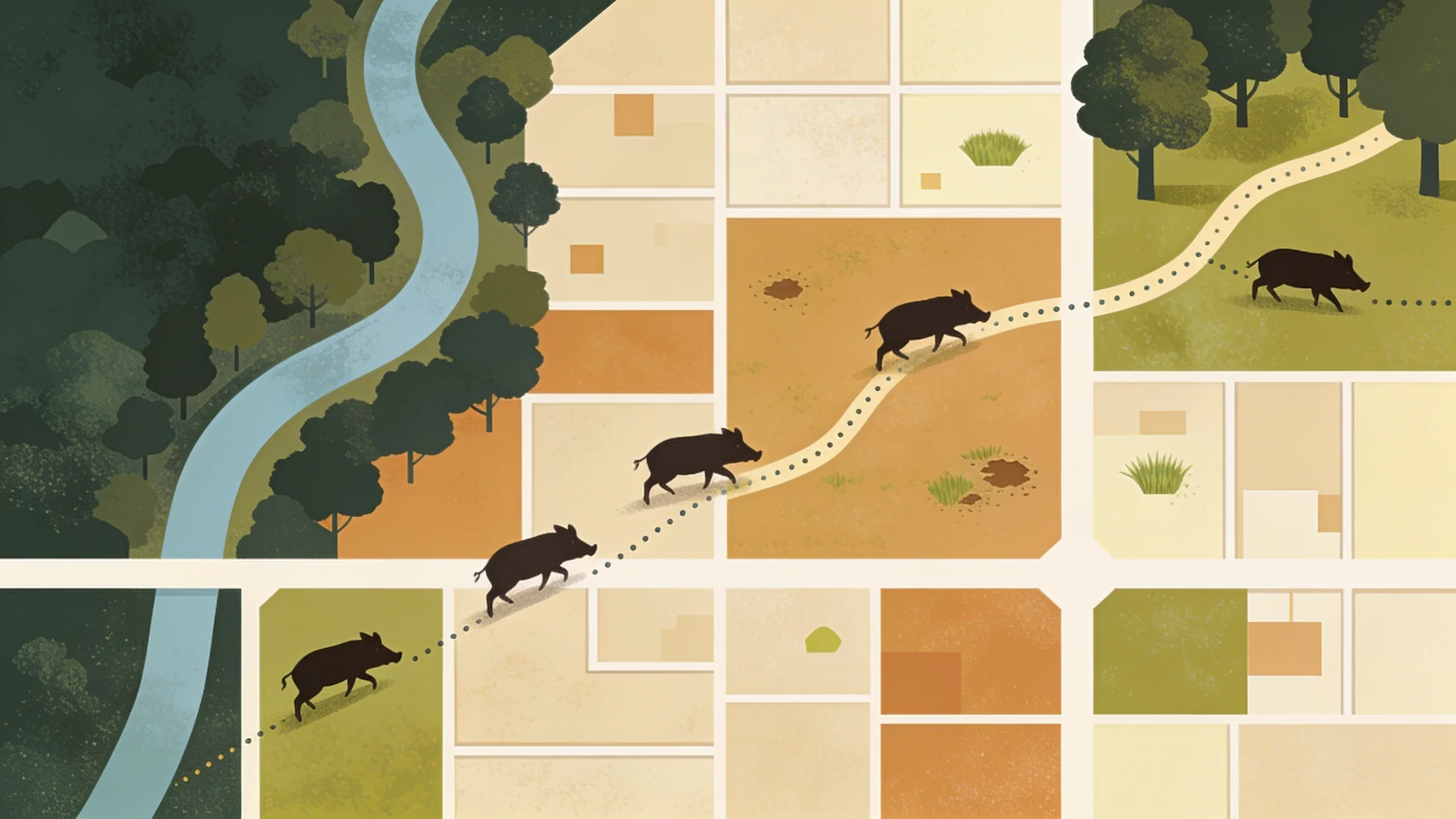
Sugar Land's feral hog pilot runs through Dec. 30 as data collection: residents log sightings so the city can map movement before choosing a control plan.
USDA Confirms Texas' First Redbanded Thrips, Found on Houston Sweetgums
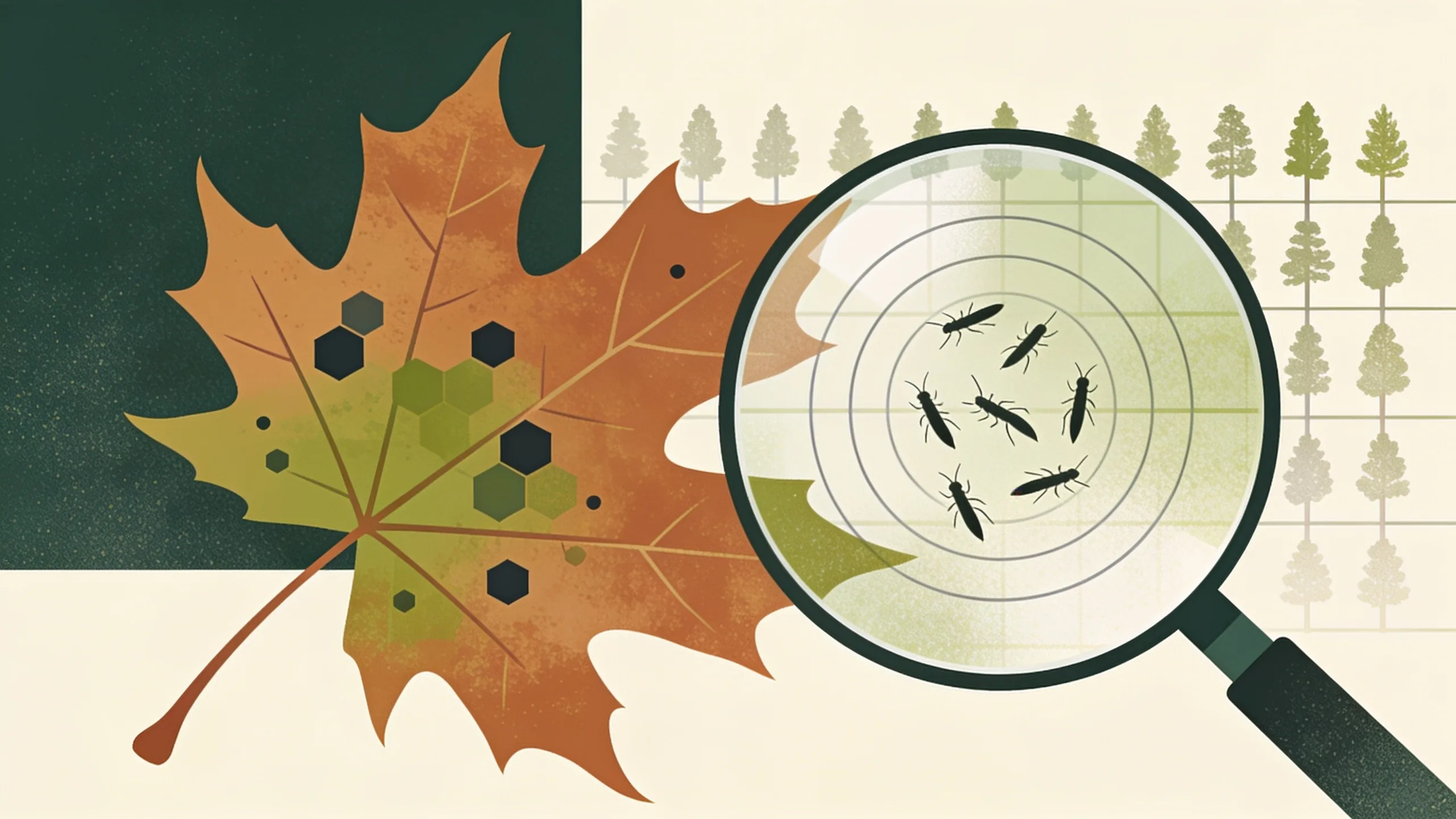
A tree-care crew's photographs led federal taxonomists to redbanded thrips in Harris County — a species previously documented in the U.S. only in Florida.