
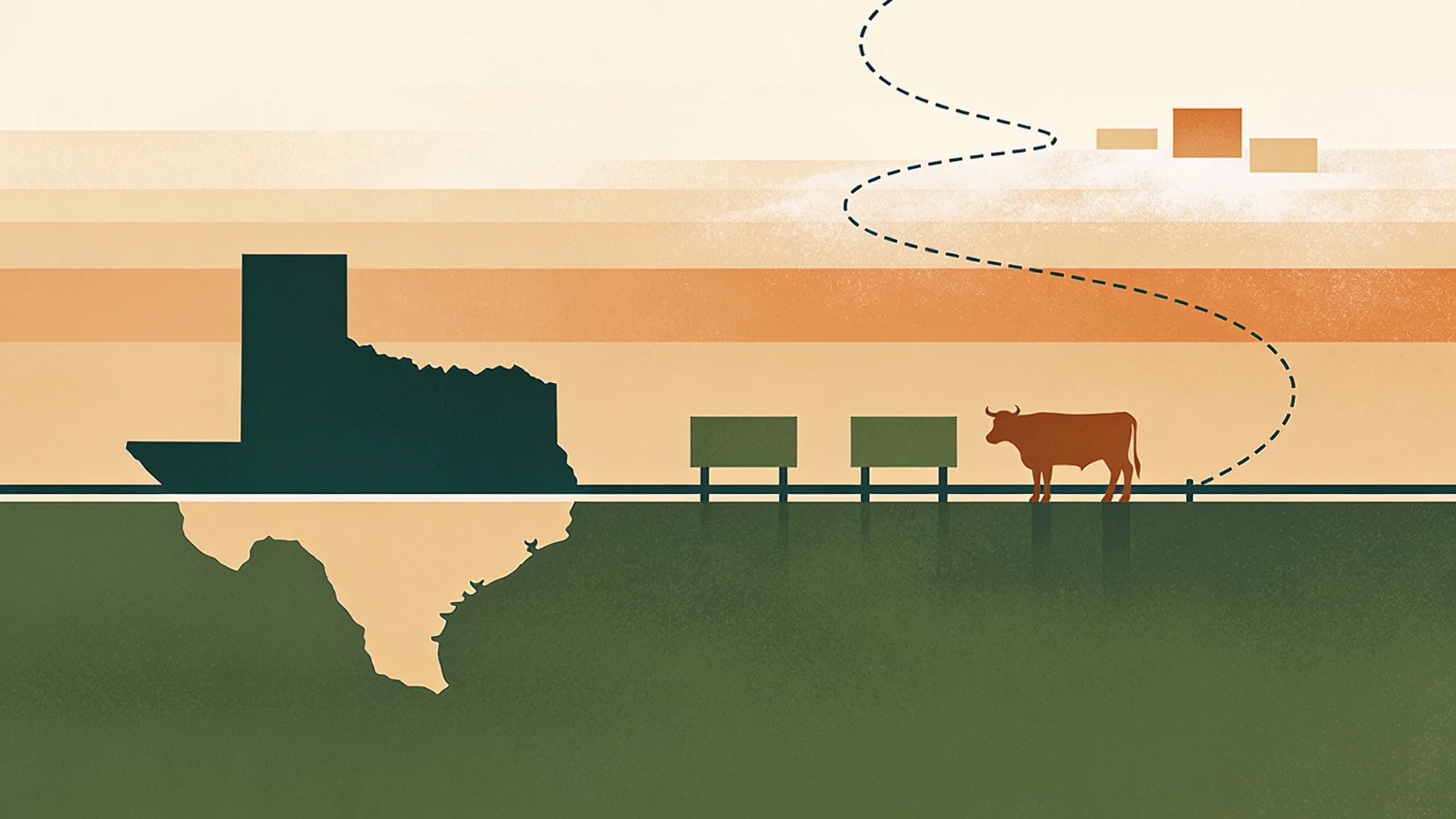
Screwworm Rules Follow the Herd North as Canada Turns Back Texas Cattle
The screwworm outbreak has already reshaped how cattle move north out of Mexico and how animals cross between Texas and its neighbors. As of this week it also governs the last leg of the trip out of the country.
The Canadian Food Inspection Agency lists both Texas and New Mexico as affected states, which means live cattle originating there cannot be imported into Canada at all. New Mexico made the list after a New World screwworm detection on Sept. 17; Texas has been on it since the parasite was found in the state earlier this year. The Alberta Beef Producers flagged the updated requirements for producers on Oct. 1.
The rules reach further than the animals themselves. Cattle from unaffected U.S. states may still enter Canada, but only if they have not been in, or travelled through, an affected state during the 21 days before export — and simply driving a trailer across a corner of Texas counts as transit. Canadian cattle that have been in an affected state cannot come straight home. They have to be moved to a clean state, sit there for at least 21 days, and then meet the rest of Canada's import conditions.
The restrictions cover live cattle and several other animal species, including Canadian animals returning from the U.S. They do not apply to meat or other animal products. CFIA advises exporters to confirm the current rules with a local Animal Health District Office before moving anything, since the affected-state list can change.
A case count that keeps edging up
The federal picture behind the border rule has not stopped moving. The USDA's public screwworm dashboard logged 53 confirmed U.S. cases as of Oct. 2 — 51 in Texas and two in New Mexico. The most recent entry is a dog in Brewster County confirmed on Oct. 2, following a goat case in Crockett County on Sept. 26 and a wild fly trapped in Brewster County on Sept. 25. Cases in Presidio, Zavala, Val Verde and other counties along the border corridor make up most of the Texas total.
That steady trickle is what Texas regulators are building their own defenses around. A new executive director order from the Texas Animal Health Commission, effective this month, sets entry requirements for livestock, exotic livestock and fowl arriving from affected states — a condition-triggered rule rather than a list of named states, so it expands automatically as the outbreak does. New safeguards at the Santa Teresa cattle crossing north of El Paso were announced the same week.
For Texas producers the Canada change is less about the immediate border than about the shape of the map. Screwworm has been treated all year as a southern-border problem — a reason to keep Mexican cattle waiting at the Rio Grande and to push USDA to speed up the sterile fly facility at Moore Air Base in Edinburg. Canada's affected-state designation is a reminder that the parasite does not respect which direction the trucks are pointed. A herd that moves through South Texas in the 21 days before a Canadian delivery can lose its market regardless of where the paperwork was filed.
Nothing in the new guidance changes what ranchers are already doing on the animal-health side: inspect wounds, watch new stock closely for a week, report anything that looks like a screwworm infestation to the TAHC on-call veterinarian at 800-550-8242. What it changes is the arithmetic of shipping — three weeks of buffer, a clean state to sit in, and an export plan built around a state list that is still growing.
Sources
Texas Bug Slayers Editorial Team
Editorial Board
The Texas Bug Slayers editorial team brings together licensed pest control professionals, entomologists, and writers dedicated to helping Texans protect their homes and families from pests.
Related Articles

First Wild Screwworm Fly Trapped in Texas as USDA Logs Brewster County Detection
USDA's case dashboard logged a wild screwworm fly from a Brewster County surveillance trap on Sept. 25 — the outbreak's first detection with no animal involved.
USDA Unveils Quarterly Review Roadmap for Screwworm Response Playbook
USDA APHIS shares comprehensive roadmap for quarterly reviews of New World Screwworm Response Playbook as parasite cases reach 45 infestations across Texas and New Mexico.
FDA Grants Emergency Use of Wound Spray as Texas Screwworm Fight Gains a Second Drug
FDA issues Emergency Use Authorization for Elanco's CLiK Extra dicyclanil wound spray to prevent New World screwworm in cattle, horses, sheep, goats, swine and wildlife.