
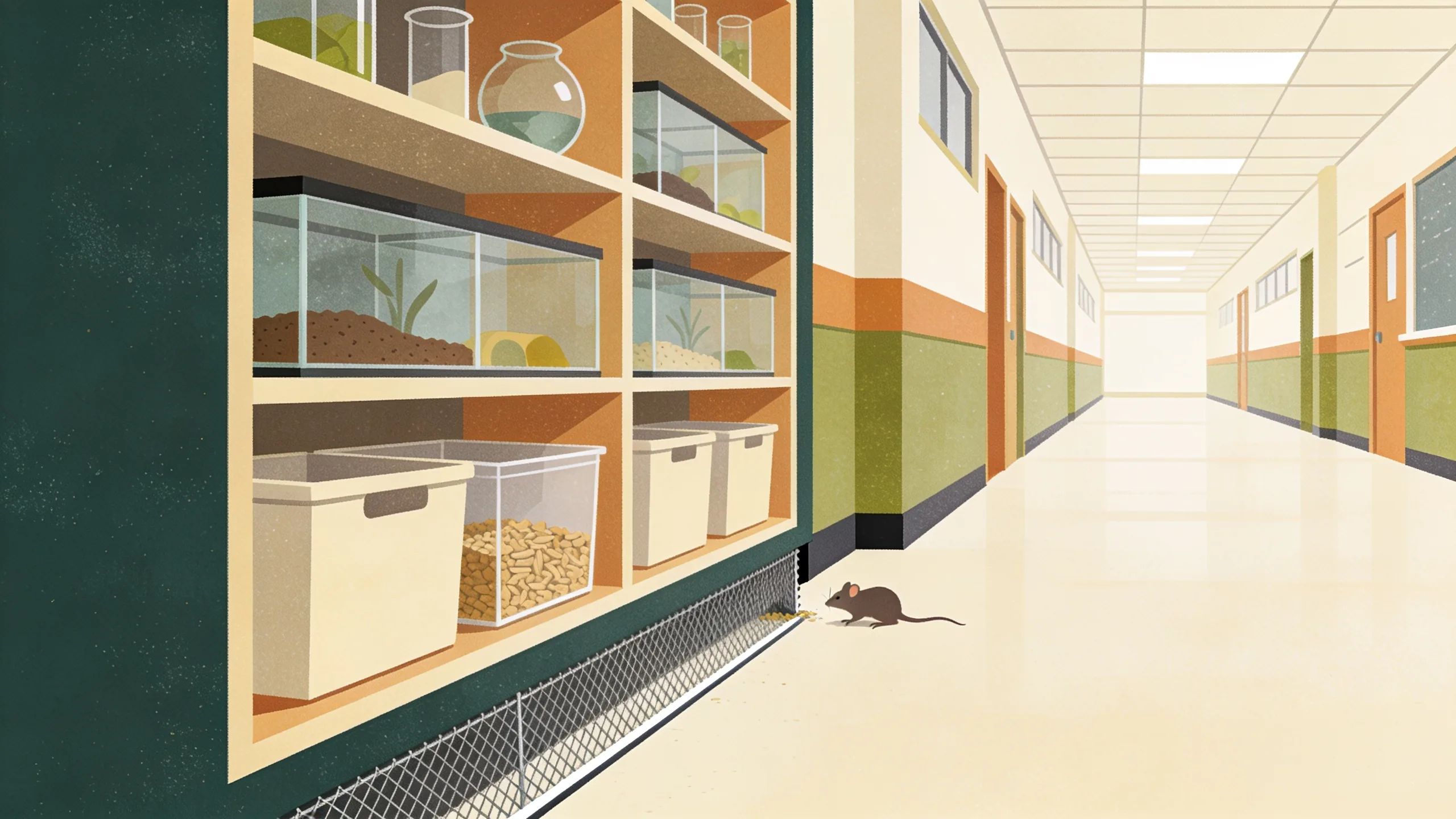
Rodents Move In at a San Antonio High School Where Classroom Pets Live
The rodents at Roosevelt High School did not have to break in. They were invited by the menu.
North East Independent School District confirmed this week that rodent activity had become a problem in the science building at the San Antonio campus, and that the animals appeared to be drawn there by the live pets housed in classrooms. Several species live in the building — fish, snakes and gerbils among them — and the district acknowledged the weak link plainly. "Food for those animals is sometimes not stored correctly, which needs to be corrected," a NEISD spokesperson told KSAT.
Staff at Roosevelt had raised the issue earlier in September, telling the station they were worried the problem would linger. It was not the first time the building had dealt with rodents. A separate incident last spring was "resolved and eradicated," according to the district, which said teachers have since been given classroom expectations aimed at keeping the situation from repeating.
For pest control operators, the case is a textbook illustration of why exclusion and sanitation sit ahead of spraying in any school account. A science wing with aquariums, terrariums and animal feed holds all three things a rodent needs: food, water and shelter. Feed sacks left open, spillage behind shelving, and a steady supply of water from tank maintenance create a habitat that survives even when the building envelope is sound. Snap the food source shut and the population stops renewing itself.
The district's response has followed the standard sequence rather than a dramatic one. Roosevelt staff filed multiple work orders, and pest control crews had already made visits to campus before the issue reached the news. NEISD says routine visits are continuing — a monitoring and maintenance posture, not a knockdown.
That approach lines up with how Texas handles pests in schools. Districts operate under integrated pest management programs with a designated coordinator, a requirement Texas A&M AgriLife Extension has spent years training people to fulfill, and which the state extended last year to publicly funded charter schools. The point of the model is to keep a written record of sightings, treatments and repairs so a recurring problem is treated as a maintenance failure rather than a mystery.
The Roosevelt case also shows how the two halves of that loop can drift apart. Work orders were filed. Pest control came. The food kept being stored the same way. In a building with dozens of staff and hundreds of students, the person who notices droppings is rarely the person who controls where a bag of gerbil food lives, and that gap is where infestations settle in.
NEISD has not described any health findings or classroom closures, and the district's messaging casts the issue as contained and scheduled. What it has not said is when the science building's feed storage becomes part of the work order itself — the change that would end the cycle instead of resetting it each spring.
Sources
Texas Bug Slayers Editorial Team
Editorial Board
The Texas Bug Slayers editorial team brings together licensed pest control professionals, entomologists, and writers dedicated to helping Texans protect their homes and families from pests.
Related Articles

Mezzetta Recalls 32-Ounce Peperoncini Jar After Report of Pest Contaminant
FDA posted a voluntary recall covering one lot of Mezzetta's 32-ounce Golden Greek peperoncini after a consumer video showed a possible pest contaminant in the jar.

UC Riverside Scientists Develop Pinene-Based Method to Lure Termites to Their Death
New research shows a 95% success rate using pinene, a natural forest compound, to attract western drywood termites toward insecticide treatments.

Texas Termite Swarm Season: What Homeowners Need to Know in 2026
Spring termite swarms are peaking across Texas. Learn how to identify winged termites, protect your property, and when to call a professional.