
Pasture Mealybug Spreads Across 70 Texas Counties, Threatening Hay Production
Texas Agriculture Commissioner Sid Miller has issued an urgent warning to ranchers, hay producers, and landowners across the state: a newly recorded invasive pest, the pasture mealybug (Heliococcus summervillei), is spreading rapidly and leaving devastated fields in its wake.
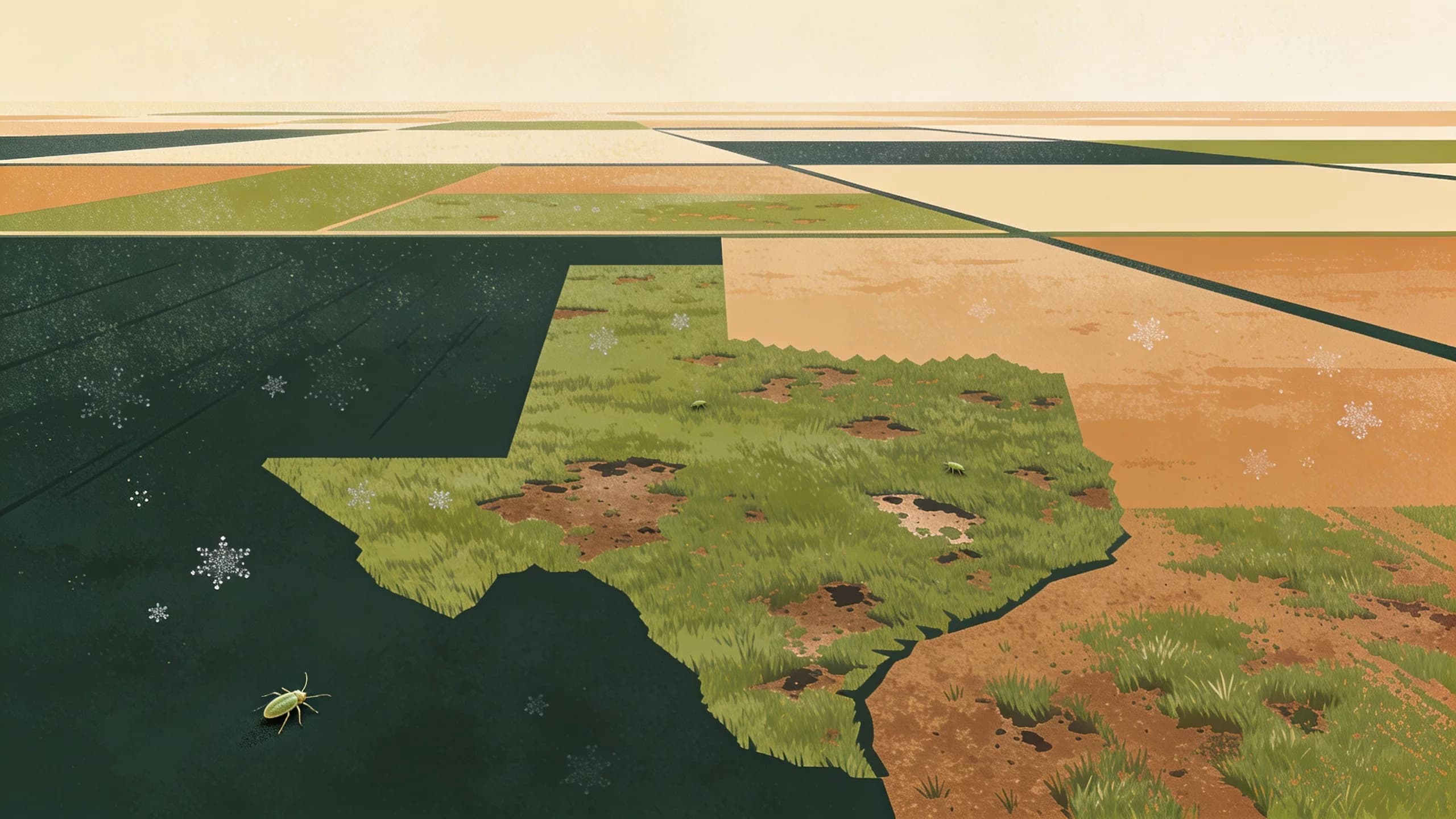
First confirmed in Texas by Texas A&M AgriLife Extension entomologists in 2025, the pasture mealybug has now been detected in 70 counties statewide, with dozens more under surveillance. The insect, which feeds on forage grasses at the soil line, can reduce hay production by half or more within weeks of infestation.
How the Damage Happens
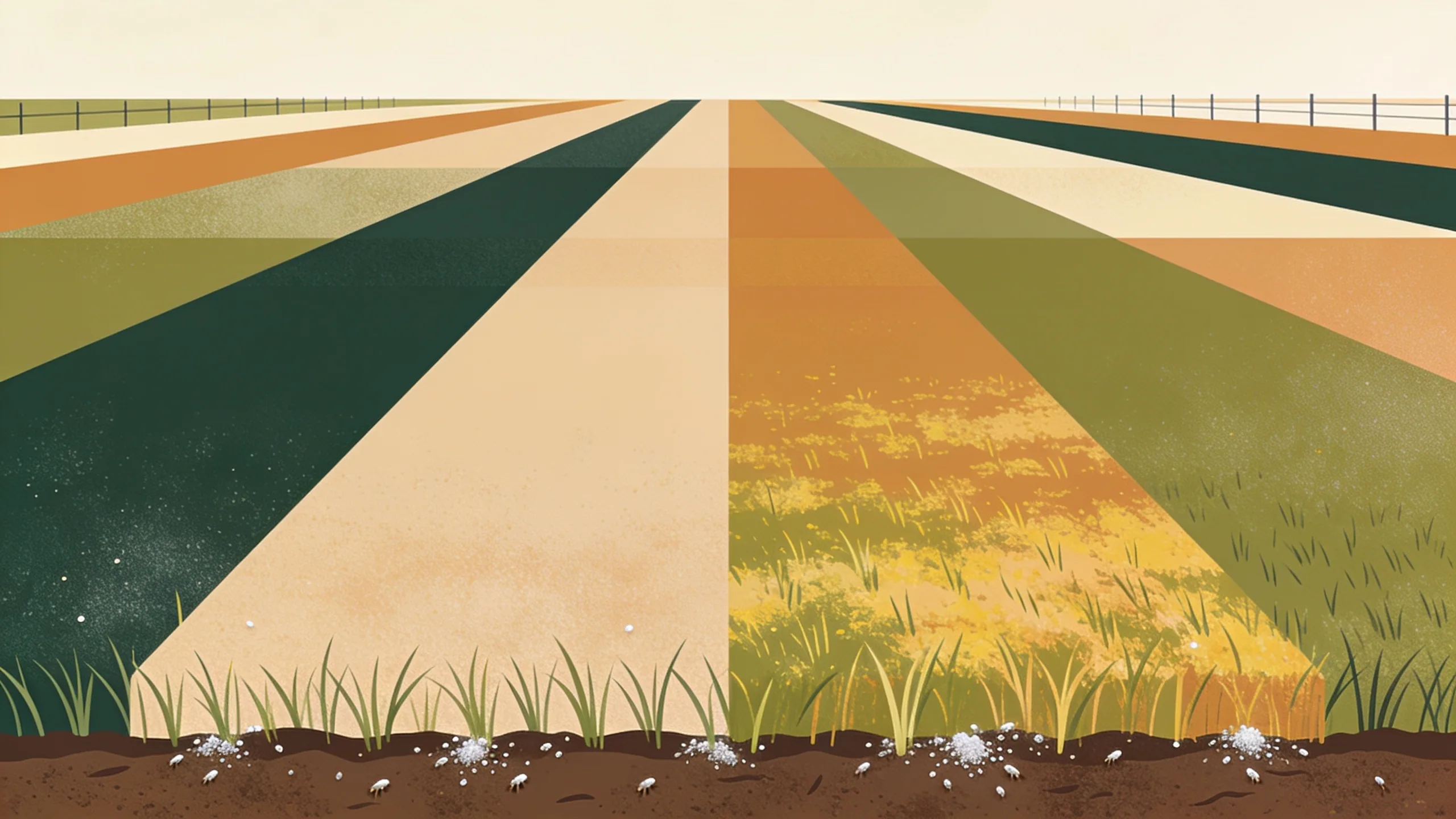
The destruction often begins where producers least expect it. The immature nymphs do the real harm, piercing grass stems to suck sap while injecting toxins that stress and weaken the plants. Under favorable conditions—high humidity, warm temperatures, and recent rainfall—visible symptoms can appear in as little as a week.
Affected areas first show yellowing and discoloration, progressing to purplish or reddish leaves, stunted growth, and poor root development. Infested pastures can look drought-stricken even after adequate rain, making the damage easy to misdiagnose.
Daniel Trampota, an operations manager with Producers Cooperative Association who runs cattle in Robertson County, first noticed the problem in April 2025 when his field turned patchy and uneven. "Some of the grass was 24 inches tall and then right next to it, three to four inches tall and just yellow and chlorotic looking," he recalled. The financial impact was immediate: "When you're talking about losing half of your production, that's pretty serious numbers and dollars."
Where Mealybugs Hide
Pasture mealybugs are frustratingly mobile and difficult to spot. They can be found on grass blades, at the base of plants, in leaf litter and thatch, beneath the soil surface, and even hiding under dried cow patties. The pest remains mobile through all life stages, and outbreaks intensify in thick, dense grass—exactly the conditions found in productive hay meadows.
Trampota observed that the worst damage hit where grass grew tallest and densest. "They prefer the real dense cover," he explained, noting why hay fields suffer more than closely grazed pastures.
Rapid Spread Through Human Activity
State officials believe human activity is accelerating the mealybug's expansion. The insects can hitchhike on farm equipment, vehicles, clothing, and—most concerning—hay itself.
Commissioner Miller emphasized the risk of transporting infested hay: "He sells that hay and hauls it to another county. Well, he just infested that county. So please don't do that." The warning carries particular weight given that hay producers may not realize their fields are infested until the damage becomes visible.
The speed of spread has caught many off guard. "If you don't go check your hay meadow for four or five days, you could lose 50, 100 acres almost overnight," Miller warned. "This thing spreads real, real rapidly."
What Producers Can Do
Texas A&M AgriLife Extension and the Texas Department of Agriculture are urging producers to adopt immediate scouting and prevention measures:
Scout regularly. Inspect pastures and hayfields frequently, paying close attention to areas where grass appears yellowed, reddened, or stunted. Check thick, unmanaged patches along fence lines and roadsides where infestations often begin.
Clean equipment. Thoroughly clean tractors, mowers, balers, and other machinery before moving between fields or properties. Even small amounts of soil or plant material can transport mealybugs to new locations.
Inspect before transport. Examine hay carefully before selling or moving it to other counties. When in doubt, consult local extension agents.
Report suspected infestations. Producers who suspect pasture mealybug presence should contact the Texas Department of Agriculture at 800-TELL-TDA or reach out to their local Texas A&M AgriLife Extension office for identification assistance.
No Standardized Treatment Yet
Researchers acknowledge that no standardized scouting protocol or treatment regimen exists yet for this newly established pest. Texas A&M AgriLife Extension is actively studying the mealybug's biology and developing management recommendations, but the immediate priority is slowing its geographic expansion while scientists work on long-term solutions.
For now, vigilance remains the most powerful tool Texas producers have against an insect that can turn productive pasture into withered ground in a matter of weeks.
Suspected pasture mealybug infestations can be reported to the Texas Department of Agriculture at 800-TELL-TDA or through your local Texas A&M AgriLife Extension office.
Sources
Texas Bug Slayers Editorial Team
Editorial Board
The Texas Bug Slayers editorial team brings together licensed pest control professionals, entomologists, and writers dedicated to helping Texans protect their homes and families from pests.
Related Articles

The Cotton Jassid Vanished This Season. Experts Say That's No Reason to Relax
After 2025's invasive cotton jassid surge, winter freezes have kept 2026 populations low across the Southeast. UGA's Phillip Roberts warns growers — including in Texas — to keep scouting.
Pasture Mealybug Spreads to 70 Texas Counties, Threatening $15.5 Billion Cattle Industry
Texas A&M AgriLife warns of rapidly expanding invasive pest that could cause up to $1 billion in annual forage losses with no effective pesticide controls available.
Warm, Wet Spring Triggers Pest Explosion Across Texas Farmland
Texas A&M AgriLife reports near-ideal conditions fueling outbreaks of pasture mealybugs, rice delphacids, and corn pests. Here's what producers need to know.