
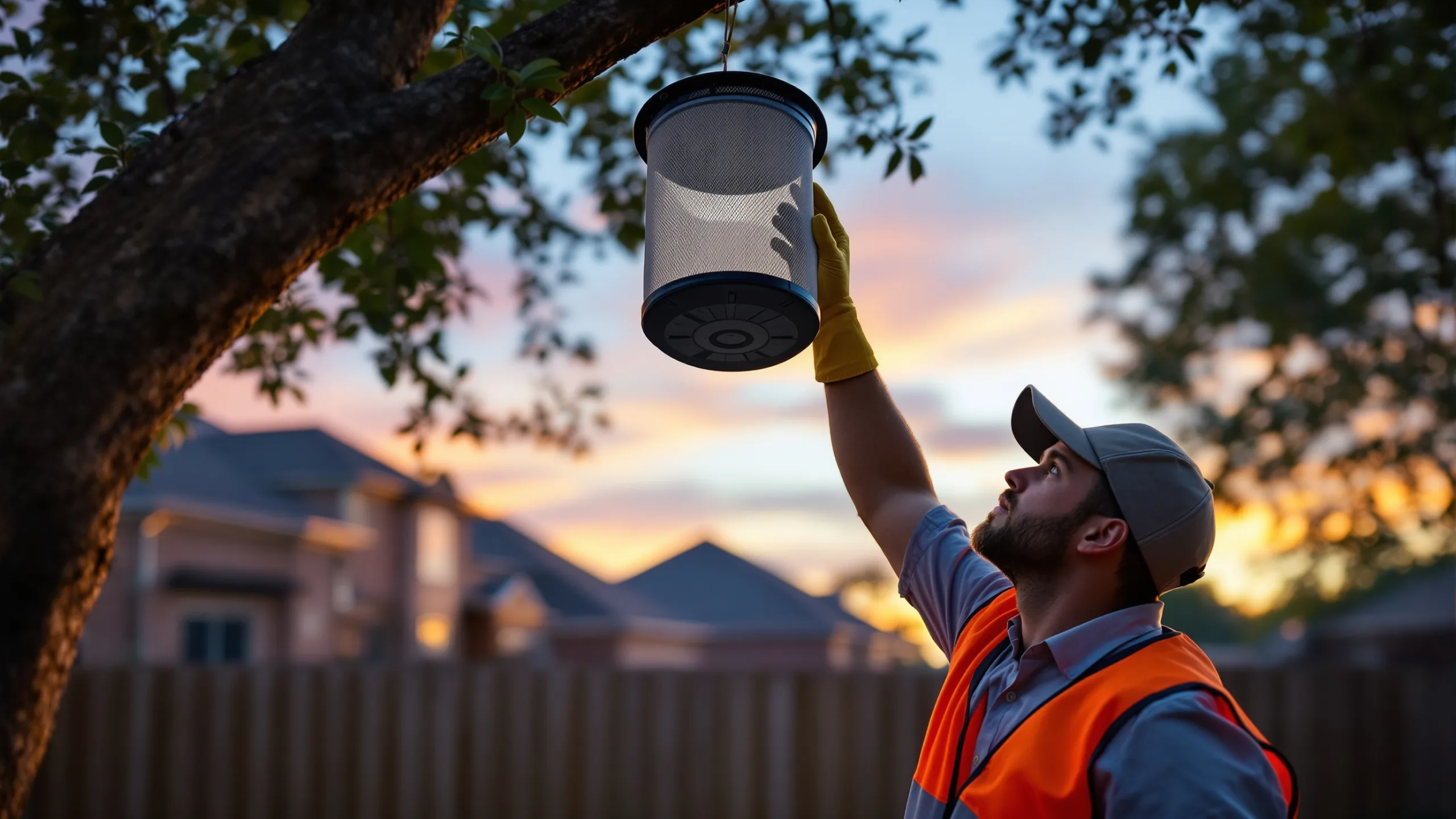
Tarrant County Reports First Human West Nile Case of 2026 — and It Is the Neuroinvasive Form
Tarrant County Public Health announced its first human West Nile virus case of the 2026 season on Friday, July 24 — and the patient did not have the mild version. The case involves the neuroinvasive form of the disease, the rare presentation in which the virus crosses into the brain or spinal cord.
That is an unwelcome way to open a county's human case count. Fewer than 1% of people infected with West Nile develop neuroinvasive disease, and roughly 1 in 10 of those patients die. Long-term neurological problems are common among survivors.
The announcement lands after months of warning signs in the county's mosquito traps rather than out of nowhere.
86 Positive Mosquito Pools Before the First Human Case
Tarrant County Public Health has identified 86 West Nile-positive mosquito pools as of July 24. The county's first positives of the year turned up back in mid-May, in Fort Worth and Grand Prairie, and the county has been running its surveillance-and-spray protocol ever since — including the accelerated ground spraying Arlington ordered in June after a positive trap near Douglas Court.
For context on where the season may be headed: Tarrant County recorded 17 human cases last year across a West Nile season that runs from April through mid-November. The 2026 season is only now producing its first human case, but it is doing so with a mosquito infection rate that has been climbing for two months and with the highest-risk weeks — August and September — still ahead.
Texas Has Doubled Its Case Count in Three Weeks
Statewide, the picture has moved fast. CDC's ArboNET surveillance system, current as of July 21, lists eight West Nile disease cases in Texas this year. Three weeks earlier, that figure stood at four.
Nationally, ArboNET counts 91 cases across 20 states, of which 64 are neuroinvasive — an unusually severe ratio that has held all season. Arizona remains the national outlier with 55 cases, 43 of them in Maricopa County.
Texas human cases are spread across six counties in the CDC data:
- Harris — 2 cases (1 neuroinvasive), plus 3 presumptive viremic blood donors
- Montgomery — 2 cases (1 neuroinvasive), plus 2 blood donors
- Fort Bend — 1 neuroinvasive case, plus 2 blood donors
- Liberty — 1 neuroinvasive case
- El Paso — 1 neuroinvasive case
- Denton — 1 non-neuroinvasive case
Tarrant County appears in the CDC table too, but only under non-human activity — the county's new case was announced three days after the last ArboNET refresh and has not been folded into the federal count yet. When it is, Texas will be at nine or more.
The wider footprint is broader than the case list suggests: 29 Texas counties have reported West Nile activity of some kind to ArboNET this year, including Bexar, Dallas, Collin, Travis, Williamson, Galveston, Brazoria, Lubbock, and Nueces. Most of those are mosquito or bird detections, not people — but that is precisely how every human case starts.
Spraying Underway From Kingsville to Lake Jackson
Vector control crews are working in several parts of the state this week.
In Kingsville, the city health department confirmed that a mosquito trapped July 14 in the 700 block of East Warren tested positive at the Texas DSHS lab. Crews began spraying Wednesday night and ran through Friday evening. City Health Director Emilio Garcia said there are no reported human cases in the region so far.
In Brazoria County, the Mosquito Control District confirmed West Nile in samples collected July 22 from two trap sites — near Spanish Oak and Oakwood Drive in Lake Jackson, and Glenforest Drive in Richwood. Crews are spraying the affected areas twice nightly for three nights, then retesting.
Both responses follow the same logic North Texas cities use: a positive pool triggers a targeted knockdown before the virus has time to move from the mosquito population into the human one.
Fort Bend's Aerial Spray Cut Mosquito Counts by 83%
The most concrete evidence that intervention works came out of Fort Bend County this week. After heavy rainfall and flooding drove mosquito populations to unusual levels, the county ran an aerial mosquito control operation — and trap counts fell from 109,536 before treatment to 18,711 afterward, an 83% reduction. Twelve of the 15 treatment areas saw populations drop by more than 75%.
"These results demonstrate that our aerial mosquito control operation was highly effective in rapidly reducing mosquito populations across the targeted areas," said Dr. Letosha Gale-Lowe, Fort Bend County's local health authority and director of Health & Human Services.
She was careful not to declare the season over. "While these results are very encouraging, mosquito season is not over, and residents should continue taking steps to protect themselves from mosquito bites."
One treatment area has already shown renewed mosquito activity and is under additional surveillance. Fort Bend confirmed its first human case of 2026 earlier this month, and the City of Sugar Land is adding an extra weekly adult mosquito spray in its Zone 4 — where a human case was confirmed — while continuing larvicide treatments until samples test negative.
The reason a single spray cannot end the risk is biological: West Nile is maintained in a cycle between mosquitoes and birds, so the virus keeps circulating in the local bird population and can reappear as soon as mosquito numbers rebound.
Who Is Actually at Risk
About 1 in 5 infected people develop symptoms. Most of them have West Nile fever — fever, headache, fatigue, muscle aches, joint pain, rash, vomiting, or diarrhea — which is unpleasant but not usually dangerous.
The neuroinvasive form is the one that puts people in the hospital. Symptoms include intense headache, confusion, tremors, convulsions, muscle weakness, seizures, paralysis, or coma. Higher risk goes to adults over 50, people who are immunocompromised, and those with diabetes, cancer, hypertension, or kidney disease.
There is no approved human vaccine for West Nile virus. Prevention is entirely a matter of not getting bitten.
What Texas Homeowners Should Do This Week
The advice from Tarrant County, Brazoria County, and Kingsville officials is identical, which is a good sign that it is worth following:
- Use EPA-registered repellent containing DEET, picaridin, or oil of lemon eucalyptus whenever you are outdoors.
- Cover up at dawn and dusk — long, loose-fitting sleeves and pants during peak Culex activity hours.
- Dump standing water weekly. Flowerpot saucers, pet bowls, birdbaths, buckets, kiddie pools, clogged gutters, and tarps all breed mosquitoes in under a week. A container the size of a bottle cap is enough.
- Repair screens on windows and doors before August.
- Report standing water you cannot fix — roadside ditches, abandoned pools, neglected properties — to your city or county mosquito control district.
Peak West Nile transmission in Texas historically runs August through September. The state is entering that window with double the case count it had three weeks ago, a neuroinvasive first case in its third-largest county, and mosquito populations that flooding has kept unusually high across the eastern half of the state.
Sources
- Fort Worth Report — Tarrant confirms first human case of West Nile Virus this year
- Tarrant County Public Health — Tarrant County Confirms First Positive Human West Nile Virus Case Of 2026
- CDC ArboNET — West Nile Virus Current Year Data (2026)
- KRIS 6 News — Kingsville health officials confirm West Nile virus detected in mosquito trapped on East Warren
- CW39 Houston — Brazoria County detects West Nile virus in mosquitoes, begins spraying
- KHOU 11 — Fort Bend reports 83% drop in mosquitoes as West Nile virus remains a concern
Texas Bug Slayers Editorial Team
Editorial Board
The Texas Bug Slayers editorial team brings together licensed pest control professionals, entomologists, and writers dedicated to helping Texans protect their homes and families from pests.
Related Articles

Arlington Sprays Two Nights for West Nile as Texas Case Count Reaches 46 at Season's Peak
Arlington crews sprayed two nights near Caliente Drive after a mosquito trap tested positive for West Nile, as CDC's Sept. 1 update put Texas at 46 human cases.
Denton County Reports First Neuroinvasive West Nile Case as Virus Spreads Across North Texas
Denton County confirms its first severe neuroinvasive West Nile virus case of 2026, marking the second human infection in the county as health officials urge prevention measures.

Tarrant County Reports First Human West Nile Case of 2026 with Severe Neuroinvasive Illness
Tarrant County confirms first human West Nile virus case this season involving rare neuroinvasive form, as health officials track 86 positive mosquito pools across North Texas.