
Texas Panhandle Farm Reports 80% Drop in Rodent Damage Using Rat Birth Control
For years, the rodents on a 400-acre farm outside Dalhart worked underground, out of sight, gnawing through buried irrigation tape in search of the one thing the dry Texas Panhandle rarely offers freely: water. Every chewed line meant another leak, another repair crew, another stretch of crops going thirsty at the wrong moment. This month, the operation says it has finally turned the corner — not by killing the rats, but by keeping them from reproducing.
SenesTech, an Arizona company that markets fertility-control products for rodent populations, announced on July 9 that the fourth-generation farm recorded an estimated 80% decline in rodent activity after several months of using its Evolve Rat Birth Control across the property. The results, drawn from the operation's own field observations, point to an unusual pest problem that has quietly followed the spread of water-efficient farming across West Texas.
When Efficient Irrigation Becomes a Rodent Buffet
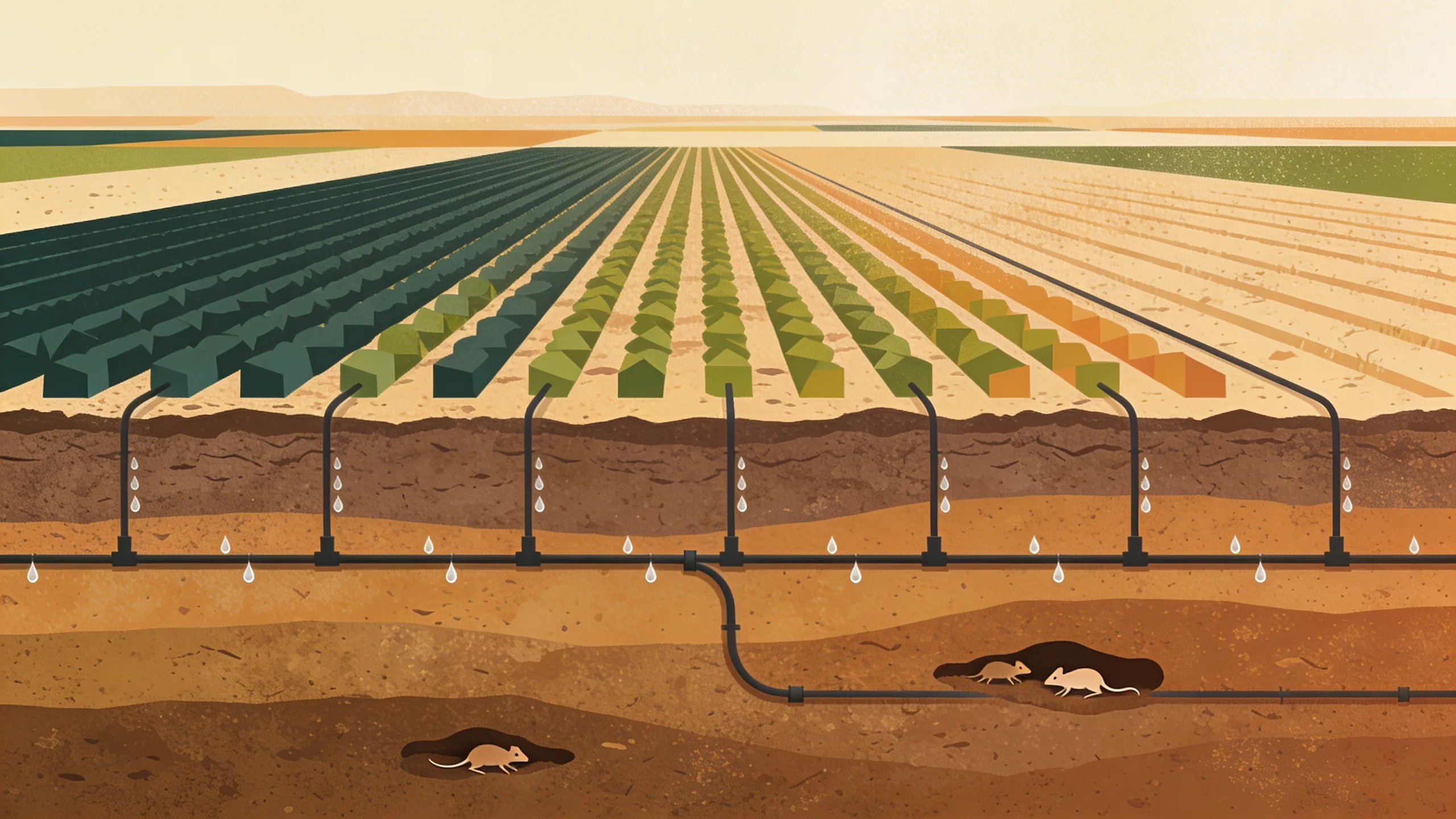
The Dalhart farm, which grows winter wheat and summer corn, relies on subsurface drip irrigation — thin tubing buried in the field that delivers water straight to plant roots while cutting evaporation. It is exactly the kind of conservation technology Texas growers have adopted to stretch shrinking aquifers. But those same buried lines create a hidden vulnerability. In a region where surface water is scarce, burrowing rodents learn that the tape carries moisture, and they chew through it to reach it.
The damage compounds fast. According to SenesTech, the farm had been dealing with recurring leaks, mounting maintenance bills, labor-heavy repairs, and disruptions to water delivery during critical growing windows. Company chief executive Michael Edell said that when the project began, "hundreds to thousands of rodent holes were visible throughout the perimeter of the property and around individual pump stations."
A Different Approach Than Bait and Poison
Rather than rely on traditional rodenticides, which kill through acute toxicity, Evolve is designed to shrink a rodent population over time by reducing fertility. The farm deployed it through what the company calls a "T-Bait Station" system built for large agricultural sites — row-crop fields, dairies and ranches — with an eye toward low-cost setup and easy visual checks on when stations need refilling.
Over the first several months, Edell said, crews saw heavy feeding at the bait stations followed by a steady drop in visible activity: fewer active holes, less feeding pressure, and — the metric that matters most to a farmer — fewer blown irrigation lines. "For the first time since implementing this underground irrigation system, we're seeing dramatically fewer leaks caused by rodents," the farm's owner said in the company's announcement.
Why It Matters Beyond One Farm
The story lands on a broader problem for Texas agriculture. Subsurface drip systems now water large tracts across the Panhandle, the Rio Grande Valley and other water-sensitive corners of the state, and their buried tubing is uniquely exposed to rodents drilling toward moisture. Repairing those lines diverts money and labor from the rest of the operation, and a leak discovered too late can cost yield.
Fertility control is not a silver bullet, and the caveats deserve emphasis. The results come from a single commercial operation and rely on the farm's own estimates rather than independent measurement, and SenesTech — a small publicly traded company promoting its own product — cautions that other sites may see different outcomes depending on local conditions, rodent numbers and how the program is run. The company positions Evolve as a complement to integrated pest management, not a replacement for monitoring, sanitation and habitat control.
Still, for Texas growers weighing how to protect an expensive, hard-to-inspect irrigation network, a method that thins a rodent colony without scattering poison across a working field is worth watching. Whether the Dalhart farm's 80% figure holds up across a full season — and across other operations facing the same underground pressure — will be the real test.
Sources
Texas Bug Slayers Editorial Team
Editorial Board
The Texas Bug Slayers editorial team brings together licensed pest control professionals, entomologists, and writers dedicated to helping Texans protect their homes and families from pests.
Related Articles

Texas A&M Researchers Deploy AI to Predict Crop Pest Outbreaks Before They Strike
New machine learning models from Texas A&M AgriLife can forecast western flower thrips populations with remarkable accuracy, giving farmers critical early warning.

EPA Unveils New Alternatives to Animal Testing for Pesticide Safety Reviews
EPA announces two major scientific advancements to eliminate mammalian animal testing by 2035, introducing new framework for surfactants and GHS mixtures equation for pesticide risk assessment.

Texas A&M AgriLife Hosts Greenhouse Pest Symposium in Dallas Oct. 1
Integrated Pest and Pathogen Management Symposium for Controlled Environment Agriculture brings experts on biocontrol, AI pest monitoring, and disease-resistant crops to Dallas.