
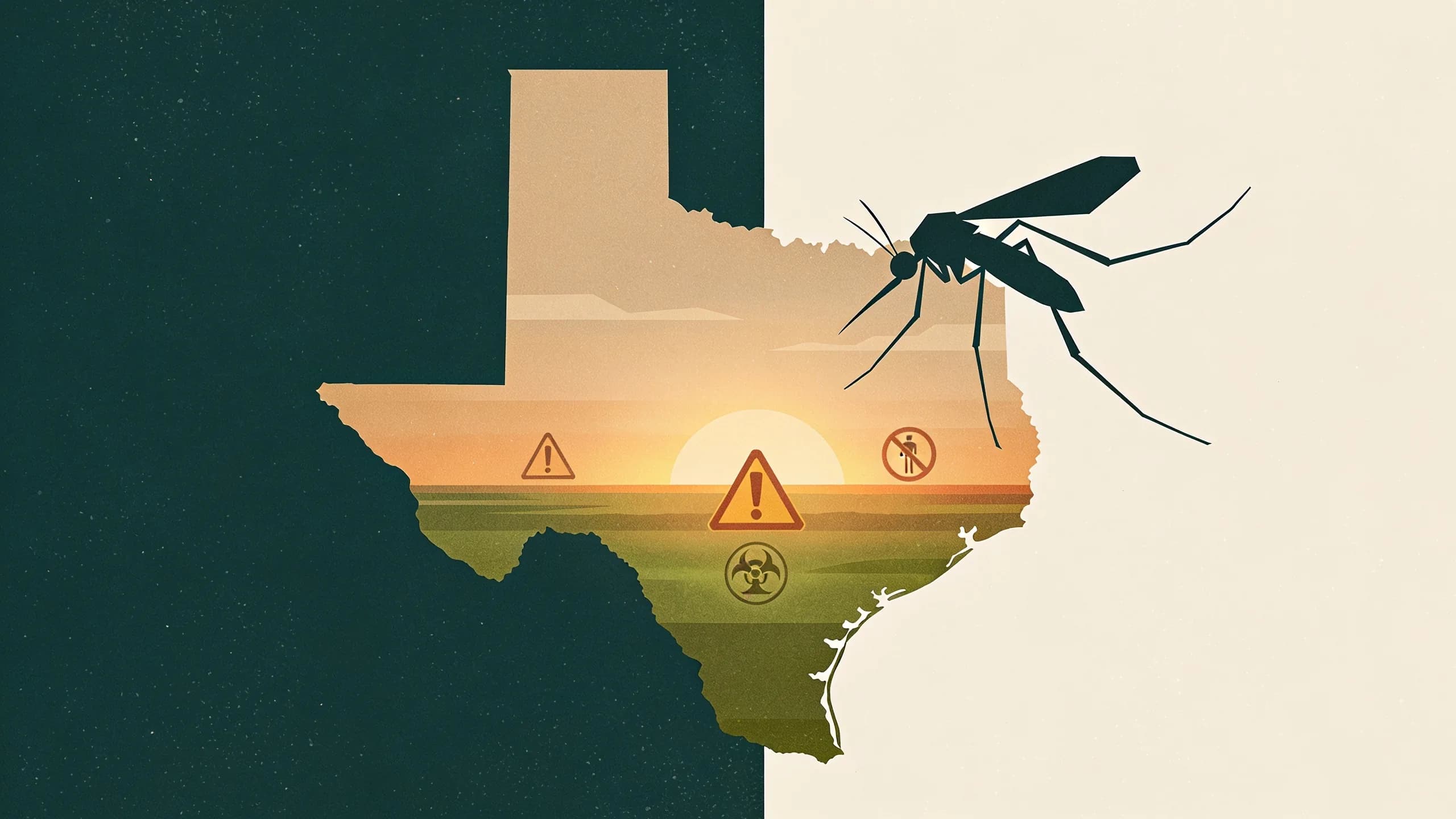
CDC Warns of Early, Intense West Nile Season as Texas Reports Surge in Cases
The Centers for Disease Control and Prevention issued an urgent warning this week as West Nile virus cases surge across the United States at an unprecedented pace. According to federal health data, the nation is experiencing its earliest start to West Nile season in more than two decades—and the numbers paint a concerning picture for what could become a severe year for the mosquito-borne illness.
As of June 30, 2026, states have reported 48 confirmed West Nile cases to the CDC. What alarms epidemiologists is not just the early timing, but the severity: 38 of those cases—nearly 80%—involve neuroinvasive disease, the most dangerous form of the virus where it penetrates the brain and can cause encephalitis, meningitis, or acute flaccid paralysis. Four deaths have already been recorded, all in Arizona.
"This is not a typical season," said Dr. Erin Staples, a medical epidemiologist with the CDC's Arboviral Diseases Branch. "We're seeing case counts and severity levels in late June that we normally wouldn't expect until August or September."
Texas Counties Report First Human Cases
Texas has not been spared from the early wave. Fort Bend County confirmed its first human case of neuroinvasive West Nile virus on July 2, prompting health officials to intensify mosquito surveillance and public outreach efforts. The case marks a significant escalation in the Houston metropolitan area, where vector control districts have been tracking positive mosquito pools since May.
"Our Mosquito and Vector Control Program conducts year-round surveillance," said Dr. Jacquelyn Minter, director of Fort Bend County Health & Human Services. "Finding West Nile in our mosquito population was concerning, but a human case requires immediate action."
Central Texas is facing similar pressures. Travis and Williamson counties both detected West Nile virus in mosquito populations within the past week, according to Austin Public Health. The findings come as the region experiences above-average rainfall followed by intense heat—conditions that create ideal breeding environments for Culex mosquitoes, the primary vectors for West Nile transmission.
"We've had a wet spring followed by hot temperatures," explained Wizzie Brown, an entomologist with Texas A&M AgriLife Extension. "That's the perfect storm for Culex populations. They love standing water, and when you combine that with heat that accelerates their life cycle, you get rapid population growth."
Why This Season Differs
West Nile virus typically follows a predictable seasonal pattern. Cases begin rising in July, peak in August and September, then taper off with the first sustained cold fronts of October. But 2026 has shattered that timeline.
The 48 cases reported by June 30 represent a dramatic departure from historical baselines. More troubling is the neuroinvasive ratio. In typical years, neuroinvasive disease accounts for roughly half of reported cases. The current 80% rate suggests either a particularly virulent viral strain circulating in mosquito populations, or—more likely—severe cases are being detected earlier while milder infections go unreported.
"Neuroinvasive cases get hospitalized, get tested, get reported," explained Dr. Staples. "Non-neuroinvasive cases—fever, headache, body aches—often never enter the surveillance system because people don't seek medical care or physicians don't test for West Nile."
The CDC emphasizes that the true number of infections is always higher than reported figures. For every neuroinvasive case detected, epidemiologists estimate 30 to 70 non-neuroinvasive infections occur in the community.
What Texas Residents Should Know
West Nile virus is endemic to Texas, with cases reported annually across all regions of the state. The virus cycles between birds and mosquitoes, with humans becoming incidental hosts when infected mosquitoes bite. Humans cannot transmit West Nile to other humans or to mosquitoes.
Symptoms typically appear 3 to 14 days after a bite. Most infected individuals—roughly 80%—experience no symptoms at all. Approximately 20% develop West Nile fever, characterized by fever, headache, body aches, joint pains, vomiting, diarrhea, or rash. Less than 1% develop neuroinvasive disease, which can cause high fever, headache, neck stiffness, disorientation, coma, tremors, convulsions, muscle weakness, and paralysis.
People over 60 and those with compromised immune systems face the highest risk of severe disease. However, the CDC notes that neuroinvasive cases this season have occurred across all adult age groups, suggesting elevated viral activity in mosquito populations rather than isolated outbreaks among vulnerable populations.
Prevention Strategies for Peak Season
With July 4th weekend marking the traditional start of summer outdoor activities, health officials are urging Texans to take mosquito precautions seriously. The Texas Department of State Health Services recommends the "Four Ds" approach:
Dusk and Dawn are peak mosquito activity periods for Culex species. Limit outdoor exposure during these hours when possible, or wear protective clothing and repellent if you must be outside.
Dress in long sleeves and pants when outdoors, especially during peak activity periods. Light-colored clothing may be less attractive to mosquitoes.
DEET and other EPA-registered repellents provide effective protection. Look for products containing DEET, picaridin, IR3535, oil of lemon eucalyptus, or 2-undecanone. Apply according to label instructions.
Drain standing water around your property. Culex mosquitoes breed in stagnant water, and even small amounts—bird baths, clogged gutters, flower pot saucers, pet water bowls—can support larval development. Empty and scrub containers weekly.
For communities, vector control districts are expanding surveillance and treatment operations. Ground spraying, larviciding in storm drains, and public education campaigns are being intensified across affected counties.
Looking Ahead
The early surge does not guarantee a record-breaking season, but it eliminates any possibility of a mild year. With mosquito populations established and viral transmission confirmed across multiple Texas counties, the focus shifts to mitigation.
"We're not at the peak yet," warned Dr. Staples. "If this trajectory continues, we could be looking at one of the most significant West Nile seasons in recent memory."
For Texas residents, the message is clear: the mosquitoes are already active, the virus is circulating, and personal protection measures are essential through the summer months. The holiday weekend offers a reminder that outdoor recreation and mosquito risk now share the same season.
Health officials recommend monitoring local health department communications for spray schedules and outbreak alerts in your area. Anyone experiencing symptoms consistent with West Nile virus—particularly high fever with severe headache or neurological symptoms—should seek medical evaluation promptly.
Sources
Texas Bug Slayers Editorial Team
Editorial Board
The Texas Bug Slayers editorial team brings together licensed pest control professionals, entomologists, and writers dedicated to helping Texans protect their homes and families from pests.
Related Articles
West Nile Virus Detected in Three Brazoria County Locations as Mosquito Surveillance Intensifies
Mosquito samples from Pearland, Lake Jackson, and West Columbia test positive for West Nile virus, triggering targeted spraying and renewed public health warnings across Brazoria County.

CDC Warns West Nile Virus Off to Earliest Start Since 2004 as Texas Reports 4 Cases
CDC reports 48 West Nile cases nationwide by June 30—the worst early season in 22 years. Texas ranks second with 4 confirmed cases as health officials urge mosquito precautions.

CDC Issues Urgent July 4 Warning as West Nile Virus Cases Hit Two-Decade High
Federal health officials warn of historic early-season West Nile activity with 48 cases across 23 states, including 38 neuroinvasive infections.