
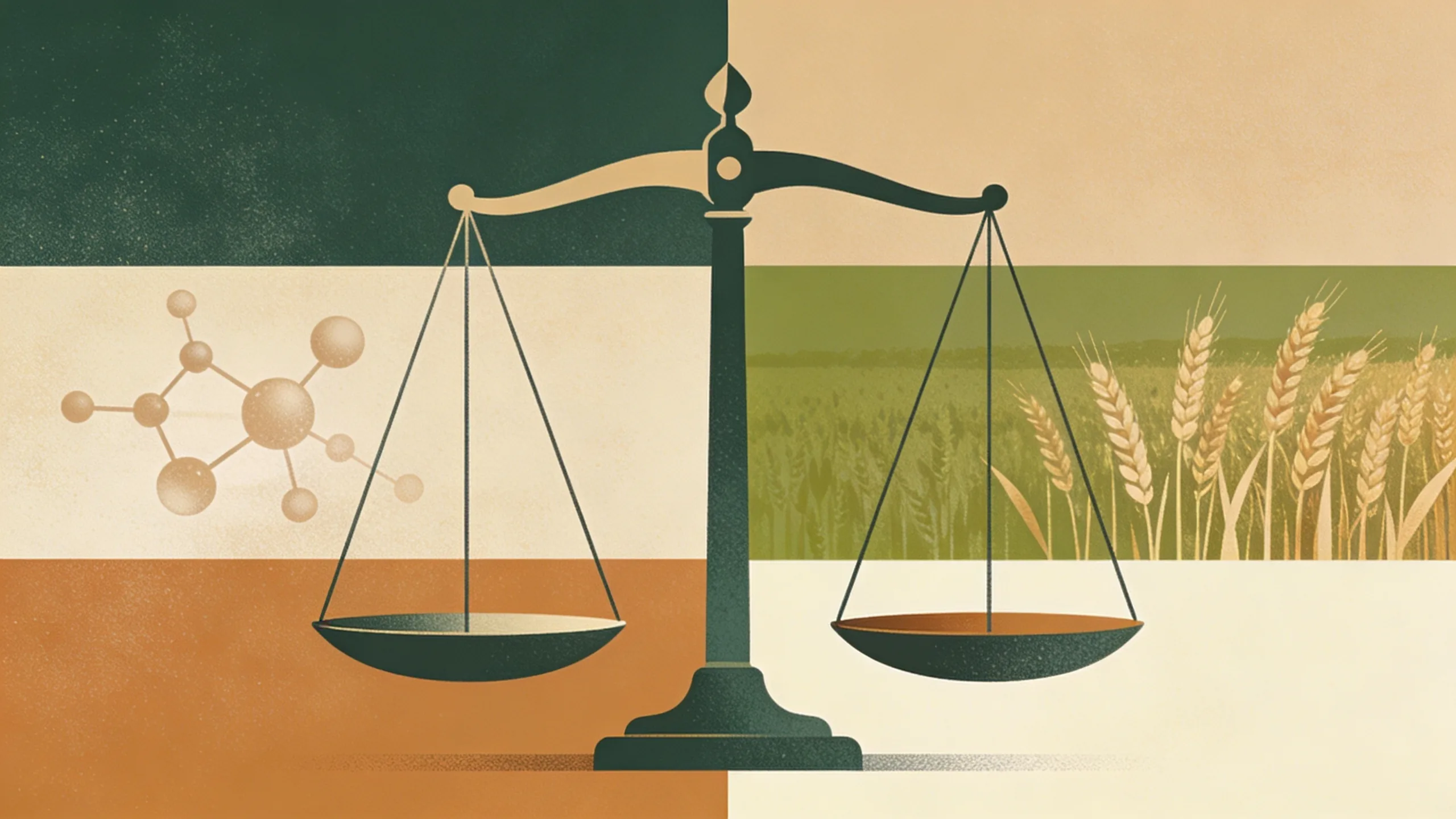
Kentucky Becomes Third State to Shield Pesticide Makers from Cancer Lawsuits
Kentucky has joined a growing list of states passing legislation to protect pesticide manufacturers from lawsuits alleging their products cause cancer—laws that critics call "Cancer Gag Acts" and supporters defend as necessary to keep affordable crop protection tools available to farmers.
The Kentucky legislation, which advanced through the state House in March despite splitting the Republican caucus, makes the Bluegrass State the third to enact such protections. The move comes as Bayer, manufacturer of the glyphosate-based herbicide Roundup, faces thousands of pending lawsuits nationwide from plaintiffs claiming the product caused their non-Hodgkin lymphoma.
The State-Level Strategy
For years, pesticide companies pursued federal immunity through Congress, attempting to insert liability shield language into must-pass legislation like the Farm Bill. Those efforts have repeatedly failed in the face of public opposition and procedural obstacles. The shift to state-level lobbying represents a tactical pivot—if federal protection proves unattainable, securing it state by state offers an alternative path to the same destination.
The strategy has proven effective. Iowa lawmakers defeated a similar immunity provision in 2025, but the victory for consumer advocates proved temporary. Rather than accepting the loss, Bayer and industry allies redirected their efforts to Washington, pushing for federal protection through the 2026 Farm Bill.
That effort recently suffered a significant setback. The U.S. House passed a Farm Bill version in early May that excluded the so-called "Cancer Gag Act" provisions—Sections 10205, 10206, and 10207—that would have granted pesticide makers broad immunity from failure-to-warn lawsuits. Representative Chellie Pingree of Maine, speaking on the House floor during debate, characterized the stripped provisions as putting "chemical company profits over the health of Americans."
The Legal Landscape
The state immunity laws operate through a simple mechanism: they prevent plaintiffs from arguing that pesticide manufacturers failed to adequately warn about cancer risks, provided the product carries EPA-approved labeling. Since the EPA has consistently declined to require cancer warnings on glyphosate products—despite the International Agency for Research on Cancer classifying the chemical as "probably carcinogenic to humans" in 2015—this effectively eliminates a major avenue for litigation.
The legal theory underlying these lawsuits rests on state tort law rather than federal pesticide regulation. Plaintiffs argue that even if a product meets federal labeling requirements, manufacturers have a separate duty under state law to warn consumers about known risks. The immunity laws preempt this state-level accountability, channeling all disputes into the federal regulatory framework where pesticide companies have historically found more favorable treatment.
Critics note the timing coincidence. Bayer has already paid out over $10 billion to settle Roundup litigation while continuing to deny any causal link between glyphosate and cancer. The company faces ongoing pressure from shareholders to cap future liability, with some investors pushing for a complete withdrawal from the glyphosate market—a move that would upend weed management practices across American agriculture.
Agricultural Perspectives
Farm organizations have generally supported immunity legislation, framing it as protection for farmers who rely on affordable, effective pest control tools. The American Farm Bureau Federation and similar state-level organizations argue that litigation threatens to remove valuable products from the market or drive prices beyond reach of smaller operations.
"Farmers need access to the tools that keep their crops healthy and their operations viable," reads a typical defense of immunity legislation. "Lawsuit abuse shouldn't drive agricultural decision-making."
Environmental and public health advocates counter that this framing obscures the real beneficiaries. "These laws don't protect farmers—they protect chemical company profit margins," said Jennifer Breon, Iowa senior organizer for Food and Water Watch, following the House Farm Bill vote. "Farmers deserve protection from harmful products, not protection for the companies that make them."
The Supreme Court Wildcard
The state immunity movement unfolds against the backdrop of pending Supreme Court litigation that could render the entire debate moot. The Court heard arguments in Monsanto v. Hardeman earlier this year and is expected to rule in June on whether federal pesticide labeling requirements preempt state failure-to-warn claims entirely.
If the Court rules for Monsanto, establishing broad federal preemption of state tort claims, the state immunity laws become largely redundant. If the Court rules against preemption, the state laws take on heightened significance as potentially the only barrier between pesticide manufacturers and thousands of pending lawsuits.
Legal observers note the irony: pesticide companies are simultaneously arguing in court that federal law already provides the immunity they seek, while lobbying state legislatures to pass laws providing that same immunity explicitly. The dual strategy suggests uncertainty about which forum offers the better odds—or a determination to secure protection through whatever means available.
Implications for Texas
Texas has not yet considered pesticide immunity legislation, but the state's massive agricultural sector and business-friendly regulatory environment make it a logical target for future industry lobbying. The Texas Department of Agriculture, led by Commissioner Sid Miller, has generally aligned with agricultural industry priorities, though Miller has also shown willingness to break with conventional positions on issues like hemp regulation.
Any Texas immunity bill would likely face opposition from the state's active trial lawyer community and environmental organizations, but would benefit from the overwhelming Republican majorities in both legislative chambers. The outcome could hinge on whether agricultural groups prioritize the issue and whether opposition can mobilize effectively during the compressed timeline of a legislative session.
For now, Texas farmers and consumers remain subject to the traditional liability framework—one where pesticide manufacturers can be held accountable in state court for failing to warn about known risks. Whether that framework survives the ongoing industry campaign for immunity remains an open question.
Sources
Texas Bug Slayers Editorial Team
Editorial Board
The Texas Bug Slayers editorial team brings together licensed pest control professionals, entomologists, and writers dedicated to helping Texans protect their homes and families from pests.
Related Articles
EPA Unveils Draft Fungicide Strategy to Protect Endangered Species Across Texas and Beyond
EPA releases comprehensive draft strategy for minimizing fungicide impacts on endangered species, with new mitigation measures affecting growers in Texas and all states except Hawaii.
EPA Unveils Draft Fungicide Strategy to Protect Endangered Species
The Environmental Protection Agency releases a comprehensive draft strategy to minimize harm to endangered species from fungicide use, with implications for Texas agriculture.
Supreme Court Hears Monsanto Case That Could Reshape Pesticide Regulation Nationwide
The Supreme Court heard arguments in Monsanto v. Durnell on April 27, 2026, in a case that could determine whether federal pesticide law preempts state failure-to-warn claims.